The man who refused to disappear
The man who refused to disappear
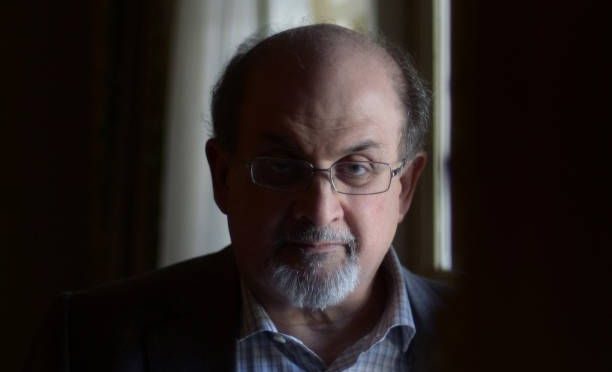
Today, Salman Rushdie turns 78. He was not supposed to.
There is a version of this story where it ends in 1989.In that version, a novel gets published, a fatwa gets issued, and a man goes into hiding and stays there, not physically, but creatively, and the silence that follows is both understandable and permanent. In that version, the world wins. The version we actually got is stranger and more stubborn.
Salman Rushdie did not disappear. He kept writing.The child who wanted the whole world.
He was born on 19 June 1947, in Bombay. The partition of India, which happened two months after his birth, would later become one of the central traumas his fiction would have to carry. He arrived, in other words, into a world mid-fracture, and he never really left it.
His father named himself after Ibn Rushd. The name was deliberate, a small act of defiance encoded into a surname, a reminder that in the medieval Islamic world, reason and inquiry had once been celebrated, not condemned. Salman Rushdie spent his entire career trying to live inside the meaning of that name, and the world spent a portion of his career trying to make that impossible.
He went to Rugby, then Cambridge. He studied history. He wrote advertising copy for a decade. And then, in 1981, he published Midnight’s Children, a novel about a boy born at the exact moment of Indian independence whose fate is magically, absurdly, inescapably tied to the fate of his nation.
The novel won the Booker Prize. Years later, it was voted the best novel in the history of the prize itself.
The book is excessive, sprawling, and overflowing with story. It wants to contain everything: Bombay street life and political collapse, the intimate and the epic, the ridiculous and the sacred. It is the literary equivalent of someone standing at a window looking at everything at once and refusing to look away. That refusal, to simplify, to narrow, and to make things more comfortable for those who preferred their fictions tidy, would define every difficult year that followed.
The book that cost him a decade
The Satanic Verses was published in 1988. Within months, it had been banned in several countries. Within a year, Ayatollah Khomeini issued a fatwa calling for Rushdie’s death and placed a bounty on his head.
His Japanese translator was murdered. His Italian translator was stabbed. His Norwegian publisher was shot.Rushdie spent the next decade moving between safe houses, under British police protection, living a life that was technically free and practically not. He has described those years with neither self-pity nor false bravery, simply as years spent writing in hiding, because writing was the only way he knew to insist that the life he was protecting was still worth something.
What strikes you, if you read his account of those years carefully, is not the fear, though the fear is there. It is the consistency of the decision to continue. Every morning, in a country house under a false name, he sat down and wrote. Not because it was courageous in any theatrical sense. Because stopping would have meant agreeing with the people who wanted him gone.
12 August 2022
He was onstage in Chautauqua, New York, about to give a lecture on artistic freedom, when a man rushed forward and stabbed him repeatedly. Rushdie was airlifted to the hospital. He lost sight in one eye. He lost function in one hand.He was seventy-five years old.
The question the world asked in the days after was whether he would write again. It was a reasonable question and also, in retrospect, a slightly absurd one. Rushdie published Knife in 2024, a memoir about the attack and its aftermath. He wrote the book in part by imagining a conversation with the man who had tried to kill him. Not out of forgiveness, exactly, but out of the writer’s compulsion to understand even the things that cannot be forgiven.He wrote because he could not do otherwise. He could not always do otherwise.
What the work insists on
There is a line Rushdie has said in various forms: that literature is the one place where, inside the privacy of our own heads, we can hear voices talking about everything in every possible way. It sounds modest when you first encounter it. It is not modest.
He has paid for this belief with a decade in hiding, the sight of one eye, and the use of one hand. He has not, as far as anyone can tell, stopped believing it.
There is something almost impossible about Salman Rushdie that is also, on reflection, the most human thing about him.
He was born into a fractured world and made art out of the fractures. He was told, more than once and more than metaphorically, that his voice was unwanted. He kept using it anyway. He is seventy-eight today, which he was not supposed to be.
The world did not manage to silence him. It tried, and the books remain. That is, in the end, the only answer a writer has ever had for the people who would prefer the silence.