The timeless genius of Franz Kafka
The literary world pauses every year on 3 July to remember one of history’s most enigmatic and influential writers, Franz Kafka. Kafka transformed the ordinary struggles of modern life into haunting, surreal narratives that continue to resonate more than a century later. Ironically, a man who spent most of his life doubting his own literary worth would go on to redefine modern literature.
The timeless genius of Franz Kafka
The literary world pauses every year on 3 July to remember one of history’s most enigmatic and influential writers, Franz Kafka. Kafka transformed the ordinary struggles of modern life into haunting, surreal narratives that continue to resonate more than a century later. Ironically, a man who spent most of his life doubting his own literary worth would go on to redefine modern literature.
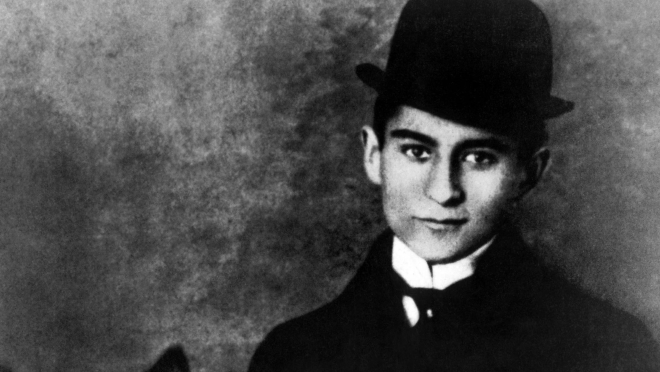
Today, the adjective ‘Kafkaesque’ has entered dictionaries worldwide, describing situations that are absurdly complex, nightmarish, and oppressive, perhaps the greatest testament to the lasting power of his imagination.
Yet Kafka’s legacy extends far beyond a single word. His works explore multiple themes, such as alienation, bureaucracy, guilt, isolation, identity, authority, and the human condition, with a depth that remains startlingly relevant in the 21st century.
A childhood marked by isolation
Franz Kafka was born on 3 July 1883 in Prague, then part of the Austro-Hungarian Empire (now the Czech Republic). He belonged to a middle-class family and was the eldest surviving child of Hermann Kafka, a successful but domineering businessman, and Julie Löwy.
His relationship with his father profoundly shaped his emotional life and literary imagination. Hermann Kafka was authoritarian, demanding, and often dismissive of his sensitive son. Franz admired him yet simultaneously feared him because of a psychological conflict that haunted him throughout adulthood.
This strained relationship culminated in Kafka’s famous but never-delivered Letter to His Father, authored in 1919, an exceptionally sophisticated 100-page document in which he painstakingly analysed the emotional wounds inflicted during his childhood. The letter remains one of the greatest autobiographical writings in literary history.
Growing up, Kafka was multilingual. He spoke German, French, Czech from birth, and had some knowledge of Hebrew. This multicultural upbringing allowed him to navigate different parts of the world while simultaneously feeling that he belonged fully to none.
Kafka attended rigorous German schools before studying law at the German Charles-Ferdinand University in Prague. Although literature fascinated him far more than legal studies, law promised him financial security.
After earning his doctorate, he worked at the Workers’ Accident Insurance Institute (WAII). His responsibilities involved investigating industrial accidents and drafting legal reports. Surprisingly, Kafka excelled at this work and was highly respected by colleagues for both his precision and intelligence.
However, the job exhausted him emotionally. Most of his writing happened late at night after working all day. He once remarked that office work consumed the energy he wished to devote to literature.
This collision between professional duty and artistic calling became a recurring theme throughout his life.
The writer who never believed in himself
Kafka published only a handful of works during his lifetime. He was relentlessly self-critical, constantly revising manuscripts and destroying drafts. Few writers have exhibited such severe perfectionism. Among the works published were: Meditation (1913), The Judgment (1913), The Metamorphosis (1915), In the Penal Colony (1919), A Country Doctor (1919), and A Hunger Artist (1924).
Many of the novels that later established his global reputation remained unfinished and unpublished during his lifetime. Perhaps the greatest irony in literary history is that Kafka never witnessed his own fame.
The Metamorphosis: A story that changed literature
No discussion of Kafka is complete without The Metamorphosis, arguably one of the most influential novellas ever written in the history of literature. The story begins with one of literature’s most unforgettable opening lines:
‘As Gregor Samsa awoke one morning from uneasy dreams, he found himself transformed in his bed into a gigantic insect.’
Rather than focusing on the impossible transformation itself, Kafka explores how Gregor’s family gradually loses compassion, treating him as an inconvenience rather than a loved one.
The novella is not merely about becoming an insect. It examines isolation, family expectations, economic pressure, identity, and the fragility of human dignity. Over a century later, readers continue to interpret the story through psychological, existential, political, and sociological lenses.
Although incomplete, Kafka’s three great novels profoundly shaped 20th-century fiction.
The Trial follows Josef K., a man arrested and prosecuted without ever learning the nature of his crime. The novel presents bureaucracy as an incomprehensible, all-powerful force. The Castle tells the story of a surveyor attempting endlessly to gain access to mysterious authorities governing a village. Every attempt ends in confusion, delay, and frustration. Amerika, also known as The Man Who Disappeared, portrays a young immigrant’s surreal experiences in the United States, blending satire with themes of displacement and identity.
These unfinished novels remain masterpieces precisely because their unresolved narratives reflect life’s uncertainty.
Kafkaesque: A word born from literature
Few writers have inspired an adjective that entered everyday language. The term Kafkaesque describes situations characterised by oppressive bureaucracy, endless paperwork, illogical authority, powerlessness, psychological anxiety, surreal injustice, and invisible systems controlling ordinary people.
Whether dealing with government offices, legal systems, corporations, or digital algorithms, people still describe bewildering experiences as ‘Kafkaesque’. This extraordinary linguistic legacy reflects Kafka’s unparalleled ability to capture universal human anxieties.
In 1917, Kafka was diagnosed with tuberculosis. At that time, effective treatment for TB did not exist. His health steadily deteriorated over the following years. Eventually, tuberculosis affected his throat, making eating and even speaking agonisingly painful.
On 3 June 1924, just one month before what would have been his 41st birthday, Kafka died in Kierling, Austria. He was only 40 years old.
The friend who changed literary history
Perhaps the single most important figure in Kafka’s posthumous fame was his closest friend, Max Brod. Before dying, Kafka instructed Brod to burn all his unpublished manuscripts. Brod deliberately ignored these wishes. Instead, he edited and published Kafka’s unfinished novels, diaries, notebooks, and letters.
Had Brod obeyed his friend, the world would likely never have read The Trial, The Castle, or much of Kafka’s surviving work. This controversial decision remains one of literature’s greatest ethical debates: Should a friend’s final wishes be honoured, or should humanity’s cultural heritage take precedence?
Most readers today are grateful that Brod chose the latter.
Even devoted readers are often surprised by several aspects of Kafka’s life. He was an enthusiastic swimmer and enjoyed rowing and hiking. Kafka became interested in vegetarianism and alternative health practices long before they became popular.
He possessed an unusually dry sense of humour. Friends frequently recalled him laughing while reading passages that modern readers often find deeply disturbing.
Contrary to his reputation as an isolated recluse, Kafka maintained close intellectual friendships and actively participated in Prague’s literary circles.
He never considered himself a successful author. Most remarkably, he asked for nearly all his writings to be destroyed after his death.
Kafka’s influence reaches far beyond literature. His ideas have shaped philosophy, psychology, sociology, political theory, cinema, theatre, visual art, and even legal studies.
Writers including Albert Camus, Jean-Paul Sartre, Gabriel García Márquez, Haruki Murakami, Jorge Luis Borges, and J.M. Coetzee have acknowledged his impact. His works continue to inspire countless adaptations in films, stage productions, graphic novels, and academic research.
Universities across the globe devote entire courses to Kafka’s writings, while scholars continue uncovering fresh interpretations of texts written more than a century ago. Few authors remain as intellectually fertile across generations.
Why Kafka still matters
The modern world often feels uncannily similar to Kafka’s fictional landscapes. People navigate complex institutions, invisible algorithms, endless bureaucracy, digital surveillance, workplace alienation, and growing uncertainty about identity and belonging.
Kafka understood these fears before they fully emerged. His stories remind us that the greatest battles are often internal: the struggle to preserve dignity in systems that reduce individuals to numbers, files, or obligations.
Rather than offering easy answers, Kafka compels readers to confront uncomfortable questions about freedom, authority, responsibility, and what it truly means to be human.
On his birthday, Franz Kafka is remembered not merely as a novelist but as one of literature’s greatest visionaries. Though he died believing himself a minor writer whose manuscripts deserved destruction, history delivered a vastly different verdict. His imagination transcended time, giving voice to the quiet anxieties of modern existence with unmatched clarity.
More than a century after his birth, Kafka’s stories continue to unsettle, challenge, and illuminate. His works remind us that even in a world of confusion, isolation, and invisible powers, literature possesses the extraordinary ability to reveal truths that history, politics, and philosophy often struggle to express.
That enduring relevance is why Franz Kafka remains immortal, not only in libraries, but in the very language we use to describe the complexities of being human.