The walk into Noakhali
On 16 August 1946, Direct Action Day was followed by devastating communal violence in Calcutta. Following this, on around 10 October 1946, violence spread through parts of Noakhali and neighbouring Tippera (roughly present-day Comilla and surrounding areas). The main victims of this violence were members of the local Hindu minority.
The walk into Noakhali
On 16 August 1946, Direct Action Day was followed by devastating communal violence in Calcutta. Following this, on around 10 October 1946, violence spread through parts of Noakhali and neighbouring Tippera (roughly present-day Comilla and surrounding areas). The main victims of this violence were members of the local Hindu minority.
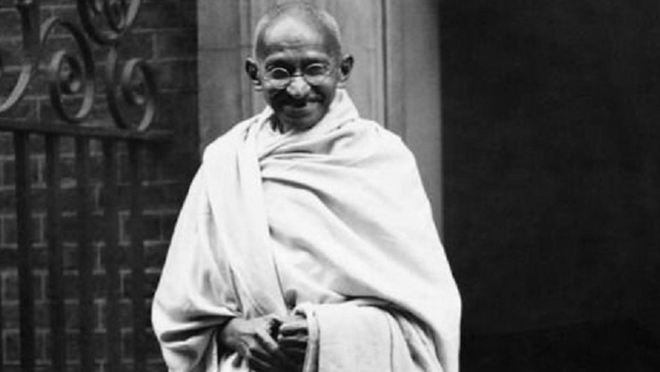
Killings, destruction of homes and temples, intimidation, forced religious conversions and violence against women were reported. The violence continued sporadically for weeks. This violence was simply not due to differences in religion. Historian Anwesha Roy places the violence within several overlapping conditions: communal nationalism, the aftermath of the Calcutta killings, local agrarian relations, economic distress and the disastrous legacy of the 1943 Bengal famine.
Mohanchand Karamchand Gandhi was simply not a preacher of one particular religion. After Calcutta and Noakhali, devastating anti-Muslim violence erupted in Bihar later in October 1946. Gandhi reacted strongly to that violence as well. His position was that atrocities against one community could not justify retaliation against another.
To stop this massacre from escalating, the 77-year-old Mahatma Gandhi left for Noakhali on 6 November 1946 and reached on 7 November 1946. For his journey, the then Prime Minister, SH Suhrawardy, prepared special arrangements, but he rejected them, stating, “these are for big people”.
M.K. Gandhi stayed in Noakhali for months, from November 1946 until the beginning of March 1947, to be precise. In January, he started visiting the affected villages by foot. He visited affected villages, spoke to Hindu victims, met Muslim residents and local leaders, held prayer meetings and attempted to persuade displaced Hindus that they could eventually live safely alongside Muslim neighbours again. He asked his associates to settle individually in affected villages and effectively stake their personal safety on the protection of the Hindu minority there. He was there to share their danger as well.
While Gandhi’s ideologies have always been a point of conversation among people on whether they make sense or not, Noakhali made Gandhi question his choices as well. Historian Anwesha Roy describes Noakhali as a “test of faith” for Gandhi. He had enormous confidence in the principles of truth and non-violence, but the communal killings made him question whether he himself had been capable of embodying them effectively enough.
Noakhali was neither Gandhi’s first encounter with communal violence nor his last. Throughout the final years of his life, Gandhi repeatedly placed himself in the midst of communal tensions, moving from one troubled region to another in an attempt to prevent retaliation and restore trust between Hindus and Muslims.
Gandhi’s lifelong advocacy of non-violence is commemorated by the United Nations through the International Day of Non-Violence, observed every year on 2 October, his birthday. Non-violence may sound too idealistic for the world, Mahatma Gandhi was a man who took it to his life and never bowed in front of violence, and it can surely be said with certainty that he showed an extraordinary commitment to practising what he preached.