Estonia, Latvia & Lithuania: The niche Eurotrip
Estonia, Latvia & Lithuania: The niche Eurotrip
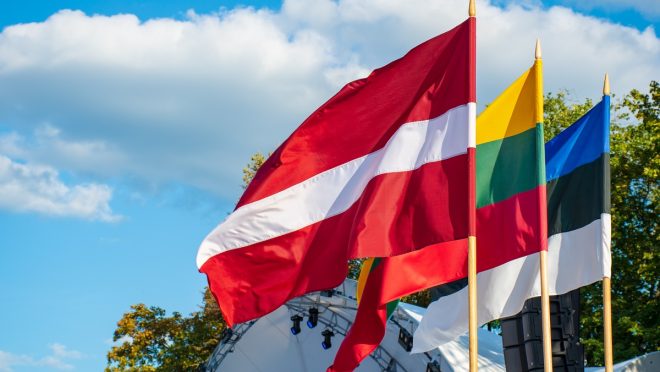
I always thought if I ever got the chance to visit Europe, it would include stargazing under the Eiffel Tower or boat rides in Venice. So, when my family decided to go on a trip to three unknown countries, Estonia, Latvia and Lithuania, I was a little disheartened. Yet, visiting these obscure places in August of this year was a life-changing experience for me.
Travellers often refer to the three Baltic capitals as sisters. From the medieval era to the 1990s, these sisters underwent a lot of changes in management. They endured Danish and German conquests, Soviet rule, Nazi occupation and then Soviet rule again before finally gaining independence.
Tallinn, the Eldest Sister
A two-hour ferry ride from the modernistic city of Helsinki was all it took to transport us back in time to the 13th century, to the capital of Estonia, Tallinn. Without wasting time, we made our way to Viru Gate, one of the Walls of Tallinn erected in 1265, and soon realised why the city was declared a UNESCO World Heritage Site. The vibrant colours from the flower shop next to it, paired with the cloudy weather and ancient architecture, created a sort of uncanny environment that was beautiful yet eerie.
As we roamed around medieval buildings, we stumbled upon an 18th-century church with a small crowd outside it. Soon, the gates opened to reveal a bride adorned in a white dress, and the groom behind her. They came out, shared a kiss and threw the bouquet just like I had seen in all my favourite rom-com films. However, Tallinn greeted us with terrible rainy weather, so upon touring a few more churches and alleyways, we cut our trip short by taking a bus to Riga, Latvia, the very next morning.
Riga, the Middle Sister
Although the running joke is that middle children are always ignored, if I had to choose one of these three cities, I would pick Riga. Even the hotel we picked seemed to be stuck in time. There were no lifts, only a haunted, winding staircase, and an intimidating Baltic woman at the reception.
The next day began with a guided city tour with countless churches and museums. However, the highlight of Riga was the Exhibition of the History of KGB, locally known as the Corner House. During the Soviet regime, anyone deemed suspicious was brought here and subjected to immense psychological and physical abuse. Hearing about the atrocities from the guide was horrifying enough, but when we hailed a taxi after leaving the museum, the driver mentioned that his own mother was also imprisoned here. Her crime? Communicating with her husband abroad.
Right next to the Corner House was the Riga Ghetto, where Jewish prisoners were kept during World War II before being sent to larger labour camps. An abandoned train wagon sat outside as a haunting reminder of their fate. Inside, lanterns crafted from photographs and letters of people who never returned home created a horrid sense of grief. The most striking piece was a photograph of a wagon full of smiling passengers brought from Berlin with promises of freedom. Little did they know their ticket was one-way; all 11,000 passengers would later be liquidated exactly where the museum stands now. The emotions after visiting two places back-to-back that bear so many traumatic memories cannot be put into words.
To stray away from the depressing elements of the trip, why not discuss a fun, themed dining experience in Riga? The restaurant, “Rozengrals”, set in an actual wine cellar from 1293 and lit entirely by candlelight, created a perfect Middle Ages atmosphere while also providing delicious authentic medieval dishes. The staff wore costumes and offered ancient props for whimsical pictures after an otherwise grim day. The place seemed straight out of The Game of Thrones, and anytime now the gripping scenes of the Red Wedding would start. Fortunately, no such things occurred and, with full appetites, we bid Riga goodbye.
Vilnius, the Younger Sister
Lithuania was the only Baltic country that graced us with sunny weather, so on Day 1 we took a road trip outside of Vilnius, to the small island of Trakai. Here you can find the beautiful red Trakai Castle, built in the 14th century. The castle was pretty, but walking along the shore of a small European island, picking wild berries and birdwatching was an even better experience. In fact, we were so engrossed in appreciating nature, we almost missed the bus back to the hotel!
The last day in the Baltics was spent exploring old Vilnius. We visited numerous churches and vibrant parks, notably St Anne’s Church, which awed even Emperor Napoleon. At the beautiful Lukiskes Square in the middle of the city, we saw a sculpture of a pair of footsteps on the ground. Turns out, in 1989, a movement called the Baltic Way saw 1.5 million people form a 660km human chain from Tallinn to Riga to Vilnius in a peaceful protest against the Soviet Union. The footsteps mark where the human chain was formed, with similar sculptures found across all three cities.
After a week of hopping from one Baltic capital to the next, we finally realised why each sister was called so. Tallinn was the responsible, moody eldest sister; Riga, with its colourful houses and painful historical elements, was the unhinged middle child; lastly, Vilnius was the cheery youngest, with that childish sparkle still in her eyes.
“As you move through this life and this world, you leave marks behind. And in return, life and travel leaves marks on you.” These words of Anthony Bourdain circled in my mind on the flight back to Dhaka. Leaving my own sibling behind (who is studying in Finland), I reminisced about the sisters, how unexpected my first impression of Europe had been. Besides the glitz and glamour of the “Instagram-friendly” cities, the continent also held them, the ones always overlooked yet having the most soul.