What you seek is seeking you: A morning at Shivapuri-Nagarjun National Park
From great barbets and laughingthrushes to dense forests teeming with wildlife, a half-day birdwatching trip near Kathmandu became an eye-opening lesson in conservation, coexistence, and what Bangladesh’s hill forests stand to lose
What you seek is seeking you: A morning at Shivapuri-Nagarjun National Park
From great barbets and laughingthrushes to dense forests teeming with wildlife, a half-day birdwatching trip near Kathmandu became an eye-opening lesson in conservation, coexistence, and what Bangladesh’s hill forests stand to lose
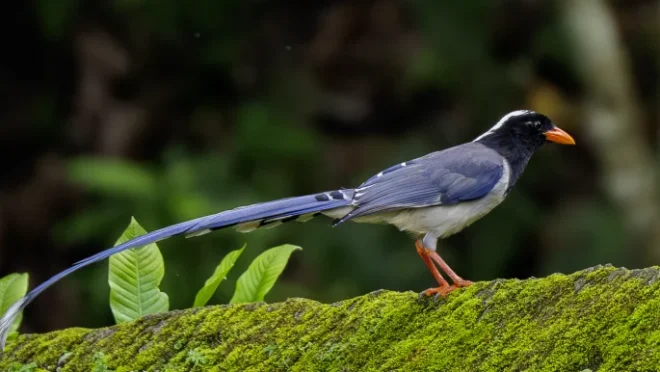
On 5 June, I visited Shivapuri Nagarjun National Park in Kathmandu. It was, admittedly, a half-day-long and somewhat rushed birdwatching and photography trip. Yet, how it had materialised was no fluke.
I spent the first week of June in Nepal attending the 6th Conservation Asia Congress hosted by the Society of Conservation Biology Asia Region, Nepal Chapter and the Burhan Community Regeneration and Conservation Foundation. It was a vibrant gathering of creative minds and souls behind wildlife conservation in Asia.
However, I was initially hesitant to attend the congress due to funding constraints, competing commitments, and the waiting game I was, and still am, enduring over a scholarship outcome.
The charm of attending a conclave of like-minded people and the opportunity of presenting the plights of rare wildcats of Bangladesh, however, outweighed the odds. Financial challenges were alleviated by the combined support from the congress organisers and S.P.E.C.I.E.S. (Society for the Preservation of Endangered Carnivores and their International Ecological Study). I asked myself, “Why not then?”
I was even planning to do some birdwatching. Through Facebook, I came to know that my colleague, Md Arif Hossain Prodhan of Wildlife Conservation Society (WCS) Bangladesh, would also be in Nepal to attend an EarthRanger training workshop. That revelation opened up a window of opportunity.
So, how was Shivapuri Nagarjun National Park? It is the ninth national park in Nepal and was established in 2002, bordering the northern fringe of the Kathmandu Valley and named after Shivapuri Peak at an altitude of 2,732 m.
The park covers an area of 159 sq km and its periphery forms a mesh of human-wildlife interface. The park area serves as an important water catchment, providing Kathmandu’s inhabitants with several hundred thousand litres of water daily.
In 1976, the area was established as a protected watershed and wildlife reserve. In 2002, it was gazetted as Shivapuri National Park, initially covering 144 sq km, and was later extended by the Nagarjun Forest Reserve, covering 15 sq km, in 2009. The park includes historical sites, religious monasteries, and a few hiking routes.
Arif was instrumental in organising the birdwatching trip. Although we were attending two different events, we were in touch. He sleuthed through eBird, the popular public platform for birdwatchers and photographers, and established contact with bird guides.
On 3 June, he made the first trip to Shivapuri. That evening, I was enthralled by his findings. He saw around 40 species of birds, most restricted to high-altitude gradients, and a few were extremely rare and coveted species in the Hill Tracts of Bangladesh. The great barbet, for example, a highly sought-after species in Bangladesh, was the ultimate decider for me. I felt determined to test my luck on 5 June.
As with all birdwatching tours, the day started around 5 am. We took a ride-sharing car and started for the park. Within 15 minutes, the Shivapuri range dominated the horizon ahead of us. However, my colleague was a bit unsettled and doubtful about whether we had taken the right track. He contacted the guide, and his apprehension was proven right.
The park, being a huge area, offers many entry points, and we had missed the correct one on the app. We were rerouted to the right point. Although a good 30 minutes were lost — later proven to be crucial — I remained undeterred, excited by the opportunity of seeing a new place.
The gate, maintained by the Nepal Army, was a simple one: no extra concrete, no rows of food carts, no dumping of plastics — all common features in Bangladeshi national parks. We bought our tickets and entered the park area.
We were accompanied by schoolchildren; it being Good Friday, they were there for a school event. Birdwatching is done best when there are fewer people, but our guide, Bikash Thakuri, a man in his late 30s with a ropey build, was very hopeful; he too was carrying a long lenAs soon as we entered, at least six plumbeous water redstarts welcomed us, including a very vibrant male with an ash-blue body and rufous-orange tail flicking like a fan. Then, we got bombarded by a mixed-species foraging party, composed of four great barbets, two golden-throated barbets, some chestnut-bellied nuthatches, and mountain bulbuls. Both barbets provided us with some good views through the viewfinder.
We spotted some barking deer munching carelessly near the army camps. We spent about an hour right at the entry point, seemingly overwhelmed by birds that were very uncommon in Bangladesh.
For example, I recalled a twitching rush to Moulvibazar to photograph the redstart. Arif and I had visited the Hill Tracts twice on different occasions to see the great barbet, and twice we returned in vain.
We started hiking. The road was mostly earthen but well-maintained and broad, making an easy route for hikers and leaving ample room for trucks to supply provisions to the monasteries at the hilltop. Soon, we were joined by several hikers, but they were not littering the park, contrary to what we see in Bangladesh.
In another sharp contrast to my birding experience in the UK, almost all of them were in their 20s. On our way up, we saw mostly Bangladeshi rarities like small niltava, Nepal fulvetta, white-crested laughingthrush, and verditer flycatcher, but none of the altitude specialists Arif had seen just the day before, like white-throated laughingthrush and Himalayan bulbul.
However, I remained mesmerised by the forest around me. We did not need to go off-trail to see any birds — another common practice in Bangladesh. The forest around us was very dense, primal on our right and on our left; often it appeared like a wall formed by some of the greenest hills I have seen in my life. The part of the park I managed to see reminded me of the Kristaung Hill of the Chimbuk range in Bangladesh that I saw in 2015. That hill is now almost entirely decimated.
I was further fascinated during my conversations with the guide. The park holds several large carnivores like leopards, black bears, and clouded leopards. From the discussion, I conjectured that the park area might also hold several other smaller species of cats, like golden cats, and who knows, marbled cats too.
To me, it was an overwhelming feeling. In Bangladesh, there are a few hill forests that hold much carnivore diversity. For a person who rarely gets these chances, even a few hours meant a lot. The birds were fearless of humans and roaming about freely. The distinction from Bangladeshi wild habitats was very noticeable to an observant eye.
We started our descent around 11 am. My colleague, too, was pleased to have visited the area twice, having got some of the best shots of great barbets. On 6 June, he visited Mount Phulchowki, which borders the south-eastern side of the Kathmandu Valley. I could not manage the time, though.
Regardless, my mind remained consumed by the experience and the sharp contrast to Bangladesh’s hill forests that I had noticed. I understand that with the ever-increasing human population, everything is at risk. But the hill forests near Kathmandu still manage to live in a friendly relationship with humans, perhaps partly due to their formidability and partly due to the respect they garner from people. But what are we doing to our hills?
Lastly, the outskirts of Kathmandu appear to be very friendly birdwatching spots. The growing community of birdwatchers and bird photographers in Bangladesh can and should try them out easily and safely, even without guides. I remain thankful to the Congress and the great machinations of coincidence. Despite all the worries that preceded the trip, the wholesome experience reminds me of Rumi’s famous quote: “What you seek is seeking you.”