When did Dhaka forget us?
There was a time when buying something in Dhaka did not require introducing yourself. The shopkeeper downstairs knew which bread your family bought. The barber understood what you meant by “a little shorter”, the tea seller knew who wanted extra sugar, and the rickshaw puller outside your lane sometimes knew where you were going before you finished saying it.
When did Dhaka forget us?
There was a time when buying something in Dhaka did not require introducing yourself. The shopkeeper downstairs knew which bread your family bought. The barber understood what you meant by “a little shorter”, the tea seller knew who wanted extra sugar, and the rickshaw puller outside your lane sometimes knew where you were going before you finished saying it.
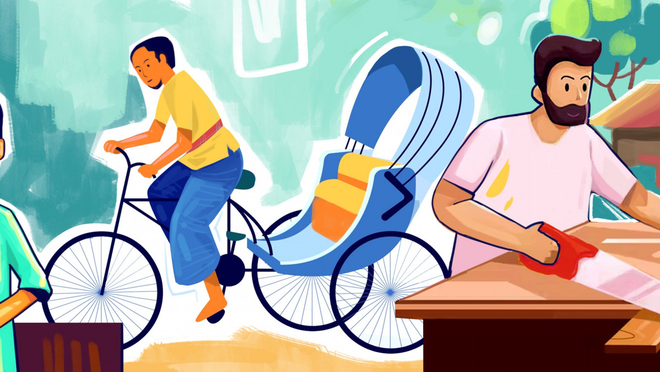
None of these people were quite friends, but they were not strangers either. They made a neighbourhood feel familiar simply because you saw them again and again.
Dhaka has changed. Between 2011 and 2022, Bangladesh’s urban population increased by 11.5 million people, with around six million added through net rural-to-urban migration, according to the World Bank. Statistics call this urbanisation. In everyday life, it looks like apartment towers replacing old houses, families moving away from neighbourhoods where they grew up, and roads that seem permanently under construction.
The older neighbourhood ran heavily on repetition. You bought groceries from the same shop, your mother knew the pharmacy owner, and your father could remain loyal to the same barber for fifteen years while complaining about the haircut every single time. These people were simply there, and because they were there every day, familiarity accumulated.
Modern Dhaka offers something different: convenience. Dinner arrives at the door. A ride across the city takes seconds to arrange. Groceries appear without anyone having to go downstairs. The convenience is real, but it changes the repetition.
The rider who takes you to work today will probably never see you again. A restaurant may recognise your phone number long before anyone inside recognises your face. We can now become regular customers without ever becoming regulars.
It would be too easy to blame this entirely on apps. The places themselves have become less permanent too. During the pandemic, the Bangladesh Restaurant Owners Association estimated that 25 to 30 percent of restaurants had permanently shut after the first wave. Rising rents, food prices and energy costs continue to make survival difficult for smaller businesses.
That instability reaches beyond balance sheets. The café where the waiter had finally learned your order becomes another restaurant six months later. The neighbourhood shop disappears behind a new signboard. Familiarity needs time, and in a city where businesses and people keep moving, there is less of it to spare. It is difficult to become a regular when the places themselves struggle to remain regular.
There is no need to romanticise the old neighbourhood either. Familiar shopkeepers and neighbours sometimes knew far more about your movements than you wanted them to know. Anonymity can be freeing, particularly in a city where curiosity has never been in short supply.
Still, something is lost when every interaction becomes efficient enough to be temporary. A shopkeeper remembering your usual purchase seems trivial. So does a barber remembering that you have an interview, or a tea seller beginning your order before you ask. Yet these small recognitions are part of what turns buildings and roads into somewhere that feels inhabited rather than merely occupied.
Perhaps this is what nostalgia for an older Dhaka sometimes gets wrong. We say we miss old houses, quieter streets and familiar shops, but buildings alone are rarely what people become attached to. What we often miss is seeing the same faces, being recognised, and knowing that someone outside your immediate family would notice if you stopped appearing.
Dhaka has become very good at bringing the city to our doorstep. Almost anything can now arrive without us going downstairs, but fewer reasons remain for the people downstairs to know our name.