Why Charles Darwin still unsettles us
Why Charles Darwin still unsettles us
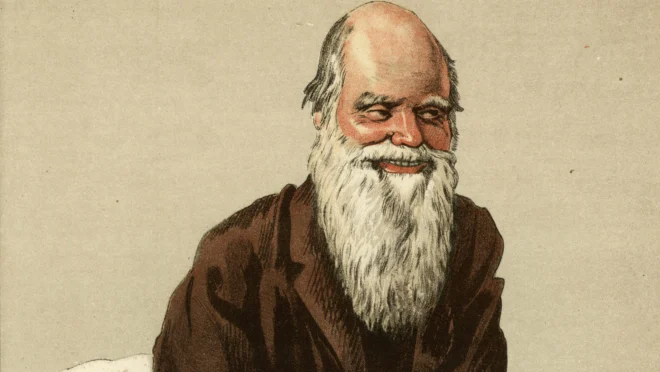
We have all heard about the “monkey theory” about how humans came from monkeys. It has been a topic of joke among people for years, and we all have laughed at this joke when we were in school learning about evolution. But have you ever stopped to wonder about the man behind this theory?
That man is Charles Darwin, and today is his 144th death anniversary.
Initially, this man did not seem to be destined to become one of the most influential scientists in history in his early life. He initially studied medicine at the University of Edinburgh but found it unpleasant. Therefore, he moved to the University of Cambridge with the intention of becoming a clergyman. Ironically, it was there that his interest in natural history began to grow.
Darwin’s life took a decisive turn during the time when he joined the voyage of the HMS Beagle in 1831. On this five-year-long journey, he greatly observed plants, animals, and geological formations from different parts of the world. It is here that these observations shaped his most important ideas.
Now, let us return to that “monkey theory”. Darwin never actually claimed that humans came from monkeys, although it is often famously interpreted that way. But actually, what he proposed was far more complex and, in many ways, far more interesting. He proposed a theory called evolution by natural selection, where he suggested that all primate species evolve over time through small inherited changes. Which means humans and modern monkeys, according to him, share a common ape-like ancestor, who was quite distinct from both of us.
Which still sounds a bit controversial.
Well, Darwin certainly presented bold ideas, and many of them challenged the traditional and religious beliefs of his time. However, it offered something science had long lacked: a unifying explanation for the diversity of life on Earth. In his landmark book, On the Origin of Species, published in 1859, Darwin introduced the argument that organisms better adapted to their environment are more likely to survive and reproduce. Over generations, these traits became more common. If understood properly, the concept is quite simple, but the theory was revolutionary in the field of biology.
Additionally, in The Descent of Man (1871), he explored human evolution and applied it directly to human beings. The book covers a wide range of relevant topics, such as evolutionary psychology, evolutionary ethics, evolutionary musicology, racial and gender differences in humans, women’s dominance in partner selection, and the applicability of evolutionary theory to society.
Beyond evolution, Darwin contributed to several other areas of biology as well. He studied coral reefs and proposed a theory on barnacles and classified them in detail. This helped scientists better understand variations within species. Moreover, he also conducted experiments on plants and explored how they respond to light and movement. He also revealed how these small creatures, like worms, play an important role in soil formation.
So why is Darwin still so controversial?
Because before Darwin, biology was largely descriptive, and after Darwin, it became explanatory. He gave scientists a framework to understand how life changes and adapts over time. Yes, his ideas challenged traditional and religious beliefs in Victorian society. Even today, they are sometimes misunderstood. But his legacy endures not only because it was controversial but also because it was convincing.
His work is supported by evidence from genetics, fossils, and modern science continues to support and expand upon his work. His ideas began as merely careful observations during a sea voyage but grew into the very foundation of modern biology.
Darwin passed away on 19 April 1882 and was buried in Westminster Abbey. On his death anniversary, it is worth looking beyond the jokes and his half-understood ideas. Yes, the “monkey theory” may still invite a smile. But behind it stands a man who changed the way we understand life itself. Darwin taught us that life is not fixed but constantly changing, that complexity can arise from simplicity, and that understanding the natural world requires patience, observation, and the courage to question what we think we already know.
Perhaps that is the most hopeful part of his legacy.