Why is India’s democratic cornerstone facing eroding trust?
Why is India’s democratic cornerstone facing eroding trust?
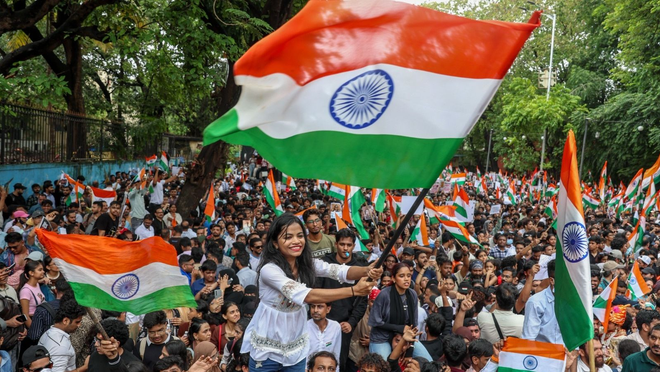
India is witnessing an unprecedented wave of protests against the Election Commission of India (ECI) and Chief Election Commissioner Gyanesh Kumar, amid growing concerns over the independence and credibility of the constitutional body responsible for safeguarding the country’s electoral process.
Thousands of civil society activists, opposition leaders and students have reportedly been detained as the protests escalate, bringing together the opposition and the youth-led political pressure group Cockroach Janta Party (CJP) against the Bharatiya Janata Party (BJP)-led government. What began as a controversy over alleged irregularities within the ECI has developed into one of the most significant protest movements against the BJP since it came to power in 2014.
Independence under strain: How public trust in the ECI eroded
Understanding the anger directed at the ECI requires examining its history as an independent constitutional institution entrusted with conducting free and fair elections. Established in 1950, the commission initially functioned as a single-member body. It briefly became a three-member commission in 1989 before the arrangement was made permanent in 1993, following tensions over the powers of then Chief Election Commissioner TN Seshan and his efforts to assert the institution’s independence.
The restructuring meant that the CEC was no longer the commission’s sole authority. Instead, the chief commissioner became primus inter pares, or first among equals, with the other Election Commissioners enjoying equal voting rights. The episode also highlighted a recurring concern in Indian politics: successive central governments have faced accusations of attempting to influence the independence of the country’s electoral watchdog.
In March 2023, the Supreme Court of India ruled that appointments to the ECI should be made by a three-member panel comprising the Prime Minister, the Leader of the Opposition and the Chief Justice of India. The court clarified that this arrangement would remain in place until Parliament enacted a law governing the appointments.
Parliament subsequently passed legislation replacing the Chief Justice of India with a Union Minister nominated by the Prime Minister. Opposition parties criticised the change, arguing that it undermined the panel’s independence and increased the risk of politically influenced appointments.
In 2024, the Supreme Court declined to stay the new law while considering a challenge to it. The opposition’s petition raised concerns about the selection process, including a formal dissent by its representative on the appointment panel. According to the petition, the representative received a dossier containing 212 names on the night before the meeting and a final shortlist of six candidates only 10 minutes before it began, leaving insufficient time for meaningful scrutiny.
These controversies have intensified public concerns about the ECI’s independence and weakened confidence in its ability to operate impartially.
What is the Special Intensive Revision, and why is it controversial?
Public distrust reached a new level following the ECI’s implementation of the Special Intensive Revision (SIR), an extensive voter verification exercise intended to remove duplicate entries and the names of deceased or permanently relocated voters from electoral rolls.
Over the past year, the exercise has reportedly resulted in the removal of more than 12 crore names from voter lists, raising questions about the accuracy of the process and the safeguards available to eligible voters.
Opposition parties have accused the BJP of using the revision to disenfranchise particular demographic groups, including Muslims and other minorities who are perceived to be less supportive of the ruling party. The ECI’s use of artificial intelligence in the latest revision has also attracted scrutiny.
An investigation by The Reporters Collective reportedly found that a central software module automatically generated tens of thousands of deletion requests without providing specific reasons and after the legally prescribed deadline.
The controversy intensified following the BJP’s victory in the West Bengal Assembly election, in which it unseated the Trinamool Congress (TMC). The TMC alleged that the SIR had distorted the electoral mandate, an allegation denied by the ECI.
More than 58 lakh voters were reportedly removed from the electoral rolls in West Bengal. Among the cases attracting attention was that of Justice Sahidullah Munshi, a retired Calcutta High Court judge who was serving as chairman of the Kolkata Auqaf Board. Critics cited such cases as evidence of possible systemic failures in the revision process.
Following the public backlash, the ECI reportedly introduced a feature called “Mark VIP” in its digital application for Booth Level Officers (BLOs) during the Delhi SIR. The feature was designed to prevent the erroneous deletion of prominent individuals from voter lists.
Critics have questioned the apparent disparity in treatment, arguing that special safeguards for public figures contrast with the difficulties ordinary citizens face when trying to restore their voting rights after being wrongly removed from electoral rolls.
What sparked the current wave of protests?
The immediate trigger for the current protests was an investigative report published by The Indian Express on 23 September. The report revealed that the two Election Commissioners had formally recorded at least 14 complaints concerning decisions taken by CEC Gyanesh Kumar over a 10-month period.
The allegations were particularly significant because they suggested internal disagreement at the highest level of the electoral body. The commissioners reportedly objected to crucial directives concerning the SIR and the centralisation of election databases, claiming that decisions had been issued in the commission’s name without their knowledge or consent.
One commissioner reportedly described the ECI’s actions as “unauthorised and illegal”.
The revelations directed further public anger towards Kumar, whom critics accuse of making decisions that favour the ruling BJP, the party-led government under which he was appointed CEC. The allegations have fuelled broader concerns about the commission’s internal decision-making and institutional independence.
Nationwide protests gather momentum
The 23 September report served as a catalyst for demonstrations across India. Opposition parties said the revelations reinforced their allegations of electoral manipulation.
On 24 September, CJP founder Abhijeet Dipke issued a 48-hour ultimatum, putting Kumar’s resignation at the centre of the group’s demands. The Indian National Congress (INC) became the first major opposition party to launch nationwide demonstrations, taking to the streets on 25 September. Several party leaders were detained during the protests.
Although the ECI subsequently reversed some of its controversial decisions amid mounting criticism, the changes did little to ease public anger.
On 28 September, the Indian Youth Congress (IYC) organised a major demonstration in New Delhi, attempting to march towards the ECI headquarters. Police responded with water cannons and detained protesters.
On 2 October, the birth anniversary of Mahatma Gandhi, the CJP organised demonstrations in Mumbai and at Jantar Mantar in Delhi. More than 500 people were reportedly detained. Dipke subsequently announced plans for a demonstration dubbed “Jantar Mantar 2.0” on 10 October if Kumar did not resign.
The name referred to an earlier protest at Jantar Mantar that the group claimed had contributed to the resignation of Union Education Minister Dharmendra Pradhan. Meanwhile, the INDIA opposition alliance continued to organise separate demonstrations against the CEC while expressing support for the CJP.
The CJP held a major demonstration at Freedom Park in Bengaluru on 8 October. However, Delhi Police refused permission for the group’s planned protest at Jantar Mantar on 10 October.
On 9 October, authorities announced a series of restrictions intended to limit the influx of protesters into the capital. Plans included closing 47 metro stations, down from an initial proposal to shut 57, cancelling mail and express train services to Delhi, imposing an internet blackout in central Delhi and instructing hotel and taxi aggregators to restrict young passengers.
Protest leaders condemned the measures as an “Unofficial Emergency”, accusing the authorities of attempting to suppress dissent. They nevertheless vowed to proceed with their demonstrations.
On 10 October, police officers boarded a Delhi-bound flight shortly after it landed and detained CJP leader Abhijeet Dipke and fellow leaders Saurav Das and Asutosh Ranka before they could disembark.
Police also detained four former chief ministers, including Mamata Banerjee and Arvind Kejriwal, alongside thousands of protesters, students and political activists during demonstrations in Delhi. More than 6,000 people were reportedly detained that day.
Delhi remained under heavy restrictions on 11 October, with the number of detentions reportedly exceeding 7,500. Dipke, Das and Ranka were subsequently released on bond.
The crackdown continued on 12 October, when Delhi Police reportedly withdrew Jantar Mantar’s status as a designated protest site, a designation it had held since 1993. The move would redirect future demonstrations to locations farther from the city centre.
On 13 October, CJP leaders Saurav Das and Asutosh Ranka defied police restrictions, passed through the security cordon and raised the Indian national flag at Jantar Mantar. They were immediately arrested again and were sent to Tihar Jail the following day.
On 14 October, Dipke announced that the CJP would formally coordinate its street protests with the INDIA opposition alliance, signalling a potential consolidation of the movement.
Further demonstrations are expected in the coming days, suggesting that the dispute over India’s electoral rolls, the independence of its election watchdog and the credibility of its democratic institutions remains unresolved.
Saqi Manjur is a second-year BBA student at Dhaka University’s Institute of Business Administration.