Why the African renaissance at the World Cup is a victory over history
As the group stages of the first-ever 48-team FIFA World Cup 2026 unfold across the stadiums of North America, the global football community is witnessing something far more significant than a mere tactical evolution. We are witnessing a demographic and historical reckoning.
Why the African renaissance at the World Cup is a victory over history
As the group stages of the first-ever 48-team FIFA World Cup 2026 unfold across the stadiums of North America, the global football community is witnessing something far more significant than a mere tactical evolution. We are witnessing a demographic and historical reckoning.
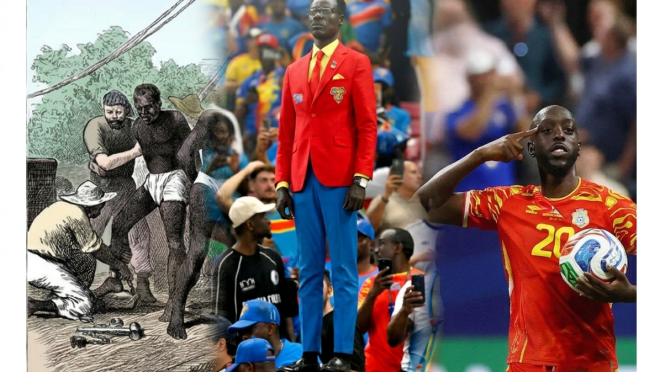
As of today, the statistics tell a story of unprecedented dominance. For the first time in World Cup history, with nine African nations competing, the continent has secured five wins and three draws in its opening fixtures. But to the discerning fan, these “win stats” aren’t just numbers on a scoreboard.
They are the dividends of a 400-year-old debt. To appreciate why the African “fight back” in 2026 is the most beautiful story in sports, we must look at the scars beneath the jerseys: the history of extraction, the rebuilding of “crumbling infrastructure,” and the ultimate message of global peace.
To understand the magnitude of a 2026 African victory, one must recall the 1600s. For centuries, the relationship between Europe and Africa was defined by one-way extraction. First, it was the Atlantic slave trade, which systematically drained the continent of its strongest, most capable youth.
Found any connection yet? Yes, it is the very demographic that today makes the World Cup the pinnacle of human physical achievement.
By the late 19th century, this extraction turned towards resources. In the Congo Free State, under the brutal regime of King Leopold II, the “Red Rubber” trade saw millions of Africans forced into labour to fuel the industrialisation of the West.
While Europe was building its first grand football stadiums and formalising the rules of the game in the late 1800s, African infrastructure was being intentionally dismantled. Colonial powers didn’t build schools or sports academies; they built railways that led only to ports, designed solely to ferry gold, rubber, and minerals out of the continent.
When we see an African team in 2026 playing with state-of-the-art GPS tracking vests and world-class medical support, we often forget that these nations have had to build their sporting “infrastructure” from the literal ruins of colonial extraction. Every win in 2026 is a testament to a continent that refused to remain a “resource colony” for European talent scouts.
The 2026 World Cup is being played under the FIFA theme of “Football Unites the World.” For Africa, this is more than a marketing slogan; it is a lived reality. Many of the nations competing today have emerged from the shadows of internal conflicts that were often the “toxic leftovers” of colonial borders drawn in 1884.
Football has become the most potent tool for peace on the continent. We remember how Didier Drogba once helped halt a civil war in Ivory Coast with a single World Cup qualification. In 2026, we see this spirit intensified. The African teams are playing with a sense of “Ubuntu” (I am because we are).
In a world currently fractured by geopolitical tensions, the sight of African fans, from Cairo to Cape Town, celebrating together in the streets of New York or Toronto offers a blueprint for global harmony. They are showing the world that you can fight back against historical injustice without bitterness, using the “soft power” of sport to demand respect. The “peace” in FIFA 2026 is being driven by the African continent’s ability to forgive the past while outperforming the present.
Another key stat of 2026 is the “Diaspora Factor.” Roughly 40% of the players representing African nations in this World Cup were born or raised in Europe. In the past, these players would have felt pressured or been offered more opportunities to play for France, Spain, or England.
But in 2026, the tide has turned. Players are choosing their ancestral homes in record numbers. This is the ultimate “fight back” against the colonial legacy. It is a symbolic reversal of the 1600s: instead of talent being stolen from Africa, the talent is returning. These players are bringing the “infrastructure” of European training back to their roots, combining it with the cultural pride of their heritage.
When a dual-national player scores for an African side in 2026, he is bridging two worlds and healing a historical rift. He is proof that the “crumbling infrastructure” of the past has been replaced by a bridge of global identity.
The “crumbling infrastructure” that the 1600s to the 1900s left behind has not been fully cleared, but in 2026, the African nations are building a new skyscraper of success on top of it.
As we look at the current win stats, the clean sheets, the last-minute winners, the tactical masterclasses, we see a continent that is no longer asking for a seat at the table. It is building its own table.
FIFA 2026 will be remembered as the “African World Cup” because the spirit of the continent redefined the tournament. It is a story of peace through competition, of rebuilding through resilience, and of a 400-year journey from the rubber plantations to the podium of world football.
So, when you see those African flags waving in the stadiums and on the rooftops of 2026, know that you are seeing more than a game. You are seeing the greatest comeback in human history.