Zobera Rahman Linu: Recognition at last, but challenges remain
In Bangladesh’s sporting history, Zobera Rahman Linu stands as one of the pioneers who helped shape women’s participation and advancement.
Zobera Rahman Linu: Recognition at last, but challenges remain
In Bangladesh’s sporting history, Zobera Rahman Linu stands as one of the pioneers who helped shape women’s participation and advancement.
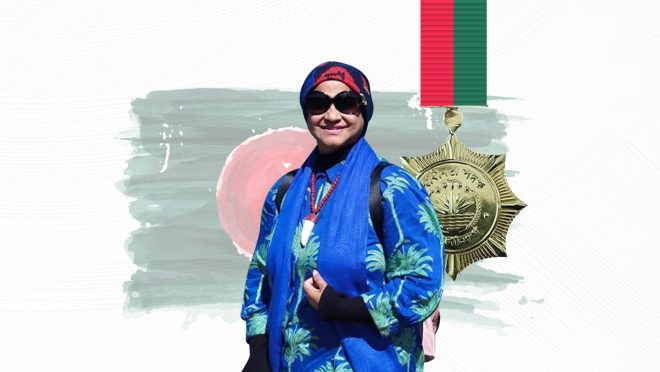
As a table tennis icon of Bangladesh and record holder, she has been recognised for her dedication to the sport with one of the country’s highest civilian honours, the Independence Award.
Among the recipients this year, she is the only sportswoman to receive the award.
For Linu, the recognition was both surprising and deeply meaningful. She said, “I am really thankful to receive this honour. I never really expected that I would receive this award, but inside every person there is always a hope and desire.”
This honour is not only a personal achievement for her but also a recognition of the sports community of women in Bangladesh. Her achievement carries significance for all the women athletes across the country.
In a sporting environment where women often struggle for recognition, such a national honour highlights their contribution. Linu believes that when women athletes receive acknowledgement at this level, it encourages young girls to imagine themselves in the same place.
However, the reality for women athletes in Bangladesh remains challenging. Opportunities are very limited, and the path to a stable career in sports is often uncertain. Families and society already do not view sports as a secure profession for girls.
On top of that, many athletes continue their training while worrying about their education, employment, and financial stability. Linu addressed this reality directly during the interview. “Without proper opportunities, sports can become a passion but not a profession,” she said. These words capture a struggle that many women athletes face. While they may have the talent and the dedication, the lack of long-term support often forces them to step away from the field.
One prominent reason for this difficulty is that, compared to men’s participation in sports, women remain severely underrepresented despite their countless contributions and winnings. Other than that, limited facilities, fewer training opportunities, and social expectations all contribute to this scarcity.
As a result, young girls often lack role models and visible examples of successful female athletes.
Family plays an important role in this situation, especially for women.
Linu recalled her own life story as to how she came across this game, saying, “I was inspired to take up table tennis by my father, who played the biggest role in bringing me into sports. I would not say it was a smooth journey, as I started playing right after the war in 1973. Despite the challenges, I was able to continue because of my family’s support. I learned from my father and sister.”
Unlike Linu, many young girls lack this support and face a much harder path.
Moreover, in a largely patriarchal sporting culture, men’s sports receive greater media coverage, sponsorship, and institutional support. Women athletes frequently perform with far less recognition. Linu pointed out that society needs to change its perspective if it wants to see real progress.
She explained, “Our society is still largely patriarchal. In a Muslim society like ours, when a woman comes forward to play sports and performs well, if we cannot give her the proper respect, then it becomes very unfortunate.”
When women perform in sports, they deserve the same respect and acknowledgement as their male counterparts. During the conversation, Linu repeatedly returned to the issue of economic security and the importance of education. She believed that financial independence is crucial if women are to remain in sports for the long term.
Athletes need opportunities to earn through their performance and receive proper institutional support. She explained, “If someone is worried about basic needs like food, it becomes hard to focus on sports. So opportunities to earn through sports must be created.”
Additionally, strong educational support will create a bridge to success and open up more opportunities for women. According to her, ensuring that athletes can continue their education and secure employment along with their sporting career is equally important.
At the same time, she stressed that responsibility should not fall on the government alone. While state support is necessary, she believes that sports federations, sponsors, and other institutions must also contribute. “The government, federations, and everyone else must work together. It cannot be the responsibility of the government alone,” she said. Through her words, Linu made it clear that recognising women athletes is only the first step.
Linu also pointed out, “Team sports like cricket and football often receive more attention, but individual or indoor sports receive far less sponsorship, while it is significantly easier to support them. Those areas should also be supported by sponsors and federations.” Real progress requires structural support that allows them to continue their careers without sacrificing financial or educational security.
Her Independence Award therefore represents more than a personal milestone.
It serves as a reminder that women have always been part of Bangladesh’s sporting journey. With stronger support systems, their passion for sport may finally have the chance to become a profession.