Beyond the ear: Van Gogh’s struggle, genius, and legacy
Most of us feel a sense of comfort whenever we see the stars in the night sky.
Beyond the ear: Van Gogh’s struggle, genius, and legacy
Most of us feel a sense of comfort whenever we see the stars in the night sky.
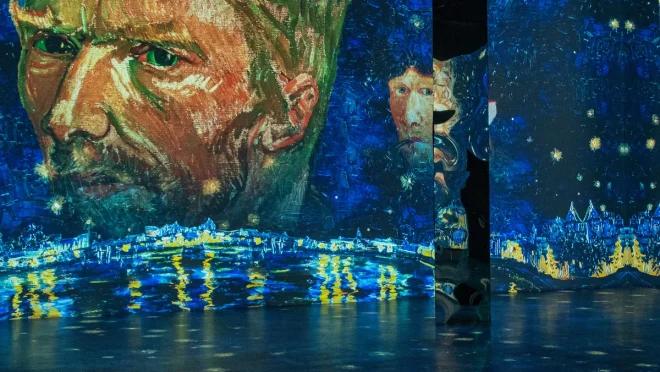
So far, many poets and artists have wrapped their art around this idea only. Which is why we see so many references to the night sky in relation to romance novels, melancholic movies, parts of epic cultures, and whatnot.
Today, we will be reflecting on an artist whose one art piece has consumed culture in a way that is very rare to witness. Such is Starry Night. I’m sure the moment you read this name, a picture of a person comes to mind with a mutilated ear. That is Vincent van Gogh.
On 30 March 1853, the artist Vincent van Gogh was born in the quiet village of Zundert in the southern Netherlands. He came from a modest, devout family. More than a hundred years later, the name Van Gogh stands for artistic brilliance. However, during his life, Van Gogh lived in obscurity, selling only a few paintings before he died. Today, on the anniversary of his birth, Van Gogh is recognised as one of the most important artists in Western art history.
Van Gogh’s journey to becoming an artist was challenging and uncertain. The son of a Protestant clergyman, he initially explored careers in art dealing, teaching, and missionary work. However, he only began to take painting seriously in his late twenties. His early works, like The Potato Eaters (1885), featured dark tones and depicted the struggles of rural life. These pieces showed his empathy for the working class, which became a central theme in his artistic career.
In 1886, Van Gogh moved to Paris, where he encountered the lively scene of modern art. In the city, he discovered the works of Claude Monet and Paul Gauguin, whose focus on light and colour greatly influenced him. Van Gogh’s palette became much brighter under the Impressionists and Post-Impressionists. His paintings began to burst with energy and emotion.
In 1888, Van Gogh relocated to Arles in southern France for both artistic and social reasons. There, he created some of his most famous works, like Sunflowers and The Bedroom. These vibrant yellows and blues not only showcase his artistic talent but also reflect his emotional state.
However, this period in Arles also brought a decline in his mental health. His relationship with Gauguin, who had joined him there, deteriorated. After a heated argument in December 1888, he famously cut off his own ear. This incident has become a symbol of his struggles with mental illness. He later admitted himself to an asylum in Saint-Rémy-de-Provence, where he produced an incredible amount of work.
In 1889, during his time in the asylum, he created his most famous painting, Starry Night. This piece is now regarded as his most iconic work. The swirling stars seem to transcend the physical world and express his emotional turmoil. Today, it represents his struggles with mental health while also capturing the beauty he found in dark times.
Despite creating over 2,000 works, including 860 oil paintings, Van Gogh remained relatively unknown during his life. He received support from his younger brother Theo, who believed in his talent and encouraged him during hard times.
His works have later been treated as a token of influence for expressionists who came after him and have produced remarkable and iconic pieces. Notable figures include Takashi Murakami and Dorothea Lange, who have contributed a lot to impressionist art and have confirmed how their perception of art was shaped after exposure to Van Gogh.
No matter how great someone is, they do have an end. Van Gogh died at a young age, just 37. In July of that year in Auvers-sur-Oise, France, he was involved in a gunshot incident, the details of which are still debated. Two days later, he passed away with Theo by his side. Yet, within a decade of his death, his work began to gain the recognition it deserved. The Paris art scene and others showcased his art, allowing people to appreciate the intensity and originality of his vision.
Van Gogh’s legacy goes beyond his art. In a world that increasingly acknowledges the complexities of mental health, Van Gogh’s story continues. While it would be simplistic to romanticise his suffering, it is impossible to disconnect his struggles from his work.