Corvien: How two A level students are redefining Bangladeshi fragrance
In a market long dominated by imitation, where most local fragrance brands rely on recreating globally popular scents, Corvien is attempting something far more ambitious: originality.
Corvien: How two A level students are redefining Bangladeshi fragrance
In a market long dominated by imitation, where most local fragrance brands rely on recreating globally popular scents, Corvien is attempting something far more ambitious: originality.
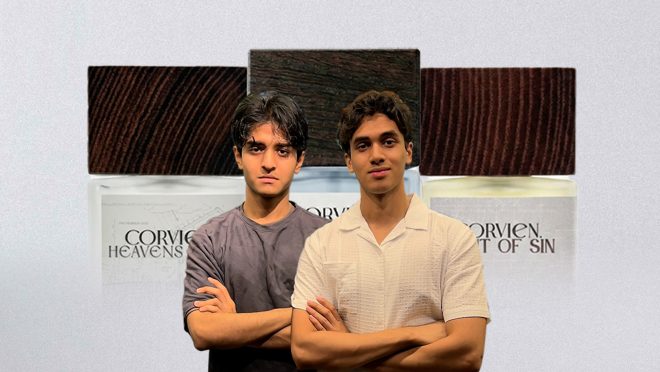
Founded by two A-Level students, Ariful Hossain Ashfi of HURDCO International School and Tahmid Mahid Prodhan of Playpen School, the emerging perfume house positions itself not as a manufacturer of “inspired” fragrances, but as a creator of distinct olfactory identities.
At a time when Bangladesh’s perfume landscape is largely defined by replication, Corvien is staking a bold claim as a niche house, one that prioritises composition over comparison, storytelling over similarity, and creative authorship over adaptation.
Their journey began just over a year ago, yet in that short span, Corvien has moved with a clarity of vision rarely seen even among established brands. Bored and tired of subpar-quality inspired perfumes, they decided to take matters into their own hands. Ariful said, “There is an open market gap that we decided to utilise, because Bangladesh has incredibly high-quality perfume raw materials, but no perfume house to call our own.”
They take inspiration from niche brands like Amouage and Born to Stand Out regarding their marketing and advertising, which is done completely in-house. Furthermore, both Ariful and Tahmid are students of science. With no formal education regarding marketing, they managed to keep their advertisements eye-catching, informative, and with a touch of humour that definitely catches the eye.
Their approach to fragrance is deeply personal and almost autobiographical. When asked about his earliest memory of scent, Ariful does not cite a luxury boutique or a designer bottle, but a stairwell in Italy. “I remember this distinct boujee scent I used to get in the stairways of my apartment,” he says. “I still recognise it anywhere and it takes me back.” That idea of scent as a time machine, something that anchors memory rather than merely decorating the present, sits at the very core of Corvien’s philosophy.
It also explains why the brand resists playing it safe. In a market where familiarity often guarantees sales, Corvien leans into experimentation, even at the cost of narrowing its audience. “The majority of perfume users prefer safe scent profiles,” Ariful admits. “Corvien as a brand doesn’t want to do safe scents only, so we aren’t afraid of getting out of the box and experimenting, even if it means our target audience shrinks.” It is a stance that feels less like a business strategy and more like a manifesto.
That manifesto is grounded not only in artistic intent, but also in an almost scientific rigour. A single Corvien fragrance can involve over 50 ingredients, sourced from as many as a dozen countries, including France, India, and regions across Northern Europe, while still incorporating local elements such as Sylheti oud. The process itself is painstaking. “Our blends are accurate to the thousandth of a gram every single time,” Ariful explains, underscoring the level of precision required to ensure consistency across batches. This is not casual craftsmanship; it is controlled, iterative, and exacting. Their fragrance Saint of Sin, for instance, underwent five separate iterations before reaching a version they felt was ready for production, a reminder that behind every finished bottle lies a quiet history of trial and error.
Yet working from Bangladesh presents its own unique set of challenges, some environmental, others structural. The country’s hot and humid climate is notoriously unforgiving to perfume performance, forcing Corvien to engineer scents that can endure and evolve under such conditions.
At the same time, logistical hurdles such as sourcing raw materials and navigating customs add layers of complexity that many global brands never have to confront. “Sourcing raw materials is by far the hardest part,” Ariful notes. “And dealing with the gruesome process that is BD customs makes it even tougher.”
But within these constraints lies a sense of purpose. For Corvien, being a Bangladeshi perfume house is not just about geography; it is about identity. “My goal is for Corvien to be synonymous with Bangladeshi perfume,” Ariful says. “We as a country have so many resources which we ourselves are not taking the opportunity of.” This ambition, to represent Bangladesh on a global olfactory stage, transforms their work from a small entrepreneurial venture into something more expansive, almost cultural.
Even their creative process reflects this narrative-driven approach. Fragrances are not named arbitrarily; they are imagined as environments inhabited by characters. “I try to imagine the atmosphere where the notes of the scent I’m working on would blend in perfectly,” Ariful explains, “and think of what character would love to be here.” In that sense, each bottle becomes less of a product and more of a story, one that unfolds not on paper, but on skin.
The journey, however, has not been without moments of doubt. Ariful recalls the anxiety of placing their first bulk order for bottles as “a financial and emotional leap into the unknown.” “I had severe doubts in myself if I would truly be able to pull it off,” he admits. The turning point came not with a grand launch or viral success, but with something far quieter: their first dispatched order and a positive review. It was a small validation, but enough to signal that their vision resonated beyond themselves.
Today, Corvien’s audience is gradually expanding, often in unexpected ways. While their core demographic leans towards affluent, fragrance-aware consumers, there have been repeated instances of customers purchasing Corvien perfumes just before leaving Bangladesh, eager to carry a piece of home with them abroad. It is, perhaps, an early sign of the brand’s latent international appeal.
Looking ahead, their ambitions remain both focused and far-reaching: to stay true to their niche identity while eventually stepping onto the global stage. If that vision materialises, Corvien may not just redefine how perfumes are made in Bangladesh, but how Bangladesh itself is perceived in the world of scent.
And if you ask Ariful and Tahmid what Bangladesh would smell like as a fragrance, their answer is characteristically unorthodox: “Shorshe ilish top notes that mellow out to a warm panta bhaat base.” It is playful, unexpected, and deeply rooted in our heritage.
Ultimately, what Corvien is attempting goes beyond selling perfume. It is about reshaping perception of quality, of originality, and of what it means to create from Bangladesh. “You are wearing something made with the resources of your country, feel proud,” Ariful says, describing what he hopes people feel when they wear his fragrances.
Corvien’s current lineup may be concise, but each fragrance feels deliberately sculpted.
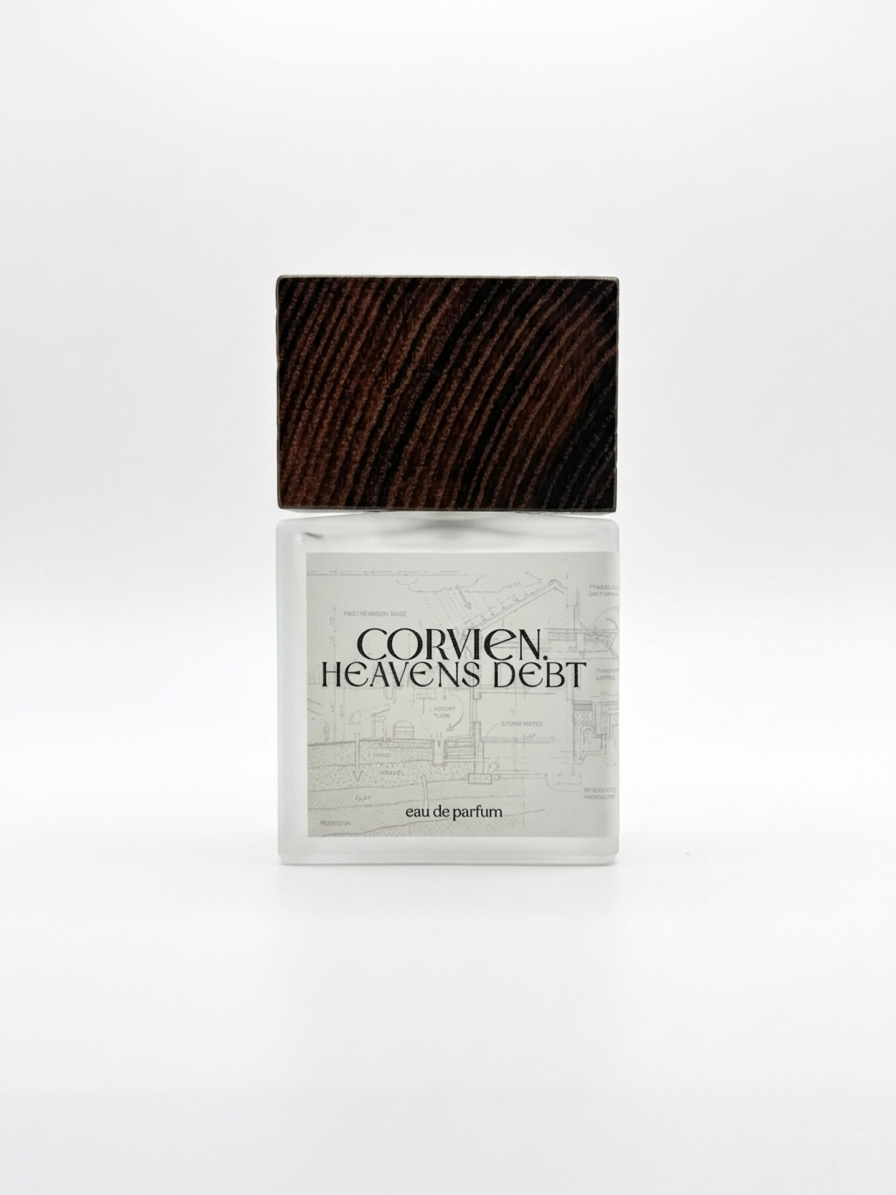
Glass Water is perhaps their most deceptively simple creation. On paper, it reads like a bright, fruit-forward freshie, but the inclusion of a subtle “soapy” accord in the top notes gives it a clean, almost translucent quality, like light reflecting off water rather than sitting on the skin. The transition into jasmine, lily, and magnolia softens the sharpness of the opening, while the base of musk, ambergris, and vanilla adds a quiet warmth that never overwhelms. It feels designed for Bangladesh’s climate: breathable, luminous, and restrained, yet still elegant enough to linger.
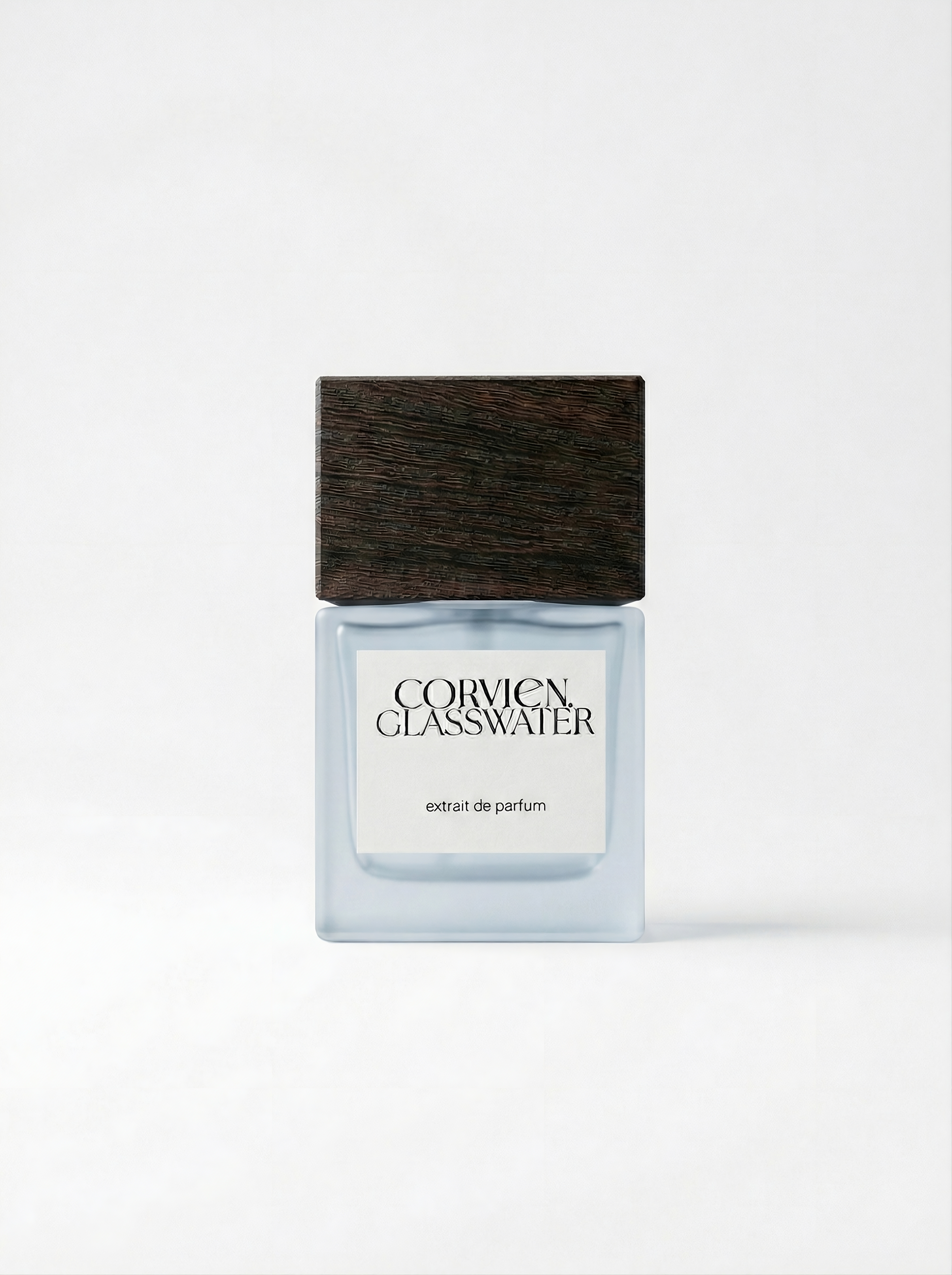
Saint of Sin, by contrast, is unapologetically bold. It opens with a chaotic burst of citrus and mint, with sweet orange and pineapple clashing with icy mint and pink pepper, creating an almost electric first impression. But it is in the heart where the fragrance begins to reveal its character: a dense, almost theatrical mix of spices, leather, saffron, and unexpectedly, gourmand touches like cotton candy and caramel.
This duality, sweetness against darkness, continues into the base, where oud, tobacco, woods, and patchouli create a smoky, masculine depth. It is a fragrance that evolves dramatically over time, reflecting the multiple iterations it took to perfect, and feels closest to the “niche” identity Corvien is striving for.
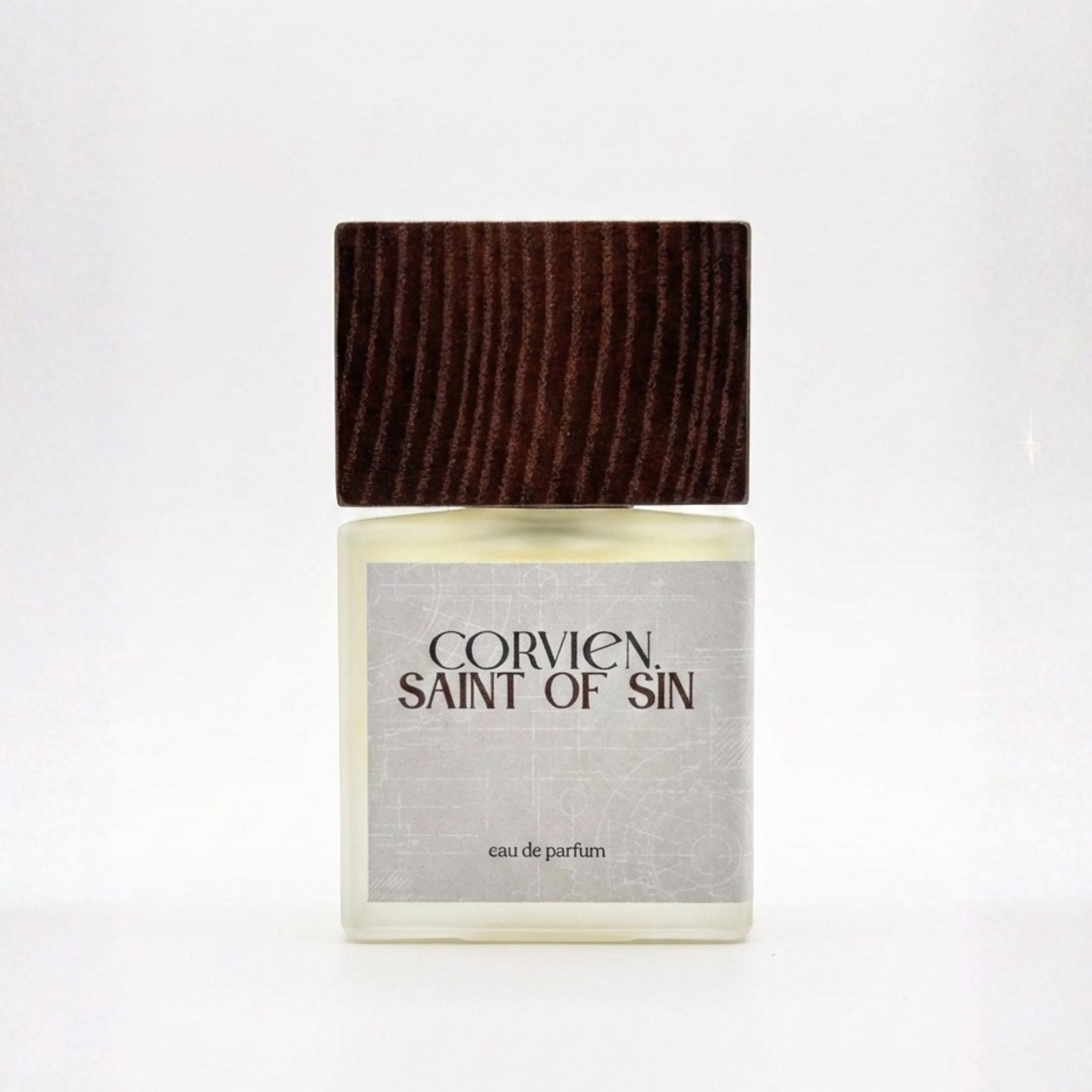
Heaven’s Debt sits somewhere between atmosphere and memory. Its opening is green and aromatic: rosemary, lavender, and peppermint lifted by citrus and subtle fruitiness, giving it a breezy, almost windswept quality. But the defining feature lies in its heart: the accord of wet woods and rain-soaked earth.
It is an unusual, almost poetic inclusion that transforms the fragrance into an environmental experience, evoking the smell of rainfall hitting soil, something deeply familiar in a Bangladeshi context. The base of amber, melon, and clean musk smooths everything out, leaving behind a soft, lingering freshness that feels reflective rather than assertive.
Finally, Sugar Shadow leans fully into gourmand territory, but with a layered sophistication that prevents it from becoming one-dimensional. The opening is playful, bergamot and pink pepper cutting through a sweet blend of strawberry, coconut, and sugar, before melting into a floral heart dominated by jasmine, orange blossom, and rose. What makes it compelling is the base: a rich combination of amber, sandalwood, cashmere woods, patchouli, and tonka bean that anchors the sweetness with depth and texture. The result is a fragrance that feels both youthful and enveloping: sweet, but not fleeting; indulgent, yet grounded.
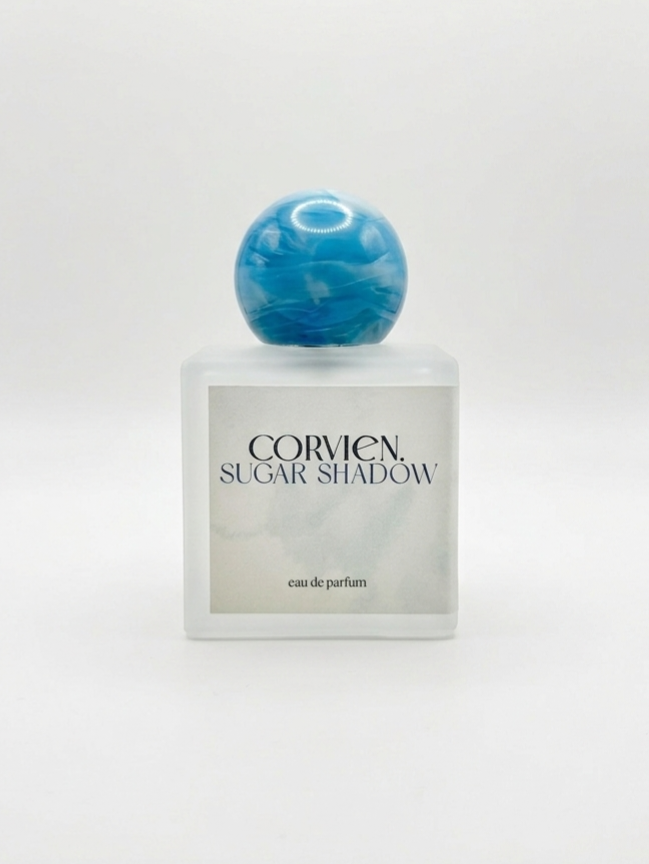
Taken together, these fragrances illustrate Corvien’s refusal to be boxed into a single style. From airy freshness to dense, evolving complexity, and from atmospheric storytelling to gourmand warmth, their portfolio suggests a brand still experimenting, but doing so with intention, control, and a clear sense of identity.
In the end, Corvien does not feel like a finished story; it feels like the beginning of an epic tale. There is a certain rawness to it, an honesty that comes from creators who are still learning, still experimenting, still daring to believe that Bangladesh can have a voice in a space it has long been absent from. And perhaps that is precisely what makes it compelling. Not perfection, but intention. Not imitation, but identity.
If Corvien succeeds—and there are already signs that it will—it will not just be because of well-crafted fragrances, but because it chose, from the very start, to build something of its own. Something that lingers not just on skin, but in memory.