South Georgia: A world untouched
From vast penguin colonies to abandoned whaling stations, South Georgia offers a rare glimpse into a world shaped by isolation, history and survival
South Georgia: A world untouched
From vast penguin colonies to abandoned whaling stations, South Georgia offers a rare glimpse into a world shaped by isolation, history and survival
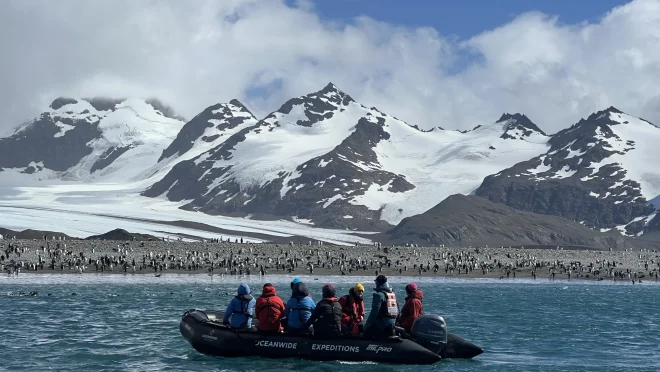
At a time when global travel has made even the most remote destinations easier to reach, there are still places that feel almost untouched by time. South Georgia, a remote island in the Southern Ocean, is one of them. Isolated, dramatic and full of wildlife, it offers an experience far removed from conventional travel.
During a recent Antarctic expedition, I had the opportunity to visit South Georgia, an experience that remains one of the most memorable of my travels. I was accompanied by Bangladeshi travel content creator Salahuddin Sumon.
Among 160 passengers from 21 countries aboard an expedition vessel operated by Oceanwide Expeditions, we were the only two participants from Bangladesh.
Over the years, I have travelled across many countries and landscapes, but South Georgia felt different. The scale of wildlife, combined with its untouched environment and striking scenery, created a sense of awe. At times, it felt as though we were watching a wildlife documentary unfold in real life.
A landscape shaped by isolation
South Georgia lies about 1,400 kilometres east of the Falkland Islands and north of Antarctica. It rises sharply from the South Atlantic Ocean, with snow-covered mountains and glaciers that stretch down to the sea, shaping a rugged coastline.
Its isolation has helped preserve both its natural beauty and ecological importance, and today it is widely regarded as one of the most wildlife-rich islands in the world.
Our expedition took us to several key sites, including Salisbury Plain, St Andrews Bay and Gold Harbour. The sheer scale of life in these places was striking. Vast colonies of king penguins covered the beaches and open land, stretching as far as the eye could see.
The seals were just as remarkable. South Georgia is home to large populations of Antarctic fur seals and southern elephant seals. In some areas, their numbers were so dense that walking required careful navigation. Above us, seabirds constantly circled the coastline, adding to the sense that the island is a thriving and vital ecosystem.
History at the edge of the world
South Georgia’s recorded history dates back to 1675, when it was first sighted by an English merchant sailor. In 1775, British explorer James Cook landed on the island and claimed it for Britain.

Snow-covered peaks rise above the rugged coastline of South Georgia. Photo: Nilay Kumar Biswas
Today, it remains part of a British Overseas Territory administered by the United Kingdom. Despite its remoteness, the island holds both ecological and geopolitical importance, particularly because of its surrounding marine resources.
One of the most significant stops on our journey was Grytviken, a former whaling station that now serves as a historical site. It is also the burial place of Sir Ernest Shackleton, one of the most important figures in Antarctic exploration. Standing at his grave brings a quiet moment of reflection. His 1916 journey, which included a dangerous crossing of South Georgia after the loss of his ship Endurance, remains one of the greatest survival stories in exploration history.
In the early 20th century, South Georgia became a major centre for commercial whaling. Norwegian and British companies established stations along the coast, with Grytviken among the most prominent. At its peak, thousands of whales, including blue, fin and humpback species, were processed each year.
However, intensive hunting led to a severe decline in whale populations. As global attitudes changed and resources diminished, the industry collapsed, and by 1966, commercial whaling had ended. Today, the remains of these stations stand as reminders of that past.

Not easy to reach, but difficult to leave behind. Photo: Nilay Kumar Biswas
Life on the island has always been difficult due to its extreme isolation. Supply ships arrived only occasionally, and those stationed there often spent long periods cut off from the outside world. Accounts from that time speak of the mental strain of such conditions, with workers reportedly watching the same film reels again and again, as new forms of entertainment were rare.
Today, South Georgia has no permanent civilian population. A small number of scientists, government officials and seasonal staff stay temporarily to support research, conservation and carefully managed tourism.
A journey that stays with you
For travellers seeking places that still feel untouched, South Georgia offers something rare. Its dramatic landscapes, dense wildlife and layered history make it unlike most destinations.

Antarctic fur seals rest along the shoreline near the remains of an old whaling-era jetty. Photo: Nilay Kumar Biswas
Even after leaving, the images remain vivid — endless penguin colonies, crowded seal beaches and a landscape shaped by isolation and endurance. It is not easy to reach, and few make the journey, but for those who do, it leaves a lasting impression.