Two weeks in the Amazon studying fantastic beasts
A group from the University of Salford arrives in the Amazon for a 14-day conservation field course, where they conduct hands-on research on bats, birds, and forest ecology across remote camps like Camp 41 and The Coloso
Two weeks in the Amazon studying fantastic beasts
A group from the University of Salford arrives in the Amazon for a 14-day conservation field course, where they conduct hands-on research on bats, birds, and forest ecology across remote camps like Camp 41 and The Coloso
Finally, the day had come — our bags packed, we brimmed with excitement. But the day started sombrely; our flight had been delayed. It was fine, though. It was the day we had all been waiting for the last three months. It could wait a little longer.
Our first stop was Lisbon, Portugal. After the 18-hour transit, we started for Brazil. With my cohorts of the MSc in Wildlife Conservation programme and professors from the University of Salford, we finally reached our destination, the heart of the Amazon, for the 14-day long field course Conservation Field Trip to the Tropics.
We flew over the Atlantic for hours. From the Manaus skyline, I saw the Amazon for the very first time. My heart literally skipped a beat. I could not believe that all those dreams about the Amazon I had as a kid had finally become a reality. We made a smooth landing at Manaus airport, and the humid air gave me a tropical welcome, like a familiar friend.
Our real adventure started on 14 April morning. We started towards Camp 41, a Biological Dynamics of Forest Fragments Project site in the Amazonas state, Brazil. This project explores the effects of habitat fragmentation and the processes of regeneration of forest fragments isolated by human activity.

Jacamars carry similar features to our kingfishers, an example of convergent evolution. Rafia Mahjabin
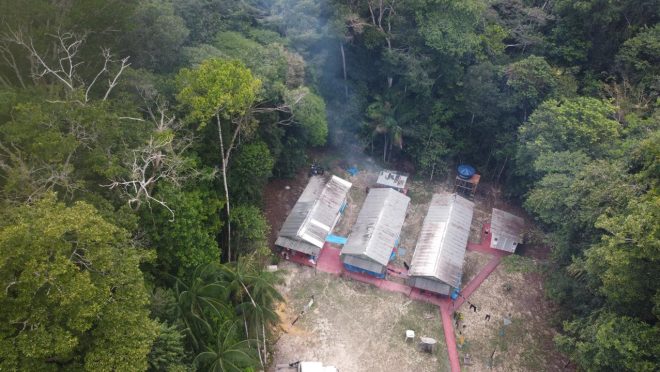
The journey went offroad fast. After a bumpy ride for almost an hour, the cars dropped us on a trail. We hiked for another 20 minutes through dense forest and finally reached camp, our home for the next three nights. We were given hammocks for sleeping but woke up hearing loud calls from a group of howler monkeys at 4am. They were just outside our camp, and their raucous howl scared us a little.
We had a total of 14 students, divided into three groups. On the first morning at Camp 41, our group woke up before 6 and went to set mist nets. We learned how to open and set up the nets from Dr Christoph Meyer, who has been working with tropical bats. We set six nets that would later be used to study bats and birds.
Coming back to the camp, Dr Meyer showed us how to programme the audiomoths for bats and all the other groups of animals. Then on, we took a different trail. We installed two audiomoths in one place to record calls. Studying sonograms and call patterns is a contemporary approach in ecology, still a rarity in Bangladesh.
Before sunset, we went out again to open our mist nets for bats. The first catch of that evening was, however, a little bird. We untangled it carefully and brought it back to camp to our Amazonian bird expert, Dr Mario Cohn-Haft. It was a female crimson topaz, my first hummingbird. We let it go near the net and kept checking our nets every 20 minutes. We caught three bats ultimately. These were leaf-nosed bats from the most common Phyllostomidae bat family in the Amazon.
The following morning, we went for a tree transect with Dr Jean P Boubli, a neotropical primate specialist. On the trail, we looked for three different palm species, Açaí, Bacaba and Bataua, important to primates for food and shelter. Once we found our desired palm tree, we took several measruements. In this survey, we found a harpy eagle’s nest in canopy, with monkey bones scattered on the forest floor. We collected the bones for genetic analysis.
The third day at Camp 41 was the bird day. We set out before sunrise, aiming to catch some birds with Dr Cohn-Haft. We used the same nets we set for bats. We kept checking the nets every 30 minutes.
We found some beautiful birds that day, a white-plumed antbird, a pair of jacamars, a family of gray antwrens, a motmot, and a woodcreeper. Dr Cohn-Haft explained to us in detail how to identify Amazonian bird species.
The last day at Camp 41 came with heavy rainfall, a tropical signature event. We were all packed and waiting for the rain to stop. But the Amazonian downpour had different thoughts. So, we decided to leave for our next destination in the middle of that rain. We hiked back to our cars, soaked in rain and mud while carrying our heavy backpacks.

Photo: Rafia Mahjabin
Finally, we loaded all our belongings and ourselves into the cars and set out. The roads were not easy to follow. Trees fell on the roads everywhere. We had to stop every five minutes to cut down the tree branches with a chainsaw and machetes. Our caring project staff did all the hard work to pave the road. After taking almost the whole day for a 2-hour drive, we finally reached the next camp, The Coloso.
We followed the same Camp 41 routine in The Coloso. We went for bats, birds, and trees each day. But this time, we chose the 10-hectare forest fragment for our study area. The fragment was a little far from our camp. The night we went to catch bats, we had to sit in the middle of the forest for three hours in the dark. Sadly, we got only one bat after getting bitten by bugs of all sorts and kinds.

Tayra camera trapped in our survey, a mustelid and related to yellow-throated martens of Bangladesh. Photo: Rafia Mahjabin
The nighttime forest was buzzing. I recorded one unusual call and Dr Cohn-Haft identified it as the Amazon milk frog. The frog was calling from inside a hollow tree, which amplified and deepened the sound. This species is one of the most trafficked frog species in the pet trade.
We also set some camera traps along the trails in both sites. In this case, I utilized my experience of working in forests of Bangladesh. These rapid camera trapping captured some amazing creatures like tyra (a larger version of marten), brocket deer, armadillo, a group of jacamim birds and some agoutis. There was a jaguar sighting near The Coloso a week before our arrival, so we were hoping to get one in our camera. But luck did not strike our camera traps.
On 24 April, the most exciting part of our trip started. We were to study the Rio Negro, and spend the next two days on a big boat. We packed our bags and got in the cars, even more excited and cheerful. But the moment we started our cars, it started raining. After two minutes of driving, the leading car got stuck in a muddy ditch. It took more than 5 hours for us to get all the cars to the other side, as each car kept getting stuck in that ditch. After this arduous journey, we finally reached our boat. The boat made our mood instantly better.
The next morning, we went on canoe rides through the flooded islands of the Rio Negro. The forests that grow on these islands are called igapo or floodplain forest. They don’t stay underwater the whole year, just for several months, much like our Ratargul swamp forest. Dr Cohn-Haft played birdsongs on his speaker, and several birds replied. It was one of the magical moments of our trip.

Boto from the Boto Sanctuary. Can’t we create a similar tourism mechanism for our threatened Ganges river dolphin? Photo: Rafia Mahjabin
The trip was going splendid. We had to make a presentation based on the data we collected in Camp 41 and The Coloso. It was group work, and we had to choose between trees, birds, and bats as our topic. We chose birds and were working on our presentation in between the activities.
The morning of 26 April came with our last canoe ride. We were trying to find some monkeys since we came to the Amazon but failed to see any. Finally, we found troops of red howler monkeys, squirrel monkeys, and capuchin monkeys. We also saw a nest of hoatzin with a chick, a primitive bird with thumb-like claws in their wings in the hatchling stage.
Our boat took us to the Amazonian pink dolphin, “the boto”, sanctuary. We sat over a platform, and a trained professional called the dolphins. The dolphins played around us, took some fish, and frequently breached the water. It was an amazing experience watching dolphins up close.

White-plumed antbird captured in the mist net for tagging. This species follows ants for food, hence the name. Photo: Rafia Mahjabin
27 April was our last day in the Amazon. We gave our presentation in the morning. Then, we went to see the point, where the black water of the Rio Negro meets with the white water of the Amazon River.
The water from these two rivers never mixes due to their different water properties. The divide goes for several kilometres. That was our last spot for this trip. After that, we came back to the dock and headed straight for the airport.
This has always been my dream to visit the Amazon. It still feels unreal that I made it there and saw everything with my own eyes — not as a passing tourist but as a keen learner of wildlife.
So, if you dream about something, be passionate about it. Only that way can you turn your dreams into reality.