Where hell meets history: International Museum Day at Haw Par Villa
Every year on 18 May, International Museum Day reminds us that museums are not just buildings full of old things.
Where hell meets history: International Museum Day at Haw Par Villa
Every year on 18 May, International Museum Day reminds us that museums are not just buildings full of old things.
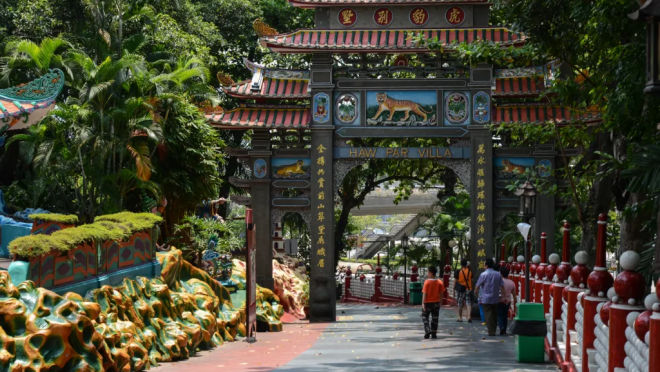
They are places where memory is stored, shaped, and sometimes even challenged. This year’s theme, “Museums Uniting a Divided World”, sounds almost idealistic. But in a strange way, there’s a place in Singapore that already does this in its own unusual style: Haw Par Villa.
It doesn’t feel like a museum in the usual sense. And maybe that’s exactly why it works.
A place you don’t really “ease into”
Haw Par Villa sits quietly along Pasir Panjang Road. At first, you might think you’ve taken a wrong turn. Then you see it. The bright statues, strange figures, a dragon, a tiger, something that looks like mythology and memory collided and stayed frozen there.
It was built in 1937 by Aw Boon Haw, the man behind Tiger Balm. The idea was simple: create a space where stories, moral lessons, and Chinese folklore could be shared with everyone. What came out of that idea, though, is something much harder to define.
It’s not polished. It’s not minimalist. It doesn’t try to be modern. And honestly, that’s part of its charm.
There are over a thousand statues spread across the park, each one acting like a scene from a story you’re expected to somehow already know, or slowly figure out as you walk.
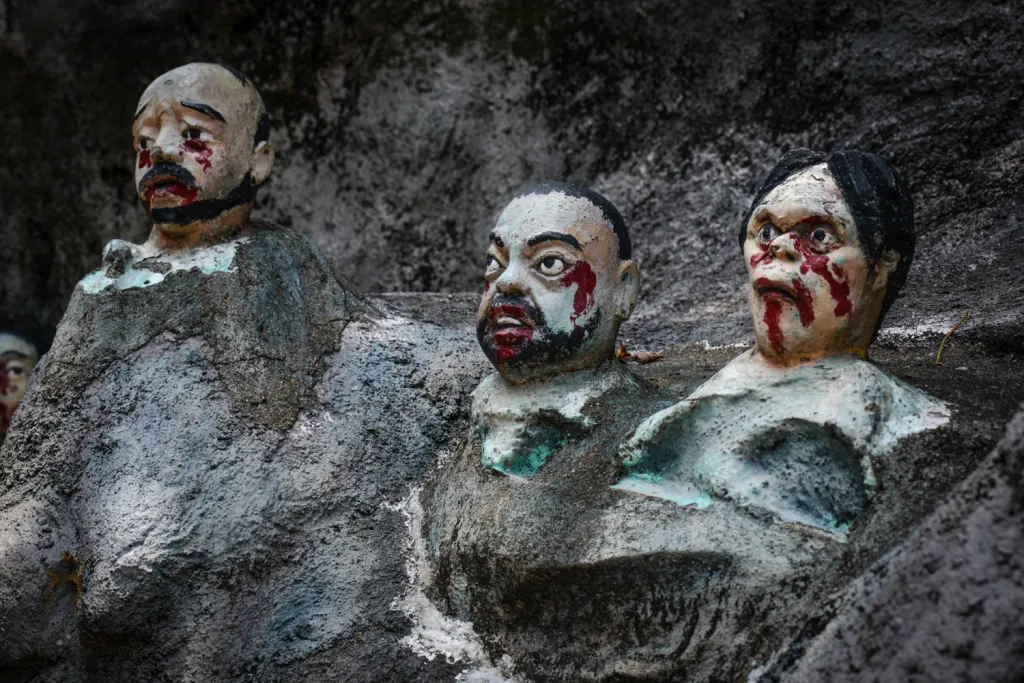
Photo: Graveyard depictions
The part everyone talks about: hell
Most people know Haw Par Villa because of one thing: the Ten Courts of Hell.
It’s exactly what it sounds like. A dramatic, sometimes disturbing interpretation of judgment after death in traditional Chinese beliefs. People are punished depending on what they did in life. Liars suffer. Thieves suffer. Betrayal has consequences that are shown in very physical, very visual ways.
It’s uncomfortable. Even a bit overwhelming.
But strangely, it doesn’t feel like it exists just to scare you. It feels like it was built to make you pause. To make you think, even if you don’t fully believe in what you’re seeing.
And that tension, that mix of disbelief and curiosity, is what stays with you after you leave.
Then came Hell’s Museum
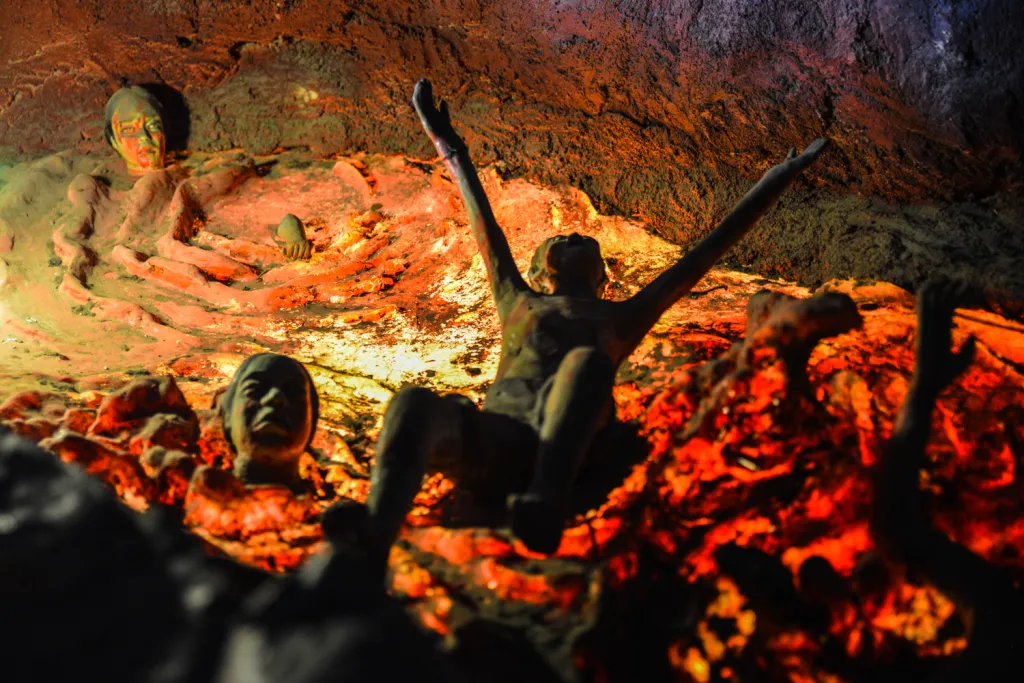
Photo: Depiction of hell
In 2021, something new was added: Hell’s Museum. And that changed the experience completely.
Unlike the outdoor park, this part is quieter, more structured, more reflective. It doesn’t just focus on one belief system. Instead, it brings in ideas from Buddhism, Hinduism, Christianity, Islam, and other traditions to explore one simple question: what happens after we die?
There are no clear answers given. And that’s the point.
Instead, you move through different interpretations, different cultures, different ways humans have tried to deal with something no one can actually prove or escape.
At some point, it stops feeling like a museum about death and starts feeling like a museum about fear, hope, and uncertainty.
Why this matters on Museum Day
International Museum Day is supposed to be about connection, about how museums can bring people together even when they don’t share the same background or beliefs.
Haw Par Villa does that in a very unexpected way.
It doesn’t “translate” culture into something simple or neutral. It puts different ideas side by side and lets you deal with the discomfort yourself. You might not agree with everything you see. You might even find some of it strange or exaggerated. But you still end up thinking about it.
And maybe that’s what matters.
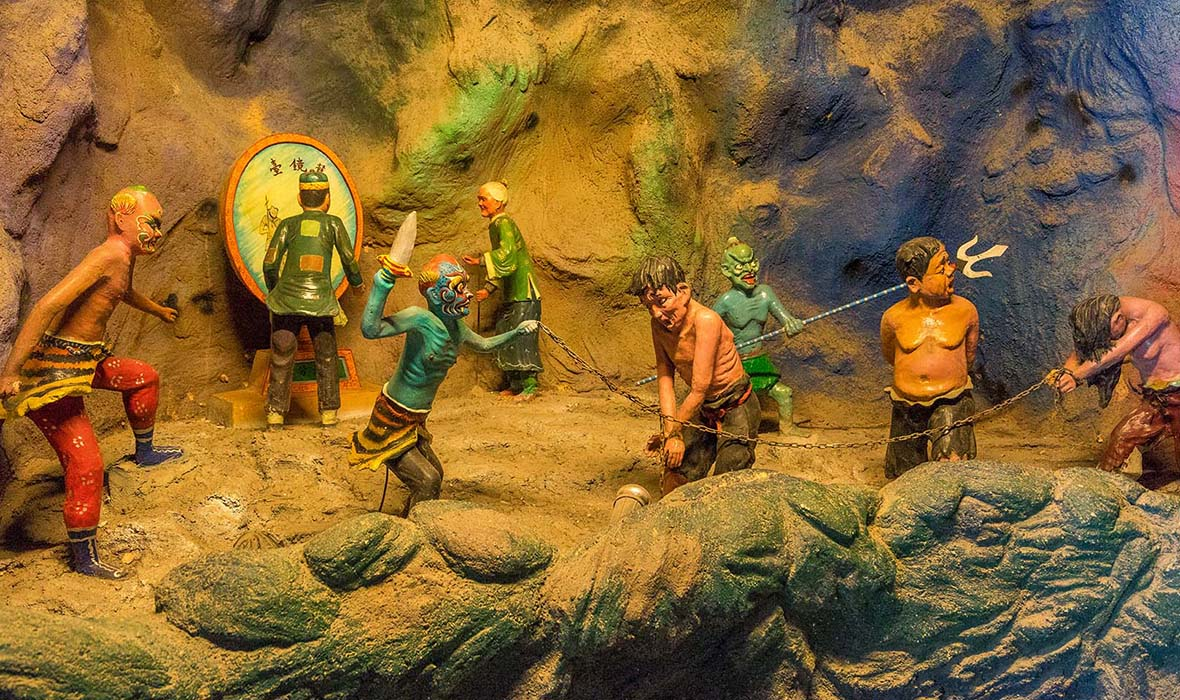
Photo: A scene of sinners being dragged through a tortuous afterlife in the 10 Courts of Hell
Because in a place like Singapore, a mix of cultures, religions, and histories, Haw Par Villa becomes more than just a park. It becomes a reminder that people have always asked the same big questions, just in different languages and stories.
What it feels like to leave
The strange thing about Haw Par Villa is that it doesn’t end when you exit.
You don’t really walk out feeling entertained in the usual sense. You leave with images stuck in your mind. Some vivid, some confusing, some hard to place emotionally.
It’s not a clean experience. It doesn’t wrap everything up neatly for you.
And maybe that’s why it works better than expected.
Because museums aren’t always supposed to be comfortable. Sometimes they’re supposed to stay with you a little longer than you want them to.