Ferrari’s electric debut backfires as critics call it ‘the end of a legend’
Ferrari’s first fully electric vehicle, the Luce, was intended to signal the Italian luxury carmaker’s entry into the electric era and its readiness to compete with fast-growing Chinese EV brands. Instead, the model’s unveiling has sparked a fierce backlash from critics, investors and even politicians.
Ferrari’s electric debut backfires as critics call it ‘the end of a legend’
Ferrari’s first fully electric vehicle, the Luce, was intended to signal the Italian luxury carmaker’s entry into the electric era and its readiness to compete with fast-growing Chinese EV brands. Instead, the model’s unveiling has sparked a fierce backlash from critics, investors and even politicians.
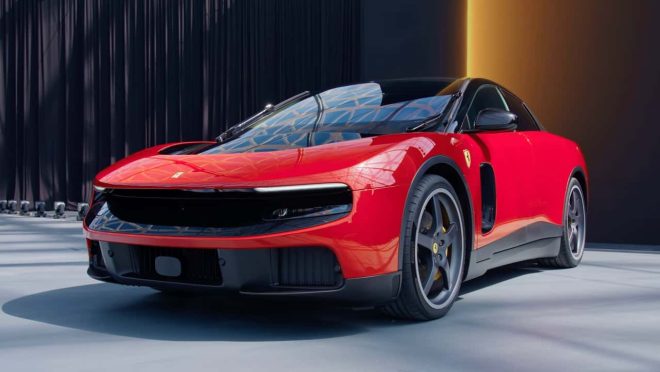
The Luce, Italian for “light”, marks a radical departure for Ferrari, a brand long associated with petrol-powered supercars and roaring engines. Designed in collaboration with former Apple chief designer Jony Ive, the five-seat electric model is unlike anything Ferrari has produced before.
Its debut was treated as a major national event, with Italian President Sergio Mattarella and Pope Leo among those invited to view the car. However, the reaction that followed was far less celebratory.
Ferrari’s shares fell by around eight percent the day after the unveiling, as social media filled with memes mocking the Luce’s design and its $640,000 (£475,625) price tag. Critics have questioned both the car’s appearance and the strategic logic behind it.
Although the Luce boasts supercar-level performance — accelerating from 0 to 60mph in around 2.5 seconds and reaching speeds of more than 190mph — it lacks the low-slung profile and distinctive engine sound traditionally associated with Ferrari.
Former Ferrari chairman Luca Cordero di Montezemolo warned that the Luce risked “the destruction of a legend”, suggesting the car should not even carry the company’s iconic prancing horse badge.
Australia-based luxury car dealer and collector Shaun Baker was more blunt, saying the model had damaged Ferrari’s aspirational image. “Ferrari was the brand everyone dreamed of owning,” he said. “With the Luce, they’ve hurt that image.”
Italian Deputy Prime Minister and Transport Minister Matteo Salvini also joined the criticism, questioning whether the car represented genuine innovation and suggesting it bore little resemblance to Ferrari’s heritage.
While some commentators have praised the Luce as bold and forward-looking, others have compared it unfavourably to far cheaper electric vehicles, including models from China. Ferrari chief executive Benedetto Vigna has rejected those comparisons, insisting the car’s pricing reflects its technology and craftsmanship.
The controversy echoes earlier debates surrounding Ferrari’s first SUV, the Purosangue, which split opinion when it launched in 2022 but went on to sell well and open up a new market for the brand.
Ferrari is not alone in facing resistance over electric ambitions. Jaguar faced a similar backlash in 2024 when it unveiled its radical Type 00 concept as part of plans to become a high-end EV-only brand. Meanwhile, Lamborghini has since scrapped its EV programme altogether, citing weak demand and a continued preference among customers for petrol engines.
The Luce’s launch also comes at a time when global carmakers are under mounting pressure from Chinese manufacturers, which benefit from vast supply chains, lower production costs and aggressive government support. Chinese brands are increasingly moving into the premium EV segment, challenging established names such as Porsche and Tesla with high-performance electric models.
One example is the BYD Yangwang U9, a $250,000 electric supercar capable of reaching 60mph in just over 2.3 seconds — a reminder of the competition Western brands now face.
Analysts suggest Ferrari may be deliberately targeting a different audience with the Luce. Younger buyers, who tend to be more open to electric vehicles, may be less concerned with traditional brand cues. The model could also attract entirely new customers unfamiliar with Ferrari’s legacy.
However, some experts argue the company could have tested the design more thoroughly with loyal customers before launch. Others believe the backlash itself may have been anticipated — or even welcomed — given the scale of attention the Luce has generated.
Ferrari has been asked to respond to the criticism surrounding the Luce.