How information overload is quietly breaking young minds
How information overload is quietly breaking young minds
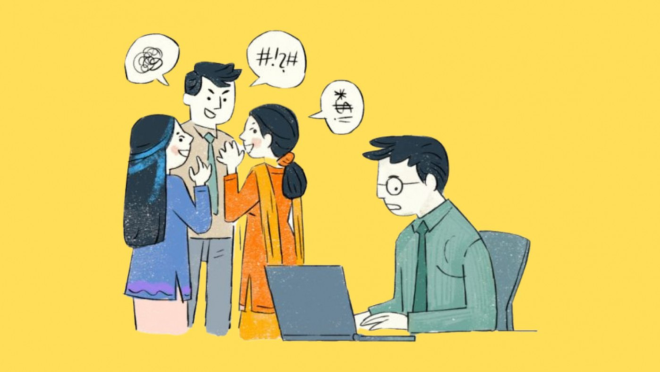
Imagine waking up in the morning and before even getting out of bed, your phone has already shown you forty-three news updates, twelve WhatsApp forwards, and a flood of Facebook posts, half of which contradict the other half.
One portal says one thing happened; another says the opposite. A photo from three years ago is circulating as “breaking news.” You don’t know what to believe. And somewhere in this chaos, a quiet anxiety begins to settle in your chest.
This is not a story from a science fiction novel. This is the daily reality of millions of young people in Bangladesh.
The information flood we did not prepare for
We live in an era where information moves faster than thought. Algorithms on Facebook, YouTube, and news portals are designed not to inform, but to keep you scrolling. They push content that provokes, that shocks, that outrages. The more emotionally intense the post, the more it spreads. False news, as researchers at MIT have found, travels six times faster than true news on social media.
For young Bangladeshis between the ages of 19 and 25, students of law, engineering, journalism, and political science, navigating this landscape has become an exhausting daily struggle. A recent qualitative study conducted among active digital users in urban Bangladesh reveals just how deep this problem runs.
“The Bangladesh news portal about an issue said one thing, and the US media showed something completely different. Fake photos were being distributed,” said one participant. “Inside the algorithm, we see the same news written differently, often exaggerated, one after another. It pulls us away from our daily tasks.”
When news becomes a source of fear
Our study, which brought together six young participants for an in-depth group discussion, found four clear patterns emerging from their experiences: information overload amplified by algorithms, psychological and emotional damage, collapse of trust in media, and desperate attempts at self-regulation.
Participants described how crisis moments, an earthquake, political unrest, exam season, became psychologically unbearable because of the relentless flood of news. “A catastrophe happened the day before my final exam,” one participant recalled. “I could not concentrate. I kept thinking it might happen again.”
During the July revolution, videos of violence spread across Facebook. Young people could not tell what was real and what was fabricated. The result was not just confusion, it was fear. It suppressed their ability to think, protest, and even speak.
Research shows this is not unique to Bangladesh. Studies on the Boston Marathon bombings found that people who repeatedly watched media coverage of the tragedy suffered higher levels of acute stress than those who were physically near the event. The screen, it turns out, can wound as deeply as proximity.
Doom-Scrolling in Dhaka
There is now a name for what many young people do late at night: doom-scrolling, endlessly moving through bad news, feeling worse with each swipe, but unable to stop. It leads to anxiety, emotional exhaustion, difficulty sleeping, reduced concentration, and what researchers call “emotional withdrawal”, a numbness that sets in when the mind simply cannot take any more.
The study found that this overload does not just hurt mental health in abstract ways. It disrupts academic performance, breaks daily routines, and erodes the ability to make decisions. It also corrodes trust; participants reported that they rarely felt safe believing any piece of information at face value, which meant constantly cross-checking, questioning, and verifying. That too is exhausting.
Finding ground in the storm
Yet the young people in this study did not simply give up. They fought back quietly, personally, creatively. They unfollowed political pages. They muted notifications. They created separate online accounts for professional and personal use. They practised digital detox.
“I maintain two YouTube accounts,” said one participant, “one for professional content and one for politics to manage my stress.” These are not just individual solutions. They are signals of a generation learning to protect its own mind in an environment that was never designed with their wellbeing in mind.
What needs to change
The burden cannot be placed on young people alone. Platforms that profit from outrage and misinformation must be held accountable. Media literacy needs to be taught in schools and universities, not as an optional skill but as a survival tool in the digital age. News organisations must choose responsibility over virality.
Bangladesh is digitalising rapidly. But speed without responsibility is dangerous. If we do not address the psychological cost of information overload on our youth today, we risk raising a generation that is informed about everything and well about nothing.
The authors conducted this research as part of an academic study on digital overload and mental health among urban youth in Bangladesh.