He opened the door and had the world thrown in his face. He still found a way to see it
He opened the door and had the world thrown in his face. He still found a way to see it
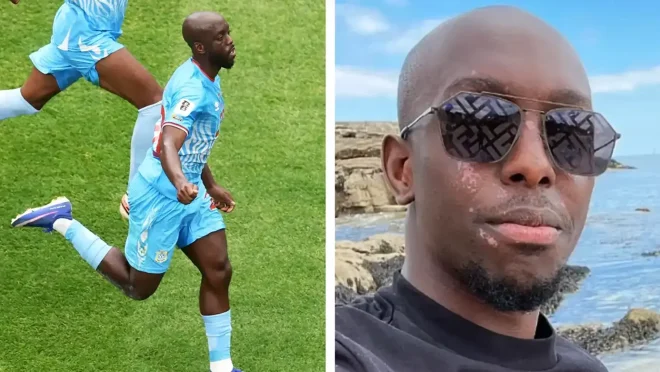
On 17 June 2026, Yoane Wissa scored the first goal in DR Congo’s history at a FIFA World Cup. He had surgery on both eyes to be here.
There is a moment, in the first-half stoppage time of the match between Portugal and DR Congo in Houston, Texas, where a cross floats into the box and a man no one was tracking leaps unmarked and redirects it into the top corner.
The goalkeeper had no chance. Diogo Costa barely moved.
Yoane Wissa wheeled away in celebration, and ninety million Congolese people felt something they had never felt before at a World Cup: the first goal in their nation’s history on football’s biggest stage. The moment lived in the kind of silence that precedes eruption the half-second where a stadium processes what it has just seen. Then it was noise, and it was flags, and it was tears from the DR Congo bench.
What the broadcast did not show, because it could not, is what Wissa sees the world through. He sees it through eyes that were burned with acid. Eyes that, on a July night in 2021, a doctor told him might not recover.
What Happened at the Door
He was still at Lorient. The transfer to Brentford was days away. His wife had just had a baby.
A woman knocked on the door of his flat, someone he had seen before, someone who had come once asking for an autograph. He trusted that. He opened the door.
She threw acid in his face.
He said in court, years later: “I screamed and could not breathe. My wife called the emergency services and they told me to get under the shower to rinse my eyes. At the hospital, they told me my eyes were burned. Someone had to come and rinse them out every hour.”
He had surgery on both eyes. For six months, he could not fully see. The doctors told him he would use eye drops for the rest of his life. The scar remains. He was offered surgery to remove it. He declined.
“This is part of my personal history,” he said.
That is the sentence that stays with you. Not the horror of what happened though the horror is real but the decision, made in its aftermath, to carry it rather than erase it. To look at the mark on his face and call it his own.
The Months That Followed
He missed Brentford’s pre-season. He arrived at a new club in a new country with burned eyes, a body still recovering, and a mind that, by his own account, had changed in ways that football could not fix.
He told the court: “Since then, I have become more reserved. I can no longer tolerate being around people I do not know. I do not show as much love as I used to. When I walk, I instinctively look behind me. At night, I can no longer sleep if I am alone.”
He scored five goals in his first six Brentford appearances. The body keeps the score, and the body also keeps playing.
He became Brentford’s all-time Premier League top scorer. He scored twenty goals in his final season there. Newcastle bought him for fifty million pounds.
Sport does not heal. But sometimes it creates a space where what is broken and what still works can exist together without one cancelling the other.
The Ultimate Comeback
DR Congo had never scored at a World Cup.
They were debutants the second-largest country on the African continent by land area, ninety million people, a nation whose footballers had spent years qualifying for a tournament they had never before reached at this stage. Portugal were the opposition. João Neves had already put them ahead.
Then Arthur Masuaku sent a cross into the box. Wissa, completely unmarked, met it and directed it into the top corner with his head.
Wissa celebrated with a scar he chose not to remove, eyes that a doctor rebuilt, and a body that had been through things a stadium crowd would never know to account for.
He scored the goal anyway.
He was there anyway.