At least Henry VIII was a King
Even after Anne Boleyn’s execution, women still fell for Henry VIII. At least he was a king. Today, girls are getting heartbroken by boys who have failed the same undergraduate course three times, are unemployed and leave saying “ma manbena.”
At least Henry VIII was a King
Even after Anne Boleyn’s execution, women still fell for Henry VIII. At least he was a king. Today, girls are getting heartbroken by boys who have failed the same undergraduate course three times, are unemployed and leave saying “ma manbena.”
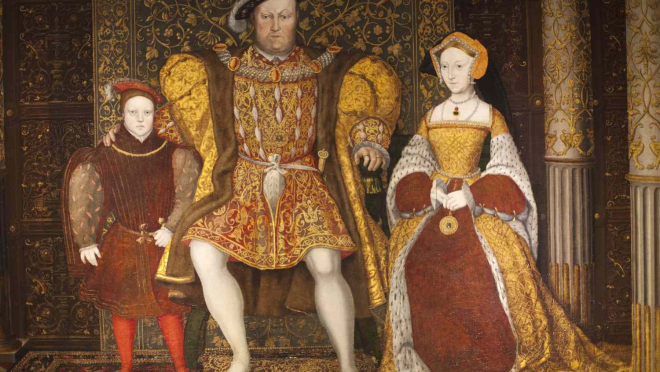
We have so much to learn from history, from wars, treaties and royalty, but have we ever thought that we could also get a lesson about romance from it?
Take Henry VIII, for example.
This man married six times. He divorced wives, annulled marriages, executed two queens and left behind enough relationship drama to keep historians busy for centuries. If the concept of red flags existed back in sixteenth-century England, then Henry would have been the king of it.
Yet women kept marrying him.
Now, before anyone accuses me of defending Henry VIII, let me be absolutely clear. This article is not about defending him. He was a terrible husband, no doubt. It is simply an observation that, compared to the dating situations of today, the standard for us girls had suffered an alarming decline.
Consider Anne Boleyn.
Henry became interested in Anne around 1526. But she refused to become his mistress, which, instead of discouraging him, made him even more determined to pursue her. And pursue her he did. Not for days, not for weeks, not like the boys of this generation who get their ego hurt after a few rejections, but for seven years. Historians have preserved the love letters he wrote to Anne. He was said to have showered her with gifts, attention, promises and public displays of affection and commitment. Not only that, but the man literally altered the political and religious structure of an entire kingdom because he wanted to marry the girl.
Now it is a different story that the man turned out to be a complete tosser, which most of them are!
After Anne, there was also Catherine Howard. By this point, his marital history was widely known. One wife had been divorced, another he found ugly, and his great love, Anne, was executed by himself. Yet Catherine married him, thinking, I am sure, “He will be different with me. He loves me!”
In Catherine’s defence, Henry put in the effort this time too. He completely captivated his young queen with gifts, jewels, expensive clothing and public affection. So much so that even foreign ambassadors were mesmerised by his devotion.
The story, too, ended tragically, with Catherine Howard’s execution in 1542.
Which brings us to one of history’s most fascinating recurring themes: men will be men and women will be women.
The man moved heaven and earth for his “love”, later to no longer have the same feeling for them. The women who married Henry VIII after Anne Boleyn looked at all the evidence and thought, perhaps it will be different with me. Five hundred years later, the situation remains exactly the same. The only difference is that the men have become significantly less impressive and women have lowered the bar far too low.
At least Henry VIII came with a crown and a kingdom.
The guys nowadays cannot even complete their undergraduate degrees, are unemployed, or only have excuses to offer you. Sometimes the excuse is that they were busy, sometimes it can be that things have changed, sometimes it simply is, “I need more time.” Or he will just throw away years of connection by saying, “ma manbena”. They might even shift all the blame to you and say that you ruined it.
And just think, men used to move kingdoms to be with their love.
The comparison is absurd. That is precisely why it is funny.
The point is not that Henry VIII was a good man. He was not. If anything, his story demonstrates that effort and character are not the same thing. A man can move heaven and earth to pursue a woman and still be entirely wrong for her. But if one of history’s most notorious husbands is making modern dating standards look unimpressive, perhaps we need to ask ourselves some questions.
Not about kings. About the standards we set for ourselves.
Perhaps the greatest female tradition in history is believing, against all available evidence, that “he’s different”. The women who married Henry VIII after Anne Boleyn had all the information they needed. The warning signs were not subtle. They were recorded in official documents.
Yet they believed.
Today, women know so much about bare minimum, princess treatment and standards, yet we are turning red flags into character development arcs. We are still mistaking potential for reality and effort for commitment.
So girls, the gist is, if you want to be heartbroken, at least get it broken by a king, not a coward.