How a village girl from Lakshmipur earned her place at Harvard
“I often found myself asking questions about inequality, opportunity, and why people’s lives could be so different depending on where they were born.”
How a village girl from Lakshmipur earned her place at Harvard
“I often found myself asking questions about inequality, opportunity, and why people’s lives could be so different depending on where they were born.”
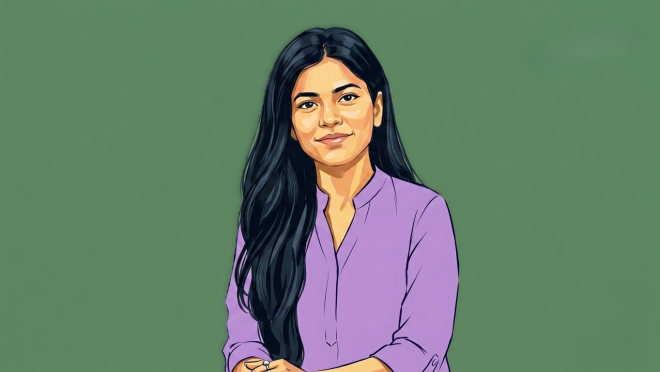
From the quiet landscapes of a remote village in Bangladesh’s Lakshmipur district to the prestigious halls of Harvard University, Afsana Alam Preeti’s story is one of resilience, ambition, and relentless self-development. Recently accepted into a highly competitive Public Policy Fellowship at Harvard Kennedy School, Preeti’s achievement reflects years of academic excellence, professional dedication, and an unwavering commitment to addressing some of society’s most pressing challenges.
Her path to global recognition began with a bold step towards education, first at Holy Cross College in Dhaka and later at the Department of Mass Communication and Journalism at the University of Dhaka. As a student of the 2014-15 session, she immersed herself in diverse perspectives, intellectual discourse, and social realities that would eventually shape her passion for public policy and social impact rather than limiting herself to classroom learning.
To know more about her journey, I talked with her regarding her global path to Harvard.
When I asked her what experiences from her childhood mostly shaped her ambitions and resilience, she said, not only focusing on one factor that influenced her but in many ways.
Her childhood was similar to that of many children growing up in rural Bangladesh.
“I grew up in a small village in Lakshmipur, and for a long time, that was the only world I knew. We did not visit cities very often, so whenever I did, I was amazed by the lights, the roads, and everything that seemed so different from life back home. I remember wondering why some places had so many opportunities and resources while others had so few. At the time, I did not have the language to describe inequality, but I was already asking those questions.”
Witnessing the issues of child marriage and other vices was commonplace.
“I remember feeling helpless because there was nothing I could do to change the situation. My family did not have extraordinary resources or privileges, but they believed in education and gave me the courage to dream beyond the boundaries of what felt possible.”
Growing up, she understood that many opportunities would not simply come to her. She would have to go looking for them. Looking back, she thinks those experiences shaped both her ambitions and resilience.
She chose the Department of Mass Communication and Journalism not because she had a fixed plan for where she wanted to see herself. She was interested in people, their stories, and the issues shaping society around her.
Studying Mass Communication and Journalism at the University of Dhaka gave her a way to explore. While she did not ultimately pursue a career in journalism, the lessons of her undergraduate degree stayed with her.
Today, whether she is conducting research or studying public policy, she approaches issues through the same lens: “how can we better understand people’s lived experiences to create meaningful social change?”
DU did widen her horizon; she expressed that fact to a great extent.
Another defining experience was stepping outside the classroom. She started working during her second semester and became involved in training, workshops, conferences, and internships wherever she could.
Looking back, university was not just about earning a degree. It was the first time she started connecting the questions she had about inequality and opportunity with the real-world systems and policies that influence people’s lives.
She was not thinking five or ten years ahead. She was simply curious and eager to learn. She knew that opportunities and information were not always easily accessible, so whenever she came across a training, workshop, internship, or conference, she wanted to explore it.
However, looking back, many of the opportunities that came later in her career can be traced back to those experiences.
One of the biggest challenges for her was learning how to navigate opportunities without having a clear roadmap. In large public universities, where teacher-student ratios can be quite high, it is not always possible for every student to receive close mentorship or individualised guidance. As a result, Preeti often found herself figuring things out on her own.
There were resources and opportunities available, but understanding how to access them and plan for the next stage of Preeti’s journey was not always straightforward.
“I often wished I had more feedback on my work and a clearer sense of direction, especially during important academic and career decisions.”
Another challenge was balancing multiple responsibilities while constantly thinking about what came next. Whether it was academics, work, applications, or career planning, there was often a sense of uncertainty about the future.
After graduation, she chose to work in research and development, particularly on issues related to gender equity, social justice, and marginalised communities. Preeti was aware that people’s lives could be very different depending on where they were born, whether they were a boy or a girl, or what opportunities they had access to.
When she started working in research and development, she found herself drawn to issues related to gender equity, social justice, and marginalised communities because those were the stories and realities she wanted to understand better.
Research gave her a way to listen, learn, and contribute to conversations about issues that affect people’s everyday lives. She never saw research as just collecting data. For her, it was about understanding people’s experiences and, hopefully, contributing, even in a small way, to more informed and inclusive policies.
“I have always loved learning, asking questions, and trying to understand why certain inequalities persist. Over time, I realised that many of the issues I cared about were deeply connected to policy. Public policy offered a way to not only understand problems but also think critically about solutions and how institutions can better serve communities.”
That realisation eventually led her to pursue graduate studies and later a PhD in Public Policy at the University of Massachusetts Boston, where Preeti could continue exploring the intersection of research, evidence, and policymaking.
Asking beyond the border, the most valuable lessons she learned from working within the American public sector changed the way Preeti viewed government and policymaking. Before that experience, she often thought of policy and politics as something that happened far away from people’s everyday lives. But being at the Massachusetts State House helped her see how much thought, discussion, and responsibility go into even small decisions.
One conversation with a state senator has stayed with her all this time and shaped her the most.
‘One of the greatest gifts people give you is the power to make decisions on their behalf.’
Preeti remembers thinking about how much trust is embedded in that idea. People trust someone to make decisions that affect their lives, and with that comes a responsibility to get it right, or at least to genuinely try to serve the public interest.
More than anything, the experience made her hopeful. It reminded Preeti that change is possible and that public institutions can make a difference when people approach work with integrity, empathy, and a genuine commitment to serving others.
“That is something I continue to carry with me on my own journey in public policy.”
Being accepted into a Rappaport Public Policy Fellowship at Harvard Kennedy School is highly competitive. For Preeti, she almost didn’t apply for it.
The acceptance rate is less than 10%, and many applicants come from institutions such as Harvard, MIT, Boston University, and other highly accomplished professional and academic backgrounds.
At times, Preeti used to question whether she would be competitive enough. But she decided to apply anyway, reminding herself of a lesson she had learned throughout her journey: ‘Do not reject yourself before others have the chance to consider you.’
What excites her most about the fellowship is not simply the Harvard name, but the opportunities that come with it. The programme brings together individuals from different sectors who share a commitment to public service and leadership. It provides mentorship, professional development, and access to conversations with experienced policymakers and leaders.
“One of my mentors is a former Mayor of Boston, and having the opportunity to learn directly from someone with that level of public service experience is invaluable.”
For Preeti, the fellowship is also about community. It offers a lifelong network of people who are passionate about creating positive change, and she is pretty sure that the relationships that are built will last long after the fellowship ends. Whether her future leads further into academia, public service, or both, she wants her work to be meaningful and connected to improving people’s lives.
She always believed that knowledge becomes most meaningful when it is shared. While Preeti’s research and policy interests focus on issues such as gender equity, social inclusion, and opportunity, she is equally passionate about helping others navigate paths that often feel inaccessible.
One area that is especially important to her is supporting first-generation students and young women who may have the talent and ambition but lack access to information, mentorship, or guidance. Throughout her journey, she often had to figure things out through trial and error. She knows how overwhelming it can feel when one does not have a clear roadmap.
That is why Preeti became increasingly involved in mentoring and coaching students who are pursuing higher education and professional opportunities.
“At a broader level, I hope to continue contributing through research, teaching, and policy work that helps create more inclusive opportunities for people and communities that are often overlooked.”
Preeti doesn’t think there exists any perfect formula for students to follow during their undergraduate years to maximise their chances of reaching similar opportunities to those she achieved. She expressed that everyone’s journey will look different. However, she encourages students to stay curious and look for opportunities beyond the classroom, and to attend workshops, training sessions, conferences, and events that genuinely fit one’s interests. Her advice is to seek out internships, volunteer experiences, research opportunities, or projects can help one learn new skills and gain a broader perspective.
Often, the most valuable learning happens outside the classroom.
“I would encourage students not to wait until they feel fully ready. Apply for the opportunity, send the email, ask the question, and introduce yourself to people whose work inspires you. Sometimes we reject ourselves before anyone else has the chance to consider us.”
Most importantly, she advised not to put too much pressure on everything. It is okay if your interests evolve and your plans change. What’s most important is to focus on learning, growing, and taking the next step. Opportunities often emerge in unexpected ways, and the experiences that seem small today may open doors you cannot yet imagine.
I asked her if she could sit down with Preeti’s younger self, the girl who had just arrived in Dhaka from Lakshmipur, what advice she would give her at that stage, knowing everything she knows today.
“I would also tell her to trust herself a little more. There will be moments when she feels out of place, uncertain, or intimidated by opportunities that seem meant for someone else. Apply anyway. Show up anyway. Ask the question anyway.”
Most importantly, Preeti would remind her that it is okay to take things one step at a time and that she does not need to know how the entire journey will unfold. The girl arriving in Dhaka could never have imagined all the places, people, and opportunities that lay ahead. But each experience, each challenge, and each small step would eventually lead somewhere meaningful.
“And perhaps I would simply tell her: keep being curious. It will take you farther than you think,” she concluded.