From scrubbing a space toilet to leading Mars exploration
A work experience placement at the age of 14 saw Claire Parfitt unpack and clean a space toilet. More than two decades later, she is helping shape humanity’s future on Mars.
From scrubbing a space toilet to leading Mars exploration
A work experience placement at the age of 14 saw Claire Parfitt unpack and clean a space toilet. More than two decades later, she is helping shape humanity’s future on Mars.
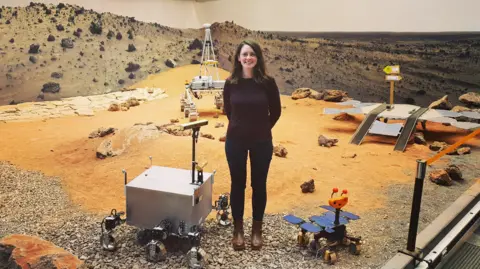
Now 42, the Nottingham-born engineer leads a team at the European Space Agency (ESA) responsible for planning future human and robotic exploration of the Red Planet. She also chairs the International Mars Exploration Working Group, playing a key role in developing long-term strategies for Mars missions.
Parfitt’s journey into the space industry began with a rejection. Her application for work experience at NASA was unsuccessful, but she later secured a placement at Leicester’s National Space Centre, then preparing to open its doors to the public.
Among her memorable tasks was unpacking astronaut Helen Sharman’s spacesuit and helping clean a space toilet destined for exhibition.
“It was just an unusual piece of technology used for space missions,” Parfitt recalled. “It was really interesting to see.”
What may have seemed like ordinary behind-the-scenes work at the time became the spark for an extraordinary career.
Inspired by the people she met, particularly National Space Centre director Alex Hall, Parfitt began to picture a future for herself in the space industry. She credits that early experience, alongside encouragement from her science teachers, with giving her the confidence to pursue her ambitions.
After earning a degree in physics and a PhD in spacecraft power systems engineering, she built a career working on some of Europe’s most ambitious space projects.
Her work includes the ExoMars Rosalind Franklin rover, which is expected to launch in 2028 to search for signs of past life beneath the Martian surface. She has also contributed to the SMILE mission, which studies how Earth’s magnetic environment interacts with the solar wind.
Since joining ESA’s European Space Research and Technology Centre in the Netherlands in 2019, Parfitt has taken on one of the agency’s most significant roles, leading preparations for the next generation of Mars exploration.
She describes Mars as one of the most scientifically important destinations in the Solar System and believes careful planning today will determine the success of future missions.
“We have to plan the next decades carefully to make sure that we preserve Mars and get the best science data that we can back for Europe,” she said.
Looking back, Parfitt believes the National Space Centre played a defining role in her career.
“It put me on the track that I’m on now for my space career,” she said.
Her story is a reminder that even the smallest opportunities, whether unpacking exhibits or cleaning a space toilet, can become the first step towards an extraordinary future.