Remembering Nelson Mandela
We read about him in the English for Today book, often for exams, without actually realising the significance of the man behind the chapter. Nelson Mandela is the anti-apartheid fighter who spent nearly three decades in prison for refusing to accept the world as it was handed to him.
Remembering Nelson Mandela
We read about him in the English for Today book, often for exams, without actually realising the significance of the man behind the chapter. Nelson Mandela is the anti-apartheid fighter who spent nearly three decades in prison for refusing to accept the world as it was handed to him.
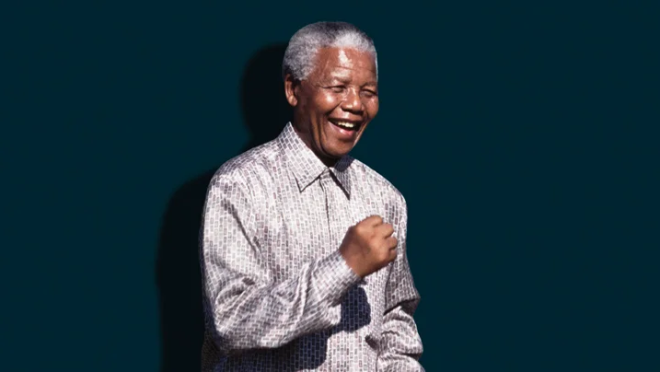
He was born on this day in 1918, in the village of Mvezo in the Eastern Cape. He was given the name Rolihlahla, which translates loosely to “pulling the branch of a tree”, often implying “troublemaker”. At that time, he was just a child who was named a little too accurately.
The name “Nelson” came later. It was given to him by a school teacher on his first day of class to keep up with the English names.
Early Life
At twelve, his father died, and Mandela became a ward of Jongintaba Dalindyebo, the acting regent of the Thembu people, at the Great Place in Mqhekezweni. There, he first heard the elders recount the resistance wars fought by his ancestors against colonial rule. Long before any political meeting or courtroom, a grieving twelve-year-old simply understood his environment and the struggles that built the foundation of the mindset of Mandela that carried him to do wonders.
That’s the part the textbook chapter usually skips. The anti-apartheid fighter didn’t arrive as a fully formed symbol. He arrived as a boy who lost his father and learnt from the environment that surrounded him.
Mandela joined the African National Congress (ANC) in 1944 and helped lead the Youth League to push for more direct action against apartheid. After the Sharpeville massacre in 1960 led the state to ban the ANC outright, he co-founded and led the organisation’s armed wing with the realisation that peaceful resistance alone would not end apartheid. He was arrested in 1962 and, at the Rivonia Trial in 1964, sentenced to life imprisonment.
He spent over 27 years in prison before international pressure forced his release in 1990. He then negotiated the end of white-minority rule with the same government that had imprisoned him, and in 1994 became South Africa’s first democratically elected black president. He served one term, then stepped down, an unusual choice for a leader with his level of popular support.
This is why he is still written about. Not because he said inspiring things, but because he dismantled a system built to keep his own people permanently unequal, went to prison for it, and then, with every reason to rule as a strongman, chose not to.
His words
What follows are not motivational poster quotes. Each one came from a specific moment in a specific year, said or written by a man who had already paid for the right to say it.
“I learned that courage was not the absence of fear, but the triumph over it”. These are not the words of someone reciting borrowed wisdom. They reflect the experience of a man who spent 27 years in prison for his role in the armed struggle against apartheid, South Africa’s brutal, state-enforced system of racial segregation and white-minority rule.
“I have cherished the ideal of a democratic and free society in which all persons live together in harmony and with equal opportunities. It is an ideal which I hope to live for and to achieve. But if needs be, it is an ideal for which I am prepared to die”. He said this from the dock in Pretoria in 1964, facing a real possibility of a death sentence. It reads less like a quote meant to inspire and more like a statement made with full knowledge of what it could cost.
“Education is the most powerful weapon which you can use to change the world”. He said a version of this at Madison Park High School, months after his release, speaking to students dropping out under the weight of poverty. He wasn’t talking in the abstract. He was talking to teenagers about the one thing that had followed him through a prison cell. For him, education wasn’t a slogan. It was the one thing apartheid could never fully take from him.
“As I walked out the door toward the gate that would lead to my freedom, I knew if I didn’t leave my bitterness and hatred behind, I’d still be in prison”. This is the closing image of Long Walk to Freedom, twenty-seven years behind him, cameras waiting on the other side of the gate. Twenty-seven years is long enough to build a justified hatred. He chose, at that door, to walk out without it.
108th
Every year around his birthday, his quotes get recycled on social media graphics, stripped of context. Some of them he never even actually said. They’re inspirational lines that got attached to his name over time because they sounded like something he would say.
The real quotes don’t need embellishing. A boy who lost his father at twelve, learnt from the tales of the elders around him, and spent nearly three decades in prison without becoming the bitter man he had every right to become. That arc doesn’t need a fake quote to be moving. It just needs to be read closely, and correctly, for once. On what would have been his 108th birthday this 18 July, that seems like the more honest tribute: not another graphic with his face on it, but his own words, said in his own time, for what they actually were.