Scientists are developing teeth that can repair themselves
Scientists are developing teeth that can repair themselves
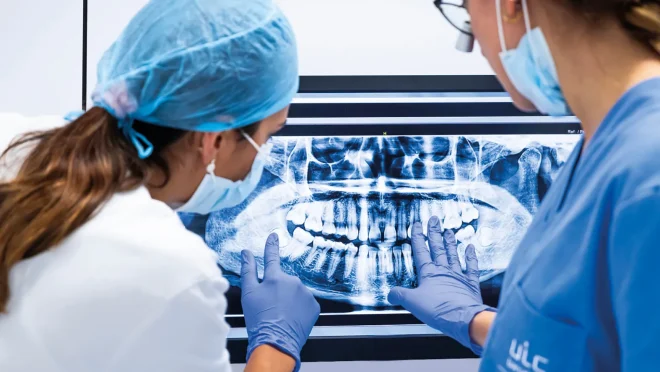
For decades, dentists have relied on fillings, crowns and implants to repair damaged teeth. While these treatments can restore function, they do not allow teeth to heal naturally.
Now, researchers believe regenerative dentistry could transform oral healthcare by enabling teeth to repair themselves or even regrow entirely.
Unlike conventional treatments that simply replace damaged tissue, regenerative dentistry focuses on restoring a tooth’s natural biological function.
“Regenerative dentistry can be a paradigm shift,” says Anne George, professor of oral biology at the University of Illinois Chicago. “It emphasises healing.”
Self-repairing teeth
Tooth decay remains one of the most common dental problems worldwide.
Cavities form when bacteria in dental plaque break down sugars and produce acids that gradually erode tooth enamel. Once the enamel wears away, the softer dentine beneath becomes exposed, allowing decay to spread more quickly.
George and her team are studying the proteins responsible for forming and repairing dentine. Their research could eventually allow damaged teeth to regenerate dentine naturally, reducing or even eliminating the need for traditional fillings.
Researchers at the University of Washington are pursuing a similar goal, but with enamel.
After discovering that enamel-producing cells die once a tooth erupts, scientists successfully used stem cells to create new enamel-producing cells in the laboratory. These cells produced enamel proteins that could one day be used to repair cracked teeth or create “living fillings” capable of restoring damaged enamel.
The long-term ambition is even more ambitious: growing an entirely new tooth inside a patient’s mouth.
Beyond dental implants
When a tooth is too badly damaged to save, dentists usually replace it with a dental implant.
Although highly effective, implants are not perfect. Unlike natural teeth, they contain no nerves, meaning patients cannot sense pressure while chewing. They can also develop bacterial infections around the implant, while artificial crowns often need replacing after around 15 years.
Researchers believe lab-grown teeth could offer a longer-lasting and more natural alternative.
Ana Angelova Volponi, director of regenerative dentistry at King’s College London, is developing tooth organoids—miniature tooth structures grown from living cells—that could eventually replace missing teeth biologically.
“Rather than just trying to patch what has been damaged, we could use a biological replacement,” she says.
Learning from nature
Humans only develop two sets of teeth during their lifetime. Once adult teeth are lost, they do not naturally grow back.
Many animals, however, continually replace their teeth. Sharks constantly regenerate new teeth, while elephants and kangaroos develop multiple sets of molars throughout their lives.
Pigs also possess several developing tooth buds within their jaws, making them valuable for dental research.
Pamela Yelick and her colleagues used human tooth cells alongside enamel-forming pig cells to grow human-like teeth inside miniature pigs. The team grew the cells on specially designed scaffolds that mimicked the environment of a developing tooth, successfully producing tooth-like structures after several months.
The research demonstrates that growing replacement teeth biologically may be possible in the future.
Still years away
Despite the encouraging progress, regenerative dental treatments are unlikely to become available any time soon.
Scientists say extensive testing, including studies in animals and eventually humans, is still required before self-healing fillings or lab-grown teeth can reach dental clinics.
However, researchers believe the work extends beyond dentistry. Understanding how teeth develop and regenerate could help advance regenerative medicine more broadly, including the repair of bones and other organs.
While many scientific and regulatory hurdles remain, experts are optimistic that biological tooth repair could one day replace conventional fillings and implants.
“It’s not very clear, but it’s hopeful,” says Volponi.