NASA finds strongest evidence yet of ancient life on Mars
NASA finds strongest evidence yet of ancient life on Mars
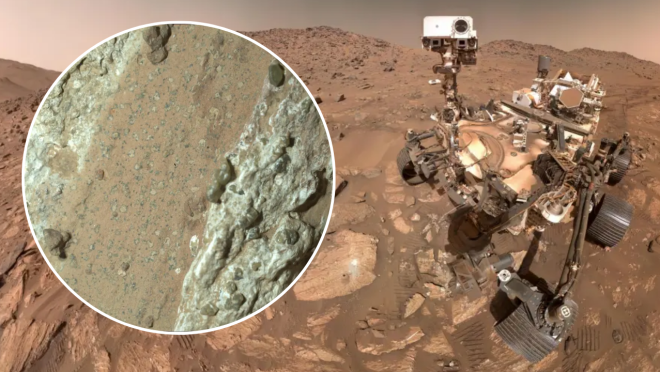
Scientists may have uncovered the strongest evidence yet that ancient microbial life once existed on Mars after analysing a rock collected by NASA’s Perseverance rover.
The findings, published in the journal Nature, centre on a reddish rock known as Cheyava Falls, discovered in Mars’ Jezero Crater in July 2024. Researchers say unusual “leopard spots” and organic compounds within the rock could be signs of biological activity that occurred more than three billion years ago, although they stress that further analysis is needed before drawing any conclusions.
NASA described the discovery as a significant step in the search for life beyond Earth. Acting NASA Administrator Sean Duffy said scientists had spent more than a year reviewing the evidence and had yet to find a convincing alternative explanation for the rock’s unusual features.
The rock was collected from the edge of an ancient river valley that once flowed into Jezero Crater, a location believed to have hosted a lake billions of years ago. Scientists have long considered the crater one of the most promising places to search for signs of past life because it was shaped by flowing water.
Researchers found several features that make the sample particularly intriguing. Alongside the distinctive black “leopard spots”, the rover detected organic compounds, calcium sulfate veins that indicate water once flowed through the rock, and minerals containing iron and phosphate. On Earth, similar combinations can form when microbes interact with their environment, although non-biological chemical reactions can sometimes produce comparable patterns.
The team says the evidence points to a potential biosignature — a feature that may have been created by living organisms — but it falls short of proving life once existed on Mars. Scientists are continuing to investigate whether the rock’s characteristics could instead have been produced by purely geological processes.
Researchers believe the final answer may only come once the sample is returned to Earth, where it can be examined with far more sophisticated laboratory equipment than the rover carries. However, the future of NASA’s Mars Sample Return mission remains uncertain as the agency reviews funding and mission plans.
For now, scientists say Cheyava Falls represents one of the most compelling pieces of evidence yet in humanity’s decades-long search for life beyond our planet—while also serving as a reminder that extraordinary claims require extraordinary evidence.