Can you actually sell the World Cup? Infantino just tried and fail miserably
At the time of writing, Fifa has just backed out of its decision to sell stakes in the World Cup to private equity.
Can you actually sell the World Cup? Infantino just tried and fail miserably
At the time of writing, Fifa has just backed out of its decision to sell stakes in the World Cup to private equity.
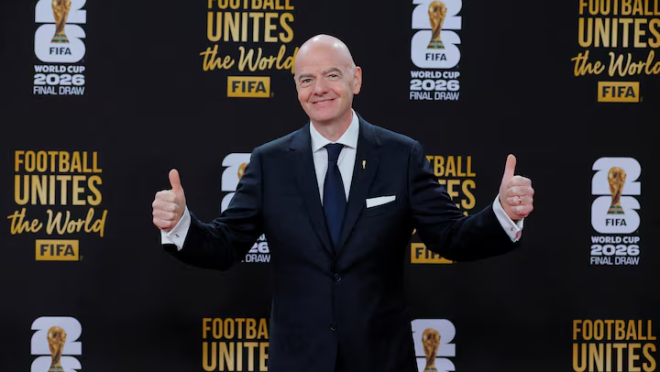
Fifa does not own the World Cup. It administers it. There is a difference, and for a hundred years nobody bothered to test it, because nobody needed to. The tournament was too big to be owned by anyone in particular. It belonged to the idea of football the way a language belongs to the people who speak it. You cannot sell Bangla. You cannot sell a penalty shootout either.
Gianni Infantino has decided to try.
On 28 July, Fifa announced a plan to build a new subsidiary, the Fifa Forward Enterprise, worth twenty billion dollars, twenty percent of which would go to private investors. Bankrolling the deal is Thrive Capital, the firm run by Joshua Kushner, brother of Jared, son-in-law of the American president. The subsidiary would run Fifa’s competitions and commercial rights. The World Cup, the Club World Cup, the tournaments that make grown men in a midlife crisis forget their own names for ninety minutes. All of it folded into a company with shareholders.
To get member federations to say yes, Infantino set a deadline: September 19. Sign on, and your federation gets access to a ten billion dollar funding pool, twenty million dollars each, available from January 2027. Say no, and you get the old arrangement, worth roughly ten million per federation over the same cycle. He called it a singular and unique funding opportunity. Read the letter twice, and it stops sounding like an opportunity and starts sounding like a ransom note with better stationery.
Uefa did not wait to find out which reading was correct. Within days, it called an emergency meeting of all fifty-five member associations and came out the other side with a boycott resolution. No European team plays any Fifa tournament, men’s or women’s, senior or youth, for as long as the proposal is alive. Aleksander Čeferin’s federation did not mince language. This is not Fifa’s to sell, they said. Institutions are judged not by what they accept but by what they refuse.
CONCACAF rejected the plan too, objecting that it was announced before anyone with actual governance authority was consulted. The president of the Asian Football Confederation called it totally unacceptable and said the September deadline left no real room for a decision of this size to be considered properly. Those are three confederations, spanning most of the football-playing world, saying some version of the same thing within a week of the announcement. When Infantino needed consensus, he got the opposite. Something close to a mutiny, dressed up in the polite language of federations.
It is worth sitting with why. Money alone does not explain this. Fifa federations have taken worse deals before and called them ‘partnerships’. What makes this one different is the shape of the offer itself, which asks each federation to make an individual, siloed decision with a price tag attached, rather than allowing the sport’s governing bodies to decide collectively what the World Cup should become. It treats a hundred-year-old institution the way a private equity firm treats a struggling retail chain. Buy the underperforming assets. Offer just enough to the stakeholders who might object. Move fast before anyone can organise a real conversation. The September deadline is not a scheduling detail. It is the entire strategy.
There is also the matter of who is holding the cheque. Thrive Capital’s involvement puts this deal inside a wider pattern that has been building since Infantino began cultivating proximity to Donald Trump, from a Fifa peace prize nobody asked for to a very public intervention in the eligibility of an American forward at this year’s World Cup. None of that proves the investment plan is corrupt. It does mean that when Uefa calls this a governance failure, it is not being paranoid. It is reading the room correctly. A twelve-year ownership stake, sold through a family with this much political gravity attached, is unfathomable.
What happens to a World Cup with no Europe in it is not a hypothetical worth entertaining for long, because it will not happen. Six of the last eight World Cups have gone to European teams. Three of four semi-finalists this year came from Uefa. A tournament that loses that much quality loses its right to call itself the World Cup, and both sides know it. This is why the boycott threat works as leverage even before a single match is cancelled. Fifa needs Europe’s teams far more than Europe’s teams need Fifa’s twenty million dollar signing bonus.
Somewhere in Nyon and Zurich, lawyers are drafting counterproposals nobody outside those rooms will ever read. Somewhere else, a federation with real financial need is quietly weighing twenty million dollars against institutional solidarity, and it would be dishonest to pretend that is an easy choice for everyone. But institutions, like people, are eventually defined by what they were willing to give up rather than accept. Fifa is betting that money moves faster than principle. Sometime around the third week of September, we will find out if it still does.