The little club by the lake that went to Europe
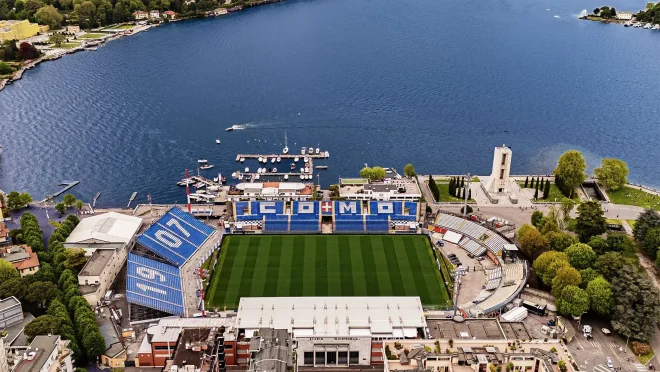
Not long ago, Como was a small club nobody talked about. They played in Italy’s third and fourth divisions, in front of a few thousand fans, in an old stadium built back in 1927. Nobody thought this club would ever matter.
The little club by the lake that went to Europe
Not long ago, Como was a small club nobody talked about. They played in Italy’s third and fourth divisions, in front of a few thousand fans, in an old stadium built back in 1927. Nobody thought this club would ever matter.
Then, in May 2026, something beautiful happened. Como beat Cremonese 4-1 on the very last day of the season. At the same time, Milan lost, and Juventus could only draw.
When the whistle blew, Como had finished fourth in Serie A, their best finish in over a hundred years, and for the first time in their 120-year history, they were going to the Champions League.
This is the story of how a small team by a lake became one of football’s most heartwarming comeback stories. It is a story about a town, a coach, and a young player who was told he wasn’t good enough for one of the biggest clubs in the world.
A club that believed in its roots
Como is a small, beautiful town of about 85,000 people, sitting next to a lake that tourists have always loved. A few years back, only around 1.9 million people visited every year. Now, more than 5.6 million come.
The people running the club noticed something simple but powerful: Como could never be the biggest club in Italy. It didn’t have the money of Juventus or the history of Milan. But it had something that those clubs didn’t have: a beautiful home. So instead of only trying to win trophies, Como decided to sell something bigger: a feeling. A lifestyle. The lake, the boats, the mountains, the food, the community.
They told stories about real people in the town, the way Humans of New York does, not just footballers, but shopkeepers, families, and fans. They opened up lakeside villas for match-day hospitality, threw boat parties before games, and sold tickets ranging from an affordable €20 seat for local fans to a luxury €2,500 experience for visitors. They even built their own lifestyle clothing line, working with brands like Rhude, so that most of what they sold wasn’t football shirts at all; it was jackets, hiking gear, and sailing wear that people wanted to wear just because it looked good. Merchandise revenue jumped from €2.7 million towards a goal of €70 million within three years.
None of this was an accident. It came from a club that decided, quite bravely, that being loved could matter as much as being feared.
Money was never easy
None of this came without pain. When Como were still in Serie B, they earned only around €5 million a year from television money, but they were spending €11 to €15 million just to compete. That is a hard gap to close. Player wages alone ate up more than half the budget.
Everything changed the moment they reached Serie A, where television revenue jumps to somewhere between €40 and €60 million, depending on where a club finishes. Suddenly, dreams that once felt impossible started to feel real. Sponsors who once paid Como less than €1 million now pay over €10 million. The club is still not fully profitable, and it hasn’t always met UEFA’s Financial Fair Play rules, but it has stayed honest with the people who run football, promising to grow the right way instead of cutting corners.
The owners spent far more than anyone expected, hundreds of millions of euros poured into a club they bought for less than €1 million. It was a risky, emotional bet on a small town’s dream.
The coach
Every good story needs someone who changes the way people see what’s possible. For Como, that person was Cesc Fàbregas.
Fàbregas didn’t just come in to win matches safely, the way so many newly promoted teams try to survive in Serie A. He asked his players to attack, to enjoy the ball, to play with courage. People started calling it “Lake Como DNA”, football that was fun to watch, built for a town that wanted to be proud of its team, not just protective of three points.
It worked. Como beat Torino 6-0 in January 2026, their biggest ever win in Serie A. They reached a Coppa Italia semi-final, only the second time in their history. And underneath all of it was a quiet, careful way of choosing players, using data and detailed scouting, almost like the famous “Moneyball” approach in baseball, but always leaving room for Fàbregas’s own eye for talent and heart. One young signing, bought for €12 million, later drew transfer offers of €60 million, proof that Como wasn’t just building a team, it was building value.
But of everything Fàbregas built, nothing mattered more than the trust he placed in one young man that Real Madrid had let go.
The boy Real Madrid gave up on
In 2024, Real Madrid sold a 20-year-old academy midfielder named Nico Paz to Como for around €6 million. He had played only a handful of minutes for Madrid’s first team. To most people, it looked like a small, forgettable transfer.
It became one of the most important signings in the club’s history.
Under Fàbregas, Paz blossomed. By the end of the 2025-26 season, he had scored 12 to 13 goals and set up around six to eight more, from midfield, and was voted the best midfielder in all of Serie A. Fàbregas has spoken about him warmly, saying they grew together, the coach and the boy nobody else wanted.
Paz missed Como’s final match of the season against Cremonese, nursing a small knee injury. He didn’t need to play. His teammates carried the win without him, 4-1, and secured Como’s place in the Champions League anyway, a quiet sign of just how much belief and depth he had helped build into that squad over two seasons. Real Madrid still hold the right to buy him back one day. Como’s president has said, honestly, that Champions League football alone won’t be enough to keep him. That uncertainty hangs over Paz’s future. But for two seasons, he belonged to Como, and Como belonged, at last, to Europe.
More than a football club
What makes this story warm, not just impressive, is what Como did off the pitch. They kept rent low for local businesses. They helped fund hospital and health projects tied to the stadium rebuild. They rebuilt a bedroom for a woman fighting cancer. They helped pay for transport for a community in Ghana. Fan groups grew not just in Como, but around the world.
The club is now trying to become something bigger than itself, building ticketing and e-commerce tools, even a blockchain ticket system with cashback, that it hopes to share with other clubs one day. Its owners talk about a valuation approaching €1 billion, not from trophies, but from believing a small club could think like a global brand without losing its soul.
Como’s rise isn’t really about money, even though money made it possible. It’s about a small town that refused to believe it was too small to dream. It’s about a coach who trusted attacking football in a country built on defending. And it’s about a young player, given up on by one of the biggest clubs on earth, who found a home where people believed in him.
Ten years ago, Como played in front of a few thousand people in Italy’s lower divisions. Next season, they will walk out under the lights of the Champions League. Somewhere between those two moments is a simple, human lesson: sometimes the smallest places, and the people others give up on, are exactly where the best stories begin.