All We Imagine as Light: Imagining a home beyond darkness
There are films that impress us, and there are films that stay in our hearts long after they end. All We Imagine as Light falls in the second category.
All We Imagine as Light: Imagining a home beyond darkness
There are films that impress us, and there are films that stay in our hearts long after they end. All We Imagine as Light falls in the second category.
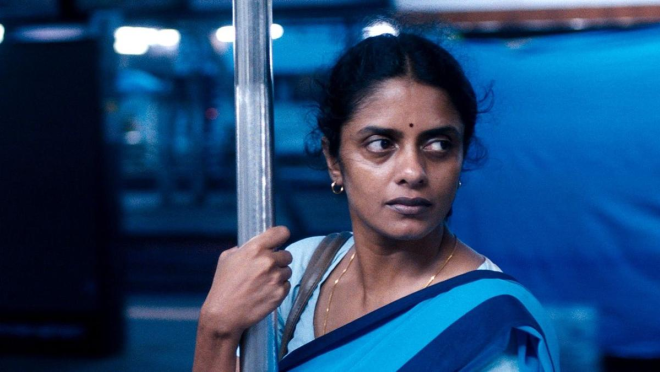
The film does not show dramatic twists or epic tales of love; it is simply a quiet declaration that people often carry dreams even when life seems to have forgotten them. I have a habit of holding myself back a bit when it comes to the theme “home”.
Home in the sense of not just a living place, but a space of love, laughter, hardships, and tears with the people you share companionship with. Payal Kapadia’s 2024 drama film successfully reaches the milestone of defining what “home” means for three women struggling in their daily lives. The film appeared in the main competition of the 77th Cannes Film Festival in 2024, received an eight-minute-long standing ovation, and a Grand Prix in its name.
All We Imagine as Light is a story of three nurses coming from small towns. The backdrop is the busy, hustling Mumbai city where everyone is running in fear of falling behind. Prabha, Anu, and Parvaty have come to the city to make a living.
The movie starts by showing the bustling of Mumbai city from before sunrise, with people speaking in voiceover. Everything is busy here: the cars, the trains, the buses, and the people. Everyone is dealing with something, yet they don’t want this rush; but they can’t leave the city. Through this chaotic, lengthy, documentary-style introduction, the audience becomes a spectator of Prabha’s life. She is the head nurse of a hospital somewhat distant from her female colleagues.
Her decline from the film nights and get-togethers with the other nurses at least speaks to that aspect of her character. She is observant, distant, but helpful to others. A complete opposite character to her roommate and another nurse at the hospital, Anu. Anu is more rebellious; she dreams of a life that would be completely in her control, and free from the shackles of her conservative Hindu family.
Also, she is in love with a Muslim guy, Shiaz. Both Prabha and Anu contradict and reflect each other’s characters. Anu is somewhat flirtatious and a favourite of the gossip-mongers; Prabha is waiting for her husband, who has been in Germany for years and has not even communicated with her ever since their marriage. On the other hand, there is Prabha’s widowed friend Parvaty (the cook), who will soon be evicted from the house she has been living in for years because she doesn’t have the papers to prove that it belongs to her. So, she is in search of a living place where she has to start all over again, all by herself.
Prabha is helping her throughout the process while dealing with her own battles with life. Three different stories, but they are somehow bound together to form a companionship among these women.
Kapadia chooses to tell the story through an obscure, or sometimes blurry texture of shadows on the screen. This is not just a brilliant way of cinematography, but also a paddle of the story that helps to create a visual environment for the audience to understand the underlying complexities of the characters.
Now, the biggest question comes: do they find their homes? Maybe or maybe not, as this writing started with a different type of idea of a “home”. For Prabha, the home will be a place where she will find peace; she will find closure from her estranged husband. For Anu, her home will be a place where she will feel free, or will be able to explore her desire, the different world that she is seeking. And for Parvaty, it will be a place where she can rest after giving her whole life to her husband and son.
The film silently deals with the yearning for freedom, yet looking for a place to sit, to rest, to love, and to make a nest with the power to fly far, just like Anu’s imagination. Kapadia shows us that the characters’ identities may be unknown to us, but their lives are similar to those of many women around the world. And this is probably the reason they feel extremely close, like we are not observing, but living with them. At its heart, All We Imagine as Light is a celebration of female companionship, vulnerabilities, and struggles of getting a place in the men’s world.
The title, perhaps, is the most beautiful metaphor. We seek light in the darkness, and sometimes imagine it before we can truly see it. Just like the three women who are imagining futures that they can not reach yet, or a home that they can not find yet. All possibilities are imagined, but the light beneath them is a way to find home.
As the film comes to an end, it makes us realise that we all imagine light, a ray of hope, while carrying invisible wounds. Even long after its ending, the film leaves the essence of finding home in oneself, or at times in the people who choose to stay with us despite the darkness.