From flavours to addiction: Why vaping is a growing concern for children
Vaping could pose health risks to children and teenagers, with doctors warning that the products should not be treated as a harmless part of growing up.
From flavours to addiction: Why vaping is a growing concern for children
Vaping could pose health risks to children and teenagers, with doctors warning that the products should not be treated as a harmless part of growing up.
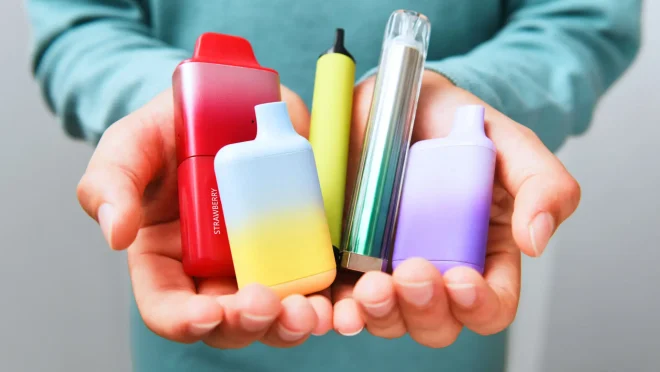
A review of 81 studies by the Royal College of Paediatrics and Child Health (RCPCH) found links between vaping and respiratory problems, nicotine dependence and later cigarette smoking among young people.
The review, published in the journal Archives of Disease in Childhood, also found associations with wheezing and coughing, poor oral and dental health, sleep problems, mental health issues and eye symptoms.
The findings are relevant to Bangladesh, where the use of electronic cigarettes and vaping products among young people has become a growing public health concern.
Bangladesh has banned the production, import, sale and use of e-cigarettes and other heated tobacco products under its tobacco control laws. However, vaping products remain visible in parts of the market, with young people able to encounter them through shops and online platforms.
Public health experts have also raised concerns about the appeal of flavoured vaping products and colourful packaging, which can make nicotine products more attractive to younger users.
Co-author of the RCPCH review, Prof Will Carroll, said the evidence showed “clear links” between vaping, respiratory symptoms, nicotine dependence and subsequent cigarette smoking.
“We must act to make vaping less attractive and accessible to children,” he said.
RCPCH vice-president for policy Dr Mike McKean said vaping was still relatively new and its long-term effects on children and teenagers were not fully understood.
“But a clear and concerning picture is emerging,” he said.
The review also highlighted concerns about exposure during pregnancy, with evidence suggesting vaping may be harmful to babies whose mothers use e-cigarettes while pregnant.
What does this mean for Bangladesh?
For Bangladesh, the findings come as the country continues to strengthen its tobacco-control measures.
The government has taken steps to restrict vaping and other emerging nicotine products, but enforcement remains a key challenge, particularly as products can be promoted and sold through informal markets and digital platforms.
The appeal of vaping among young people is also a concern because many products are available in different flavours and designs, potentially making them appear less harmful than conventional cigarettes.
The review does not suggest that vaping carries the same level of risk as smoking. Some public health organisations have noted that vaping can help adult smokers quit cigarettes. But health experts stress that people who do not smoke, particularly children and teenagers, should not start vaping.
“Vaping is still a relatively new product, and there is much we do not yet know about its long-term impact on children and young people but a clear and concerning picture is emerging,” Dr McKean said.
For Bangladesh, the message is straightforward: keeping children away from nicotine products remains a public health priority, regardless of whether those products come in the form of cigarettes or vapes.