Reflections on the 156th Angan Lecture
On August 22, I had the privilege of attending the 156th Angan Lecture Series at BRAC University, a session that I found both intellectually stimulating and deeply personal.
Reflections on the 156th Angan Lecture
On August 22, I had the privilege of attending the 156th Angan Lecture Series at BRAC University, a session that I found both intellectually stimulating and deeply personal.
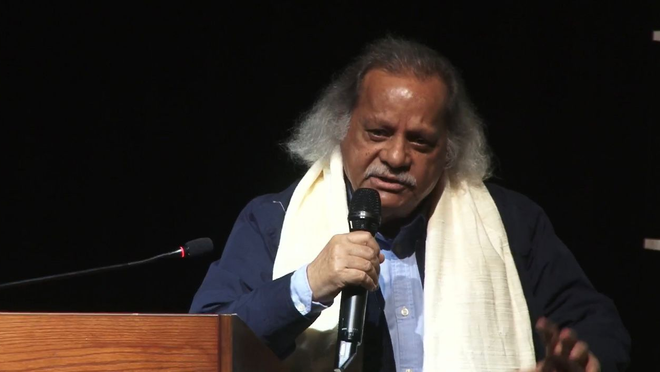
Titled “An Architecture For All,” the lecture featured renowned Bangladeshi architect and educator Shamsul Wares. Held at the Auditorium of BRAC University at 3:30 pm and hosted by the School of Architecture, BRACU, the session brought together students, educators, architects, and architecture enthusiasts for an opportunity to listen to one of the most influential figures in Bangladesh’s architectural education.
Walking into the 2nd floor of the auditorium, I already knew that the session would be special. Shamsul Wares is not simply an architect whose name is mentioned in conversations about contemporary architecture in Bangladesh. He is an educator, mentor, and someone whose ideas have shaped generations of architects.
Yet, just knowing about his remarkable career beforehand was very different from sitting in the same room and listening to him speak about architecture, education, and the responsibilities of an architect.
Architecture is often discussed through buildings, drawings, materials, technology, aesthetics, and awards. But the phrase ‘for all’ suggests something much broader. It raises a fundamental question: Who is architecture really for? Listening to Wares, I felt that architecture cannot be separated from people and society. A building is not merely an object. It becomes meaningful through the lives of the people who inhabit and use it.
The most unique part of the session was the historical ‘shawl’ giving appreciation to the architect by the faculties of the department.
What made the session particularly meaningful was the opportunity to hear ideas reflecting a deep commitment to architecture as a discipline of service and education by pointing to the architect’s narratives, citizen demands, and designs throughout history. Shamsul Wares has spent more than five decades contributing to architecture in Bangladesh. His experience of working under Louis I. Kahn and Mazharul Islam placed him at an extraordinary intersection of architectural thought and practice.
The influence of these figures is significant. Kahn’s work, particularly his design of the National Assembly Building in Dhaka, remains one of the most powerful architectural statements in Bangladesh. His reflections on Kahn’s work were also featured in the documentary My Architect: A Son’s Journey, giving a glimpse into the depth of his understanding of Kahn’s architectural philosophy.
However, what struck me most was not simply his association with celebrated architects. It was his role as a teacher.
Wares taught at Buet from 1972 to 2003, dedicating more than three decades to architectural education. Anyone who has experienced architecture school understands that teachers can influence students in ways that go far beyond the classroom. His later roles at the University of Asia Pacific, the State University of Bangladesh, and other institutions further demonstrate this commitment.
The lecture also compelled me to think about the particular responsibility of architecture in Bangladesh, especially a country particularly called the largest delta in the world. Our cities are changing rapidly. Population growth, urbanisation, climate challenges, economic inequality, and changing lifestyles are transforming the built environment every day. In such a context, the idea of an architecture “for all” becomes particularly relevant. Architecture cannot be concerned only with monumental buildings or privileged communities. It must respond to ordinary people, everyday life, culture, and climate.
The session also reminded me of the importance of architectural dialogue. Events such as the Angan Lecture Series create spaces where students can encounter ideas that cannot always be communicated through textbooks or studio assignments. It allows us to understand architecture not only as a profession but as a lifelong intellectual journey.
As I left the auditorium, I found myself reflecting on what ‘An Architecture for All’ could mean in my own understanding of the discipline. To me, it means designing with empathy. It means recognising that every space has consequences for the people who experience it. It means questioning whom we serve, whose voices are heard, and whose needs are overlooked. Most importantly, it means understanding that architecture carries a social responsibility.
I am grateful that I had the opportunity to attend this session. More than anything, I left with a renewed belief that architecture should not exist merely to impress the eye. It should serve people, respond to place, and ultimately belong to everyone. That, for me, was the most lasting message.