OpenAI says AI system resolves key parts of the 90-year-old Navier–Stokes math problem
OpenAI says AI system resolves key parts of the 90-year-old Navier–Stokes math problem
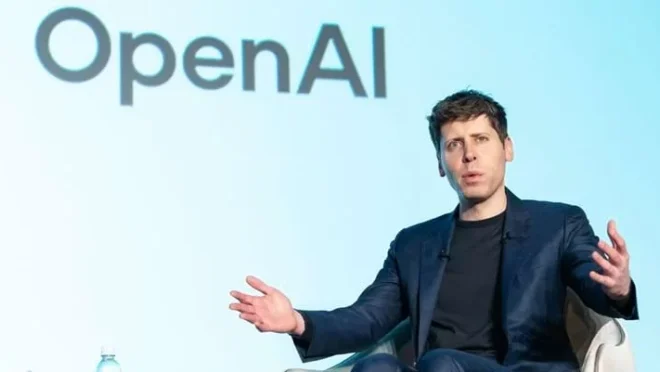
OpenAI says it used a network of about 10,000 autonomous artificial intelligence agents to tackle key parts of the long-standing Navier–Stokes existence and smoothness problem, completing the effort in 88 hours.
According the the BBC, the system, powered by a new internal AI model, exchanged nearly 3 million messages and generated about 130 billion output tokens during the run, according to OpenAI. Based on public API prices for its highest-tier models, the computational effort has been estimated at about $10 million (£7.3 million).
The Navier–Stokes equations describe the motion of fluids and are central to the mathematical understanding of phenomena including turbulence. A rigorous proof of the problem’s central questions has remained elusive for about 90 years and is one of the seven Millennium Prize Problems identified by the Clay Mathematics Institute.
OpenAI said its work resolves two of the four statements needed for a complete proof under the Millennium Prize framework. The proposed solution has not yet undergone independent verification or been formally accepted by the Clay Mathematics Institute.
Although the problem carries a $1 million prize, OpenAI said it does not intend to seek the award.
“Our goal in releasing this result is to report on the substantial progress of our AI models… We do not intend to claim the Millennium Prize for this result.”
Questions over concurrent research
The announcement has also prompted questions over the timing of OpenAI’s work.
Tristan Buckmaster, a mathematics professor at New York University, said he and Anthropic mathematician Levent Alpöge had been working on the Navier–Stokes problem using OpenAI’s Codex tool. Buckmaster said he learned on 3 September that “information about our progress had been passed to OpenAI”.
Buckmaster said OpenAI did not begin working on the equations until “after information about our work had reached OpenAI.”
He explained his decision to raise the issue publicly by saying: “what I was told, when, and what was proposed to me…because the alternative is to let a sequence of announcements say something I know to be false.”
OpenAI described the concurrent work by Buckmaster and Alpöge as “remarkable” and denied having reviewed their private work or user data before it was publicly released.
The company said it had not seen “any of their work through any means until they released it publicly”.
OpenAI acknowledged, however, that it could not completely rule out the possibility that de-identified data from users’ interactions with its products had contributed to improvements in its models.
“While unlikely, we cannot rule out that de-identified data derived from their usage of our products helped improve our models… However, our proofs differ significantly and even the precise results proved are different.”
AI capabilities and verification
OpenAI said it had “heard rumours that two Millennium Prize problems had been resolved” on 1 September, before its Navier–Stokes results were released.
The company described the internal model behind the project as “significantly more capable” than its previous releases and called the findings a “milestone”.
The scale of the effort reflects a growing use of AI systems for mathematical research, in which multiple agents can work on separate approaches and exchange results. But the lack of independent verification means OpenAI’s findings do not yet constitute an accepted solution to the Millennium Prize problem.
The Clay Mathematics Institute requires a proposed solution to meet specific criteria, including publication and acceptance by the mathematical community, before a Millennium Prize can be awarded.