Was Stonehenge a prehistoric computer?
Was Stonehenge a prehistoric computer?
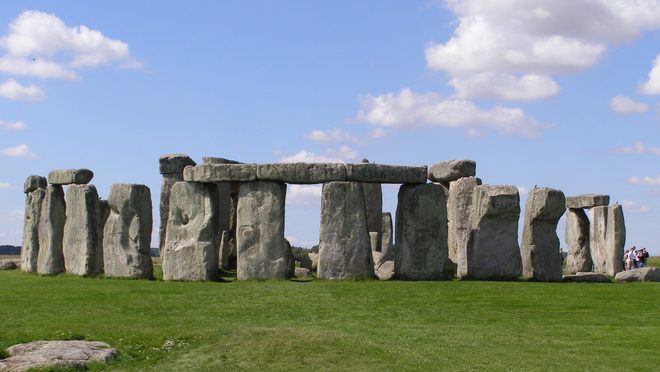
In the 1960s, US astronomy professor Gerald Hawkins proposed a startling theory: Stonehenge was a prehistoric astronomical computer designed to track the Sun and Moon and predict eclipses.
Hawkins developed the theory after visiting the monument in 1961. Using an early IBM computer at the Harvard-Smithsonian Observatory, he plotted the positions of Stonehenge’s stones, holes and mounds to determine what ancient observers would have seen from the site.
His calculations revealed numerous alignments with the rising and setting Sun and Moon. Hawkins argued that the monument’s 56 Aubrey Holes formed a counting system that could have been used to predict eclipses.
“Stonehenge was locked to the Sun and Moon as tightly as the tides,” he told the BBC in 1966.
His 1965 book, Stonehenge Decoded, became highly influential and helped establish the idea of Stonehenge as both an astronomical observatory and a religious site.
But the theory was not universally accepted. Critics questioned whether all 56 holes were deliberately constructed, noting that some may have been caused by trees. Archaeologist Richard Atkinson acknowledged Stonehenge’s astronomical significance but warned that its exact purpose required “scholarly caution”.
Hawkins’ theory remains one of the most famous attempts to explain how prehistoric people may have used Stonehenge to understand the skies.