As Above, So Below: A descent into Hell I never get tired of
As an avid fan of horror movies, As Above, So Below holds a special place in my heart. It is widely considered to be one of the best found-footage horror films of the last decade. And it is rightfully said so.
As Above, So Below: A descent into Hell I never get tired of
As an avid fan of horror movies, As Above, So Below holds a special place in my heart. It is widely considered to be one of the best found-footage horror films of the last decade. And it is rightfully said so.
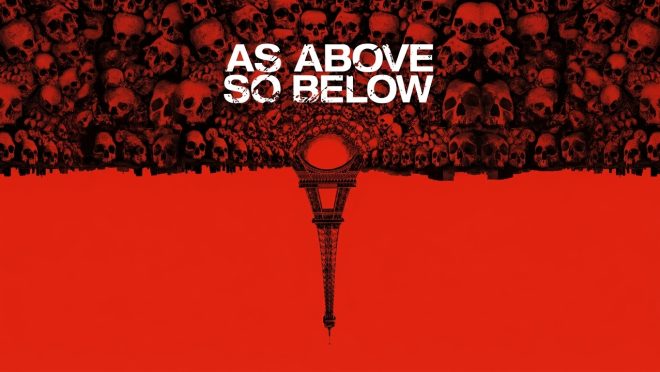
I wish I could erase my memory and watch it again for the first time because it really is that iconic. Let this review be the reason you boot up your favourite third-party movie site and watch this with the lights turned off.
The movie begins with an archeologist called Scarlett looking for the fabled Rose Key, a crucial component to find Nicholas Flamel’s “Philosopher’s Stone”, a stone that can turn any object to gold and grant immortality. The movie begins with her going to Iran to find the Rose Key which she finds in a soon to be condemned cave. The tone of the movie is set early as Scarlett scans the Rose Key while the demolition team is announcing the cave is to be blown up. As she runs for her life she has a vision of a man hanging, who turns out to be someone close from her past.
The Rose Key helped her decode the message written on Flamel’s tombstone, with the help of her translator friend George and the documentary camera-man Benji. Scarlett and George seem to have a peculiar relationship. George was unwilling to help her but his curiosity got the best of him, causing him to translate the tombstone leading them to the Paris Catacombs to look for the stone. After hitting a dead end at one of the tunnels, a local stranger points them toward an underground club to track down Papillon, an experienced cataphile. The group head straight to the club, convincing Papillon, along with his girlfriend Souxie and close companion Zed, to guide their harrowing descent into the catacombs.
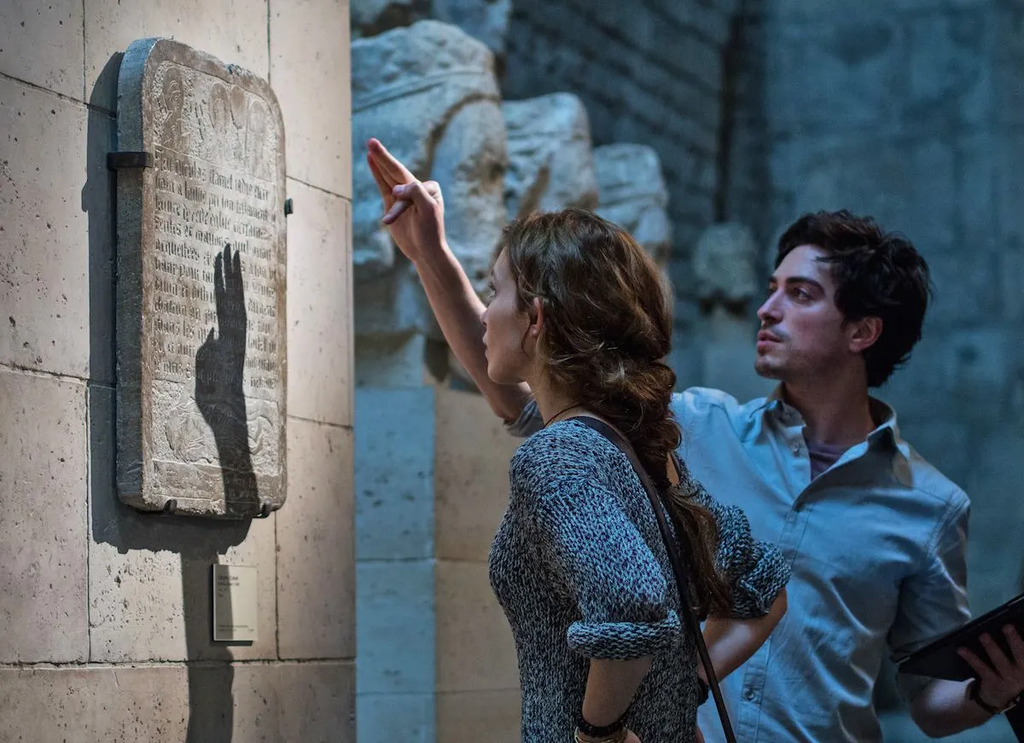
From here, the descent into the catacombs becomes less of an adventure and more of a slow march into hell. Papillon leads them through a narrow entrance hidden beneath the streets of Paris, where the walls are lined with the bones of millions of people. At first, the group treats the whole thing like an exciting expedition. They joke, film themselves and marvel at the sheer scale of the underground tunnels. But the deeper they go, the more the atmosphere begins to change.
The tunnels become increasingly claustrophobic, and soon the group finds themselves standing in places that seem impossible to explain. Ancient symbols appear on the walls. Objects that should not be there begin turning up. Their route starts becoming harder to retrace, as if the catacombs themselves are shifting around them. What begins as a search for the Philosopher’s Stone slowly starts feeling like something, or someone, is leading them further underground.
The team finally finds the Philosopher’s Stone in a room filled with treasure and lamps that seem to be burning for hundreds of years. Scarlett takes the stone while her team triggers a booby trap that causes the ceiling to fall and injure Souxie. Scarlett heals her using the stone, showing its prowess. But the group realised that the entrance they came through was gone. The group realise that the only way out was to go further in the catacombs.
At this point, the explorers are no longer simply exploring the catacombs. They are, quite literally, descending into Hell.
One of the most disturbing moments comes when the group is forced to crawl through an impossibly narrow passage. There is barely enough room for them to move, with darkness pressing in from every direction. And then they see the words carved into the stone: “Abandon all hope ye who enter here.”
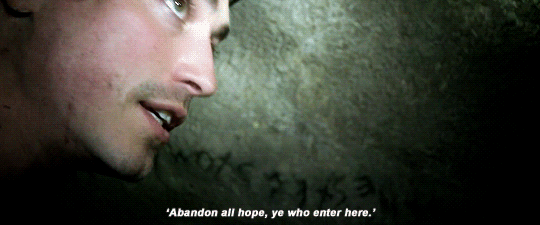
It is a chilling reference to Dante’s Inferno, where those words are written above the gates of Hell.
After getting through the tunnel they realise somehow they have gotten much deeper into the catacombs, more than it was scientifically possible. There, they realize they are in a much creepier inverted mockery of the catacombs that seem to go deeper into the earth.
From there, the movie really starts to feel like a descent through the circles of Hell. The further they go, the less the catacombs resemble anything that could exist beneath Paris. They are essentially walking through an inverted version of the world above, where every familiar thing has been twisted into something sinister.
And this is where the movie’s title becomes more than just a cool name.
As above, so below. Everything above has a reflection beneath them, but the reflection is corrupted. The catacombs become a physical manifestation of the characters’ fears, guilt and sins. They are not simply travelling deeper underground; they are being forced deeper into themselves.
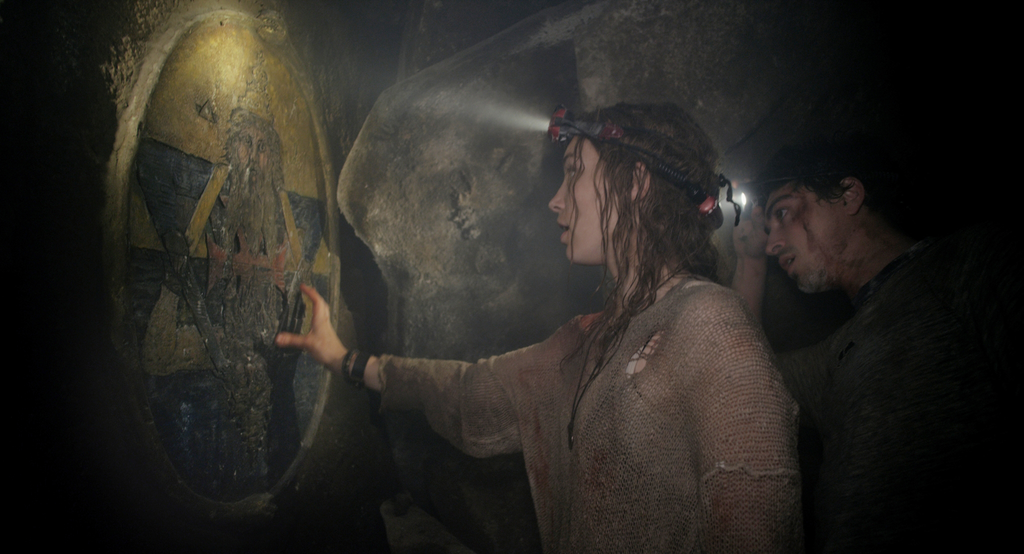
The group soon encounters things that should be impossible. They stumble upon a car sitting in the tunnels, despite being hundreds of metres beneath the streets. They encounter strange figures, mysterious rooms and horrifying visions that seem to know things about them that no stranger could possibly know. The deeper they go, the more their personal histories begin catching up with them.
Papillon, who seemed so confident when they first entered the catacombs, begins to lose control. The same man who confidently guided them through the underground passages is now terrified of what lies ahead. And when the group encounters a group of mysterious people performing some kind of ritual, the expedition descends into complete chaos.
But the real horror is not what they encounter. It is what the catacombs make them confront.
Each member of the group is forced to face something from their past. Scarlett, in particular, realises the hanging man was her father all along who committed suicide. George, meanwhile, is confronted by his own buried trauma of losing his brother and being unable to save him. The catacombs seem to know exactly where to hurt them. It is almost as if Hell has been waiting for them.
And the film does something incredibly clever here. Instead of giving us a conventional monster, it makes guilt itself the monster. There is no single creature chasing them through the tunnels. The place simply takes whatever each person fears most and puts it directly in front of them.
The deeper they descend, the more it becomes clear that they are not searching for the Philosopher’s Stone or treasure anymore. They are searching for a way out.
And that becomes increasingly difficult because the catacombs no longer seem to obey the laws of the world above. Tunnels lead to places they should not. Paths loop back on themselves. Rooms appear where there should only be solid rock. The group has gone far beyond what should be physically possible, and yet they keep descending.
At one point, the group finds themselves surrounded by burning figures and what appears to be an underground river of blood. The imagery becomes almost unmistakably hellish. It is no longer subtle. The movie is telling you exactly where these people are. They have gone to Hell, and somehow, they are still alive.
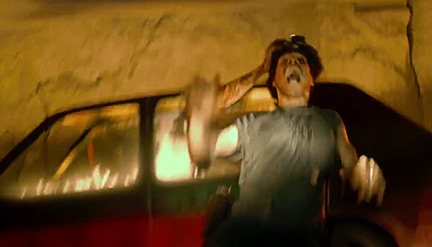
The final stretch of the film is where everything comes together. Scarlett finally understands that the Philosopher’s Stone was never simply about turning metal into gold or achieving immortality. Its real power is connected to something much more personal, redemption.
To escape, they must confront the things that brought them there in the first place.
And that is why the ending works so well for me. Beneath all the supernatural horror, As Above, So Below is ultimately a story about people being forced to confront the parts of themselves they desperately want to bury.
The catacombs are just the perfect place to do it.
Because what better place to confront your darkest secrets than a city of the dead, buried beneath the city of the living? And when the movie finally brings you back to the surface, you are left with one uncomfortable question:
Did they actually escape Hell, or did Hell simply decide they had suffered enough?