As AI gets smarter, schools must stop teenagers from getting dumber
As AI gets smarter, schools must stop teenagers from getting dumber
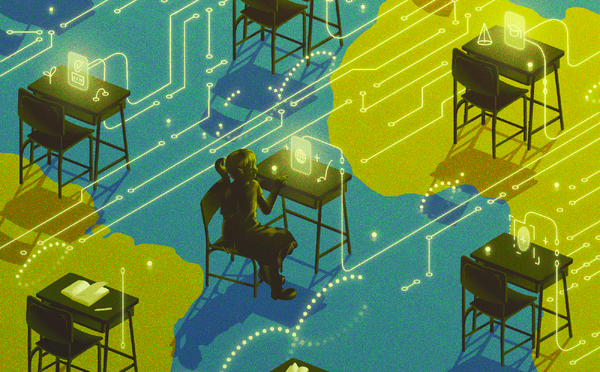
Schools across wealthy countries are facing a deepening crisis, with teenagers performing worse in reading, mathematics and science than at almost any point since the OECD began its PISA assessments in 2000.
The latest results, released on 8 September, show that scores have fallen to their lowest levels yet. Although the Covid-19 pandemic severely disrupted education and contributed to an initial decline, the deterioration has continued even after schools returned to normal. In 35 wealthy countries participating in the tests, a typical 15-year-old now has reading skills comparable to those of a 14-year-old a decade ago, reports The Economist.
Test scores cannot capture everything that matters about a child’s development, but they are closely associated with important outcomes. Students who perform well academically tend to earn more, live longer and healthier lives and are less likely to engage in crime. Even a modest improvement in PISA performance could have a significant impact on economic growth in wealthy countries.
The rise of artificial intelligence might appear to make declining academic abilities less concerning. If machines can increasingly perform difficult intellectual tasks, some may argue that young people no longer need to develop those skills themselves.
But that would be a mistake. AI is likely to make intellectual flexibility more important, not less. As technology transforms workplaces and societies, people will need to adapt quickly, assess information and make sound judgements. Schools therefore have an even greater responsibility to develop literacy, numeracy and the ability to think independently.
Screens and falling attention
PISA scores began to decline around 2012, around the time smartphones, tablets and other digital devices became increasingly embedded in young people’s lives. Growing evidence suggests that excessive screen use can distract students from schoolwork and reduce time spent on activities such as reading, which helps develop concentration.
Restrictions on mobile phones in schools may therefore be justified. Around half of countries now impose some form of ban, while technology can still be useful when deployed carefully. The problem, The Economist argues, is that new devices are too often introduced without sufficient evidence that they improve learning.
Technology, however, may not be the biggest problem. The education system itself has also developed practices that weaken academic standards. Critics of testing have questioned the value of grades, while concerns over students’ mental health have sometimes been accompanied by lower expectations. Some practices introduced during the pandemic have also persisted, including increased absenteeism and softer grading.
More money is not necessarily the answer
Simply increasing education spending is unlikely to solve the problem. Japan, for example, spends substantially less per pupil than the United States while achieving considerably stronger results.
What is needed is better evidence about what actually works in classrooms. Teaching remains surprisingly resistant to rigorous research into effective methods, while some university education departments have become more focused on abstract debates than on improving measurable learning outcomes.
Countries that have resisted the decline offer useful lessons. Britain has moved from being outside the top 30 in mathematics and reading in 2009 to placing among the top 10. The improvement in England has partly been linked to policies that emphasised demanding examinations, stronger inspections and knowledge-rich curricula.
Reversing the decline will not be quick. Education reforms take years to affect students, meaning today’s PISA results reflect decisions made a decade or more ago. This also creates a political problem: governments may not see the benefits of better schools before the next election.
Yet the stakes are too high for policymakers to ignore. Previous political leaders, including Tony Blair and George W Bush, made education reform a central part of their political programmes. Today’s governments appear less focused on improving schools, except when education becomes part of broader cultural disputes.
As artificial intelligence becomes increasingly capable, strengthening human intelligence should become a greater priority, not a lesser one. The challenge is to ensure that while machines become smarter, teenagers do not become less capable of thinking for themselves.