What Jo, Meg, Beth and Amy teach us about womanhood
Some stories can’t seem to lose relevancy even after centuries. Little Women by Louisa May Alcott is one such creation. Because through centuries, from the folds of books to the big screens, the characters have been successful in representing the all-encompassing spectrum of womanhood effortlessly.
What Jo, Meg, Beth and Amy teach us about womanhood
Some stories can’t seem to lose relevancy even after centuries. Little Women by Louisa May Alcott is one such creation. Because through centuries, from the folds of books to the big screens, the characters have been successful in representing the all-encompassing spectrum of womanhood effortlessly.
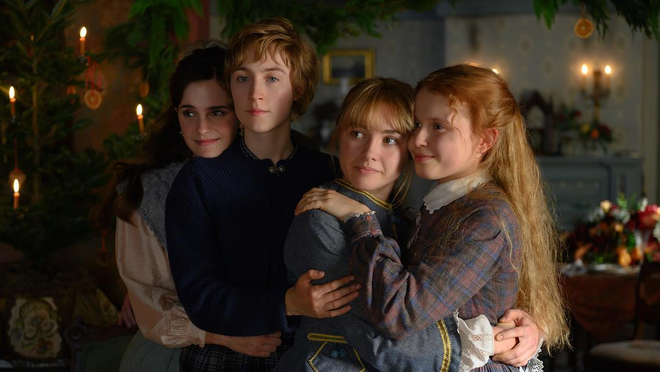
Louisa May Alcott’s Little Women was first published in 1868 in the context of the American Civil War. The story has survived for more than a century and a half through countless adaptations.
Greta Gerwig’s adaptation of 2019 made some changes to the structure, script and dialogues that allow the story to speak directly to a modern audience.
The movie is about four March sisters named Meg, Jo, Beth and Amy. Each represents four very different ideas of womanhood. And I believe that this is where Gerwig’s adaptation becomes particularly powerful because instead of presenting one sister as the “right” kind of woman, she allowed all four to exist on their own terms.
Emma Watson’s Meg portrays the closest to the traditional definition of a “perfect” young woman. She is outgoing but homely. She is caring and affectionate. Her dream is simple, she just wants to build a family with someone she genuinely loves. Her ambition is not to do exceptional or revolutionary things. She simply wants a life that feels meaningful to her.
Eliza Scanlen’s Beth is quieter. She is shy, gentle and happiest when she is playing the piano or spending time with the people she loves. Her strength comes from being comfortable with who she is.
Florence Pugh’s Amy is sceptical. She is the youngest. She balances her ambition with society. She dreams of becoming an artist, but she also understands that talent alone does not guarantee women independence or security. Her choices come from her practical experiences.
And then there is Jo.
Saoirse Ronan’s Jo is the sister who openly resists the status quo. She wants to become an independent writer. She simply hates the idea of the society that says women’s ultimate ending should be either death or marriage.
One of the most important moments in the film comes when Jo suggests Meg run away with her on her wedding day. But Meg explains:
“Just because my dreams are different than yours doesn’t mean it is unimportant.”
Another important scene was when Jo burst out and cried while saying, “Women have minds and souls, as well as just hearts, and they’ve got ambition and talent as well as just beauty.” Jo is not rejecting love, femininity or beauty themselves. She is rejecting the expectations from women that society has built.
This simple scene captures two of the most important ideas in Little Women. It showed that Meg’s dream of marriage and a family is not less feminist simply because it is traditional. Jo’s desire for independence is not more feminist either. Instead, both their dreams are equally important.
The distinction remains important today. Sometimes conversations about women’s empowerment become so focused on education, careers and financial independence that being a housewife sounds like a failure. But the work done by our mothers and grandmothers is not something to be ashamed of. Nor should a woman face any criticism for wanting a career of her own.
Feminism cannot simply replace one definition of the ideal woman with another. Feminism is the choice and freedom to be any type of woman one wants to become.
That is why Little Women feels so relevant even now.
And perhaps this is where the March sisters can be brought into a very different conversation happening in Bangladesh today, the introduction of the Pink BRTC Bus, which is a women-only, women-driven bus service intended to provide women with a safer means of transportation.
I was wondering how would the March sisters react to this simple initiative –
Meg would probably welcome it without much hesitation. For her, the most important question would be if it would make women’s everyday lives safer and easier. She would focus on the positive side. She would simply appreciate women being given a safe space to travel and operate.
Jo, on the other hand, would probably have a problem with the pink.
She spends most of the film resisting the idea of the image and stereotype that society proposed. She might therefore question why a service designed to empower women has to be associated with the stereotypical “girl’s colour” in the first place. She would probably even argue about why women’s safety issues are being covered by stereotypical solutions.
Beth would probably see both sides. She would support the initiative if it helped women, but she would understand Jo’s discomfort as well.
Amy would understand the complicated relationship between empowerment and perception. She knows that women are constantly judged by how they look, behave and present themselves. She might use the bus while still questioning the decision to brand it as “pink.” For Amy, practicality and social perception have always existed side by side.
Interestingly, these are not entirely different from the reactions that have been all over the internet. Some people are focusing on the safety it could provide. Others are questioning whether a women-only service is the right solution. Some are criticising the symbolism, while others are mindlessly mocking the initiative online.
And the men making memes? None of the March sisters have the time for them.
There will always be criticism whenever something changes. But ultimately, the Pink Bus is intended to solve a problem that women have been facing for decades and centuries. The people whose experiences matter most in that conversation are the women who actually use the service.
That is also what the March sisters represent. There is no single version of womanhood. There is Meg, who wants a family. There is Jo, who wants independence. There is Beth, who finds fulfilment in a quieter life. There is Amy, who wants artistic achievement while also understanding the realities of the world around her.
None of them needs to or wants to become the other.
Even Jo’s relationship with love and marriage was about the single idea that independence means rejecting romance forever. By the end of Gerwig’s film, Jo does eventually find herself drawn towards love. Her tears are not a surrender to society’s expectations. They reflect Jo discussing something that she has been suppressing for long. In the end, she chose to love not for society but for herself.
The four sisters show the women of society in a nutshell. Their lives are different because their desires are different.
And perhaps that is the greatest lesson of Little Women.
A woman can want a career. A woman can want a family. A woman can want both. A woman can want neither. She can be ambitious, domestic, romantic, independent, quiet, outspoken, practical or artistic.
What matters is that the choice belongs to her.
Little Women has survived for more than 150 years not because women have finally become Jo, but because we continue to recognise ourselves in the Little Women.