TECN hosts Apparel Fest 1.0 to boost RMG skills, industry engagement
TECN hosts Apparel Fest 1.0 to boost RMG skills, industry engagement
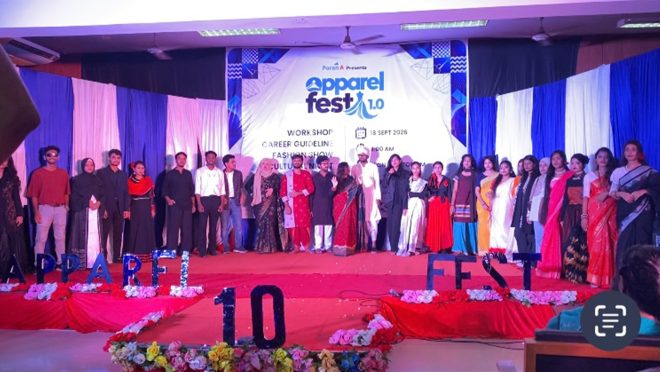
A day-long skills development and industry engagement programme, Apparel Fest 1.0, was held at Textile Engineering College Noakhali (TECN) on 18 September, bringing together students, industry professionals and alumni to explore emerging technologies, practical skills and career opportunities in Bangladesh’s ready-made garment (RMG) sector.
Organised by the Department of Apparel Engineering, the festival aimed to strengthen industry-academia collaboration and prepare future textile engineers for the evolving demands of Bangladesh’s apparel and textile industries through technology-driven learning and professional development activities, according to the press release.
Principal Abdur Rokib of Textile Engineering College Noakhali attended the programme as the chief guest.
A major attraction of the event was a comprehensive skills development workshop that introduced participants to key areas of modern apparel product development, including fashion trend forecasting, 2D and 3D digital design, Tech Pack preparation, 3D sampling, animation and product development using CLO-SET.
Through the sessions, students gained practical knowledge of the apparel development process, ranging from trend analysis and digital design to virtual sampling, technical documentation and product presentation.
The programme highlighted the growing role of digital technologies in the RMG industry and demonstrated how skills in design software, virtual prototyping and data-driven product development are reshaping global apparel manufacturing.
Participants also received insights into industry expectations, future career pathways and the importance of technology adoption in maintaining competitiveness in international markets.
As part of the festival, representatives from Poran-A conducted interactive learning sessions and practical demonstrations designed to bridge the gap between academic knowledge and industry requirements.
The sessions showcased real-world applications of apparel technologies and emphasised the importance of continuous skills development for aspiring textile and apparel professionals.
A notable segment featured the journey of Pranay Chakrabarty, whose academic and professional achievements were presented as a case study to motivate students pursuing careers in the textile and apparel sector.
The session focused on personal growth, skills acquisition and industry readiness, encouraging participants to develop competencies beyond the classroom.
Students also had the opportunity to learn about professional training opportunities, scholarship facilities and industry-oriented learning pathways.
Several participants received information on scholarship opportunities for advanced skills development programmes.
The event was attended by industry professionals and alumni, including Nur Alam Nishat, research and development professional and textile content creator; Md Zakaria Alam Jiku, chief executive officer of Online Textile School and former fabric technologist at NEXT, Lidl, Li and Fung and Kenpark; and Md Abu Sayed Patwary, a TECN alumnus and recommended candidate for both the BCS Administration and BCS Customs and Excise cadres.
The guests shared insights into career development, industry trends and the skills required to succeed in Bangladesh’s evolving apparel sector.
A panel discussion titled “The Future of BD Apparel: AI and Automation” explored the growing influence of artificial intelligence, automation and digital transformation in apparel manufacturing.
Speakers discussed how emerging technologies are enhancing productivity, improving product development efficiency and creating new opportunities within the RMG industry.
The festival also featured interactive quizzes, prize distribution, a fashion show, ramp walk and cultural performances, providing students with opportunities for engagement, creativity and networking.
Organisers said Apparel Fest 1.0 was designed to provide students with practical exposure to industry practices while fostering innovation, technological awareness and professional preparedness.
They expressed hope that such initiatives would contribute to developing a skilled workforce capable of meeting the future demands of Bangladesh’s apparel and textile industry.