Manchester City found guilty of 114 Premier League charges: What happens next
Manchester City found guilty of 114 Premier League charges: What happens next
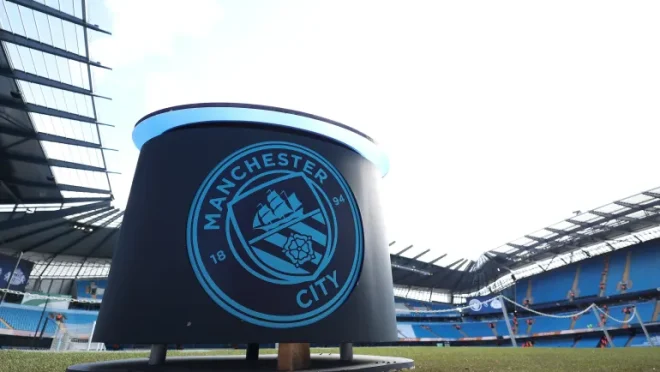
Manchester City have been found guilty of 114 of the 115 charges brought against them by the Premier League. But the story is not over. The club can appeal, and the punishment has not yet been decided.
For football fans, 114 is no longer just a number. It has become one of the biggest talking points in world football. The number has exploded across social media after Manchester City were reportedly found guilty of 114 of the Premier League’s 115 financial charges. The story became so big that even New York City Mayor and Arsenal fan Zohran Mamdani joined the conversation, posting just “114” on X. For football fans, the meaning was obvious: a reference to the 114 charges Manchester City were reportedly found guilty of.
How did the case begin?
The story goes back to 2018, when German newspaper Der Spiegel published leaked documents relating to Manchester City’s finances. The documents raised questions about the club’s sponsorship arrangements, payments to former manager Roberto Mancini and whether City had provided complete and accurate financial information. The Premier League subsequently began a lengthy investigation.
In February 2023, after around four years of investigation, the Premier League formally charged Manchester City with 115 alleged breaches. City denied the allegations and maintained that the club had complied with the relevant rules. The case was then referred to an independent commission rather than being decided directly by the Premier League.
According to the material surrounding the case, the allegations included failures to provide accurate financial information over several seasons, incomplete information concerning player and manager payments, alleged breaches of UEFA’s financial regulations and a failure to fully cooperate with the Premier League investigation. The independent commission has now found City guilty on 114 of those 115 charges.
Why are financial rules so important?
Football clubs do not have completely unlimited freedom to spend money. Financial regulations are designed, among other things, to prevent clubs from spending far beyond their sustainable income or gaining an advantage through financial arrangements that do not accurately reflect the club’s finances.
One important set of rules is the Premier League’s Profitability and Sustainability Rules (PSR). A simple way to understand the principle is to imagine a competition where every participant is given a spending limit of Tk 50. One participant, however, somehow spends Tk 100 every year and uses those additional resources to build a stronger team. The issue is not simply that the participant has money. The issue is whether the spending complies with the rules that everyone competing in the same competition has agreed to follow.
That is essentially why financial regulation matters in football. It is intended to create a framework within which clubs can compete without ignoring the financial limits imposed by the competition.
What were Manchester City accused of?
The allegations covered several different areas rather than one single transaction. The Premier League accused City of failing to provide accurate financial information, including information concerning revenue and other financial matters. There were also allegations relating to payments to players and coaches, including former manager Roberto Mancini.
Another part of the case concerned UEFA’s Financial Fair Play regulations. Perhaps most importantly, the Premier League also accused City of failing to cooperate fully with its investigation. This was not the first time City had faced financial-regulation problems.
In 2020, UEFA imposed a two-year ban from European competitions and a fine following its own investigation. Manchester City appealed to the Court of Arbitration for Sport (CAS), which overturned the Champions League ban. However, CAS found City guilty of failing to cooperate with UEFA and imposed a fine. That history made the Premier League case particularly significant.
Why did the investigation take so long?
One of the most striking aspects of the case is how long it has taken. The Premier League charges were announced in February 2023, but the underlying investigation had already lasted around four years. The hearing itself began in September 2024, according to the material reviewed for this article. An independent three-member commission then considered the case and the evidence presented by both sides.
The complexity of the case is one reason the process has taken years. Thousands of financial documents, contracts, payments and other records have had to be examined. The Premier League has also faced criticism over the length of the process, while City have repeatedly maintained that they expected the matter to be handled through an independent and fair process.
What happens now?
This is where things become particularly important. Manchester City have been found guilty, but the punishment has not yet been decided. The Premier League’s rules allow for a range of possible sanctions, including financial penalties, points deductions and other sporting sanctions. More serious possibilities include relegation or potential expulsion from the Premier League.
The exact punishment would depend on the commission’s assessment of the breaches and the principle of proportionality. Importantly, none of these possible punishments should be treated as a confirmed outcome at this stage.
There is another major step to come: Manchester City are expected to appeal. That means the current finding may not represent the final conclusion of the entire legal and regulatory process.
Could Manchester City lose Premier League titles?
This is one of the biggest questions surrounding the case. If a points deduction or another sporting sanction is imposed retrospectively, it could potentially affect historical league positions. That raises the possibility of questions being asked about titles won during the period covered by the allegations.
However, this does not mean that Manchester City’s previous Premier League titles have automatically been taken away. No such punishment has been announced yet. The eventual sanction, if any, will depend on the independent commission’s decision and the outcome of any appeal.
Could City be relegated?
Relegation is another possible sanction under the Premier League’s rules. But again, it is only a potential outcome at this stage. The rules provide a broad range of possible punishments, meaning there is a significant difference between being fined, losing points and being removed from the Premier League.
The final sanction would need to reflect the seriousness of the breaches and would also be subject to the appeal process.
What could it mean for Manchester City?
Whatever punishment eventually emerges, the case could have consequences beyond the points table. Manchester City have transformed themselves into one of the most successful clubs in European football since Sheikh Mansour’s Abu Dhabi United Group took ownership in 2008. During that period, the club have won multiple Premier League titles, domestic cups and the Champions League.
That success has been built alongside enormous investment in players, infrastructure and the wider organisation. The financial case therefore matters because it concerns the regulatory framework surrounding the period in which Manchester City became one of football’s dominant clubs. A final punishment could affect the club financially, competitively and reputationally.
What about the players?
For players currently at Manchester City, the immediate consequences remain uncertain. A serious sporting sanction could affect the club’s ability to compete in the Premier League or European competitions, depending on what is eventually imposed. It could also influence squad planning, transfers, sponsorships and the club’s finances.
But it would be premature to assume that players will leave, that contracts will be cancelled or that the club will be relegated. Those consequences would depend on the final sanction.
The bigger issue: what does this mean for English football?
The Manchester City case is bigger than one football club. Premier League clubs operate under financial rules because the league is trying to balance two competing ideas: allowing clubs to invest and grow while preventing financial practices that could distort competition.
Manchester City’s case will therefore be closely watched by other Premier League clubs as well. If significant sporting penalties are eventually imposed, the decision could influence how financial regulations are enforced in the future. If the punishment is relatively limited, it could also raise questions about how the Premier League deals with complex financial cases involving its biggest clubs.
The case is not over yet
The headline is simple: Manchester City have been found guilty of 114 of the 115 charges brought against them. But that is not the end of the story.
The next major question is the sanction. After that comes the appeal process. Only when those stages are completed will football have a much clearer picture of the final consequences for Manchester City.
For now, the club’s remarkable era of success sits alongside one of the most significant financial-regulation cases in Premier League history. The trophies have already been won and the memories cannot be erased. But what those achievements ultimately mean in the official record could depend on what happens next.