This little-known crop could help feed millions as climate change worsens
This little-known crop could help feed millions as climate change worsens
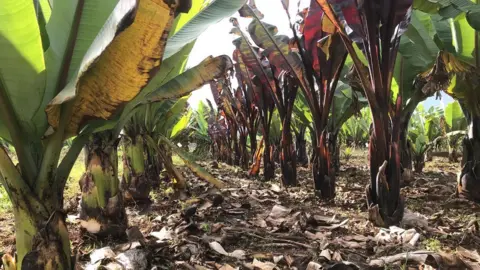
A little-known crop cultivated mainly in Ethiopia could potentially provide food for millions more people across Africa as climate change puts growing pressure on global agriculture, researchers say.
Enset, a giant herb related to the banana, is a staple for more than 20 million people in Ethiopia. However, unlike major crops such as rice, wheat and maize, its cultivation remains largely confined to the country’s southwestern highlands.
The crop can grow up to 10 metres tall and is highly tolerant of drought and disease. Researchers say about 60 plants can provide enough food to sustain a family of five for a year.
Unlike most major food crops, enset is perennial and can continue growing for more than two years without being replanted.
A 2021 modelling study co-authored by UK-based conservation biologist James Borrell found that enset could potentially be cultivated across large parts of southern and eastern Africa. Expanding its current cultivation range could provide food for up to 111.5 million additional people in sub-Saharan Africa, according to the study.
The crop’s edible parts are processed and fermented to make kocho, a bread-like Ethiopian staple. Another product, bulla, is made from the starchy pulp and can be used to prepare dumplings and porridge. Its banana-like fruits, however, are largely inedible because they contain hard black seeds.
Despite its potential, enset has spread little beyond Ethiopia. Borrell said cultural and historical factors, restrictions on transferring Ethiopian plant material and the specialised knowledge required to cultivate and process the crop have limited its expansion.
Ethiopia has strict controls on the international transfer of plant material to protect its biological resources, while wild varieties found elsewhere in Africa are not suitable for food production in the same way as Ethiopia’s domesticated varieties.
Harvesting is also labour-intensive and is largely carried out by women. Mechanised harvesting methods are being developed at several Ethiopian universities but have not yet been introduced on a large scale.
Researchers are also concerned that Ethiopian farmers are increasingly replacing enset with more commercially profitable crops such as wheat, maize and potatoes.
A 2025 study by the Royal Botanic Gardens, Kew and Addis Ababa University found that about 60% of more than 400 farmers surveyed in southwestern Ethiopia had reduced the amount of farmland devoted to enset in recent decades. Many also reported declining household consumption of the crop.
Researchers say preserving and expanding the use of underutilised crops such as enset could help diversify food systems and reduce agriculture’s vulnerability to climate change, pests and disease.
“Reliance on a narrow set of crops leaves agriculture far more vulnerable to pests, diseases and changes in environmental conditions,” the report noted.