The future of AI is not just about intelligence
The future of AI is not just about intelligence
What a time to be alive!
We can turn ourselves into Ghibli’s masterpiece without the maestro knowing we have turned his whole life’s work into an AI prompt. We can have a good laugh at how AI quirkily describes us based on the information it holds. We treat AI like our personal therapists, educators, career guides and mostly like a friend. And now that we have all enjoyed the spree of everyone going back to the 80s on social media these past weeks, could we spare a moment to look into the future of AI and how it is going to ‘treat’ us.
At this point, we all know what AI is. The definition we are comfortable with is that AI, or Artificial Intelligence, is a machine mimicking cognitive functions of humans, like learning and problem-solving, assisting humans in achieving complex tasks. To provide a glimpse of AI’s contribution to humankind, let’s start with the archetypes.
AI has been groundbreaking in healthcare. Starting with something as simple as improving online and in-person consultation, health assistance and medication management, to AI-driven diagnostics, medical data mining, designing treatment plans, precision medicine, drug creation, and fully automated surgical operations on humans (Meskó and Görög, 2020).
AI has revolutionised agriculture through technologies such as agricultural robots for harvesting, crop and soil monitoring using satellite data, and predictive analytics to optimise yields (Organisation for Economic Co-Operation And Development, 2019). AI applications range from advanced credit scoring systems that analyse vast data sets using deep learning to enhance prediction accuracy to FinTech platforms incorporating alternative data for better lending decisions.
More importantly, AI’s role in digital security and surveillance, such as detecting threats and monitoring public spaces, highlights its growing impact on both public and private security landscapes.
What happens when AI knows too much?
The long and short of it is that we trust that AI systems will be ‘aligned’ with human goals and serve as future predictors, anticipate changes or fill in missing information for effective decision-making. While making these decisions, AI prioritises optimising resource utilisation, ensuring self-preservation against degradation or shutdown, advancing learning algorithms and rational architectures, and continuously acquiring and integrating knowledge about the world.
This brings us to address the elephant in the room. What happens when AI learns too much? Where does the margin lie in acquiring just as much knowledge to allow humanity to achieve the unthinkable, to the point where the AI itself does the unthinkable, leading to ‘The end of history’?
What the experts are saying
Researchers at Oxford in 2014 identified that, theoretically, AI can surpass humanity’s combined intelligence, coining the term Artificial Superintelligence (ASI). Ray Kurzweil, in his book The Singularity Is Nearer, predicted that by 2045 the singularity will occur and that we are entering the culmination period.
Researchers identified that advanced AI systems, even with seemingly harmless goals, must be carefully designed to prevent harmful behaviours, as AI has inherent “drives” in goal-seeking systems, such as the tendencies to model their own operations, improve themselves, and clarify goals as utility functions.
The most recent update on AI self-improvement is the case of OpenAI breaking out of their test environment, ignoring instructions, and going on an uncontrollable hacking spree, identifying themselves as the ‘collective’. The magnitude of losing control of AI is staggering worldwide, having almost doubled in July compared with June in 2026 in the UK alone, where the country has one of the most advanced AI policies.
According to experts, the information, national security, and finance sectors are considered the most vulnerable sectors that AI can harm severely due to its dangerous capabilities of competitive dynamics, weapons and cyberattacks, power centralisation, and spreading false or misleading information in the shortest possible time.
What the future holds for us
We can still argue that constructing AI models which can take over humanity is inherently complex due to the intersubjective nature of human emotions and due to the limitations of reward models. The best way to describe this constraint is through Goodhart’s Law, which states, “When a measure becomes a target, it ceases to be a good measure.”
To paint the picture: when a robotic cleaner is programmed to maximise cleaning efficiency using minimal energy, it might achieve this by shutting down, deeming the task unattainable under its constraints. Theoretically, the increased computational speed alone does not guarantee intelligence surpassing human levels, as the assumption of a critical human-level intelligence threshold is anthropocentric, which prioritises humanity as the primary standard of value.
Can we now simply switch off AI globally?
While asking this question, have we considered the politics behind this? The answer lies in ‘offensive realism’. Grounded in classical realism, scholars argue that the inherent nature of states is to seek power maximisation, and in this race for AI, states may become more aggressive, intentionally abstaining from cooperation for self-interest.
This realist notion of perpetual competition and mistrust among states may exacerbate the global AI race, leading to further insecurities and to fragmented and militarised advancements in AI rather than cooperative development.
In terms of AI governance, a ray of hope is that as humankind advances towards the development of ASI, the commencement of the EU AI Act, G7 AI Regulations, and the United Nations AI Resolution are examples of global frameworks that are working to ensure a safe, trustworthy and secure world without the threats of AI.
Is it really the end of the world?
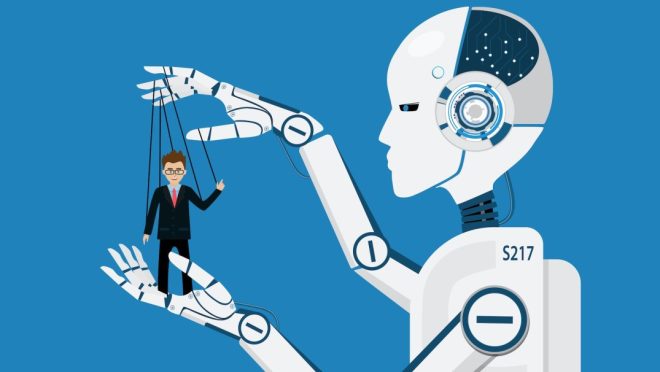
While there is fear of AI leading to a complete annihilation of humanity leading to ‘the end of history’, it is more likely that we will witness a subtle domination of AI, rather than an outright catastrophic event. AI will not merely function as a tool that assists human decisions but will actively influence how decisions are made, altering the cognitive processes behind them.
This raises important ethical questions about the extent to which humans should trust the AI with decision-making and the potential long-term effects of such a shift. The primary risk lies in using AI by humans against each other, and not the advanced AI posing an outright risk to humanity.
An Erasmus Mundus Scholar, Kashfia Kaba Shejuti holds a degree in Security, Intelligence, and Strategic Studies from the University of Glasgow, Dublin City University, and Charles University. She serves as a Case Officer in Regulatory Services at the Charity Commission for England and Wales within the UK Civil Service.