How penguins are thriving beside an active Antarctic volcano
How penguins are thriving beside an active Antarctic volcano
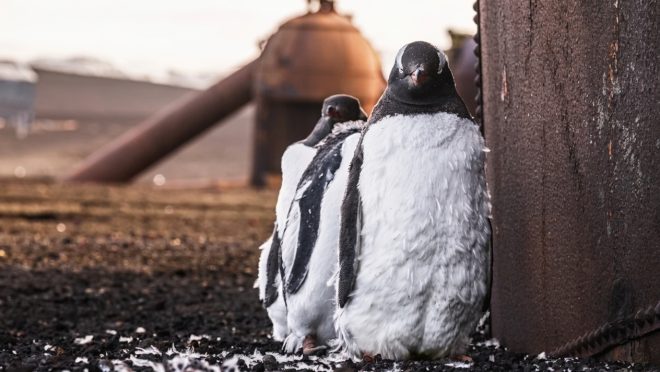
Gentoo penguins are emerging as one of the rare winners of climate change, with their numbers rising as Antarctica becomes warmer and wetter.
On Deception Island, an active volcano in Antarctica, wildlife photographer Romain Barats captured three moulting gentoo penguins sheltering beside the rusting remains of the island’s former whaling industry.
The island’s flooded volcanic caldera is now home to wildlife amid abandoned oil tanks and other industrial ruins. During moulting, penguins cannot enter the water and are particularly vulnerable to the cold, making the volcanic island’s warmth and sheltered structures useful.
According to ecologist Heather Lynch of Stony Brook University, gentoos are particularly well adapted to changing conditions. Their global population increased by about 11% between 2013 and 2020, while numbers along the Western Antarctic Peninsula rose by around 23%.
Unlike chinstrap and Adélie penguins, whose populations are declining in the region, gentoos can adjust their diets, shift their breeding seasons and lay another clutch of eggs if their first is lost.
“They just keep moving south,” Lynch told the BBC.
Gentoos have not yet established breeding colonies on Deception Island, where volcanic eruptions have repeatedly wiped out penguin populations over thousands of years. But Lynch says they could be the first species to return.
The island’s unusual mix of volcanic activity, abandoned human infrastructure and thriving wildlife offers a striking example of how some species are adapting to a rapidly changing Antarctic environment.