Anne Carson: The Nobel Prize winner who defies literary conventions
“A wound gives off its own light, surgeons say. If all the lamps in the house were turned out you could dress this wound by what shines from it.” – Anne Carson, Autobiography of Red
Anne Carson: The Nobel Prize winner who defies literary conventions
“A wound gives off its own light, surgeons say. If all the lamps in the house were turned out you could dress this wound by what shines from it.” – Anne Carson, Autobiography of Red
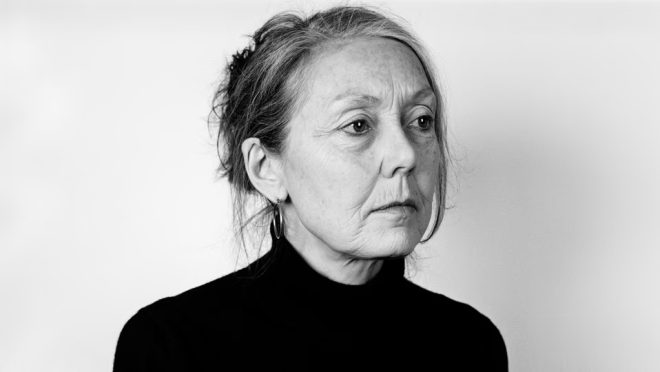
Grief and memory rarely move in straight lines. We try to trap them inside neat grammar anyway, hoping it would somehow cover up the mess inside. On Thursday, the Swedish Academy recognised a writer who completely dismantles those tired templates. They named Canadian poet and classicist Anne Carson the winner of the 2026 Nobel Prize in Literature. Carrying a diploma and 12 million Swedish crowns ($1.2 million), the award celebrates her “bold and inventive oeuvre that, in playful dialogue with the classical tradition, has created new forms for contemporary literature.”
The news jolted the global literary world. At 76, Carson has spent decades transforming how we write about heavy emotions. She moves way beyond conventional story arcs, building something far more exposed. When Stockholm called her home in Reykjavík to deliver the news, she was sweeping her kitchen floor. That incredibly mundane detail anchored the staggering scale of the announcement.
Carson forces us to rethink what a book can even do. Her textual architecture relies on undeniable structural choices.
She treats ancient Greek literature as an intimate, unfinished conversation. Armed with degrees from the University of Toronto, Carson approaches figures like Sappho and Euripides like living companions. A broken line of 2,600-year-old poetry reads more like a sudden interruption than a dead relic. Carson preserves the textual erosion itself. She leaves physical gaps and heavy square brackets across the printed page. You’re forced to sit directly with the missing pieces of human history.
She collides myth against modern life. Take her 1998 breakthrough work, Autobiography of Red. Carson lifts Geryon, a winged red monster killed by Herakles, and drops him into late-20th-century North America. He turns into an awkward teenager with a camera. He stumbles through a messy romance while dealing with being a literal monster at the bus stop. Epic legend crashes straight into everyday heartbreak. That unexpected mix gives the book a deeply beating heart.
She turns books into physical objects you have to wrestle with. Following the death of her estranged brother, Carson published Nox in 2010 as a continuous paper scroll. It comes folded like an accordion inside a heavy grey box. Readers physically unfold a private archive. You sort through faded family photographs alongside exhaustive dictionary entries dissecting a single Latin poem. Reading transforms into a tactile process of unearthing what remains of a person.
Her tone keeps these daring experiments believable. Heavy academic research sits right beside blunt jokes about everyday chores, catching you completely off guard. It makes her writing feel wildly smart without ever sounding snobby.
Prize organisers asked if she had a foundational rule for creating intricate narrative structures. Carson kept her advice famously brief.
“Start in the middle. It’s the only rule I have.”
The Swedish Academy recognised a writer who completely ignores the established borders of storytelling. Her work fills in the gaps where language almost fails us