Austria enforces headscarf ban for girls under 14 in schools
Austria enforces headscarf ban for girls under 14 in schools
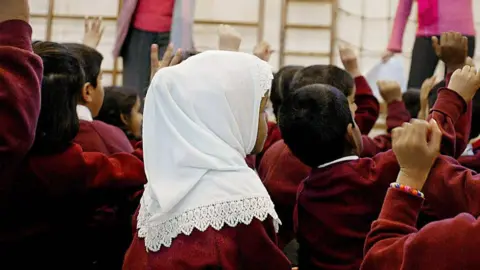
Austria has brought into force a law banning girls under 14 from wearing traditional Muslim head coverings, including hijabs, in public and private schools as the new academic year begins.
The law, introduced by the conservative-led coalition government, is intended to promote gender equality and protect young girls, according to the government.
Integration Minister Claudia Bauer of the conservative People’s Party (ÖVP) described the headscarf as “a sign of oppression and a means of controlling girls from the earliest childhood”.
However, the Islamic Religious Community in Austria (IGGÖ) has opposed the ban, arguing that it restricts religious freedom and disproportionately affects Muslim girls. The organisation has also pledged to support legal challenges before the country’s Constitutional Court.
The court struck down a previous ban on headscarves in primary schools in 2020, ruling that it violated the principle of religious neutrality.
Under the new law, teachers are expected to discuss violations with students and their legal guardians. Repeated violations must be reported to child services, while guardians could face fines of up to €800 as a last resort.
The ban has also drawn criticism from teachers and opposition politicians. Some educators have raised concerns about being tasked with enforcing the restrictions, while the far-right Freedom Party (FPÖ) has called for a broader ban covering students and teachers alike.
The law specifically targets Muslim head coverings, unlike France’s broader ban on conspicuous religious symbols in schools, which also covers items such as turbans and kippas.