Who exactly is it that dies?
Most of us walk around holding a stack of cards we never asked for. Son or daughter of this family, follower of this religion, citizen of this country. We spend years building on top of these cards, adding achievements and relationships and opinions, until the stack starts to feel like the whole of who we are.
Who exactly is it that dies?
Most of us walk around holding a stack of cards we never asked for. Son or daughter of this family, follower of this religion, citizen of this country. We spend years building on top of these cards, adding achievements and relationships and opinions, until the stack starts to feel like the whole of who we are.
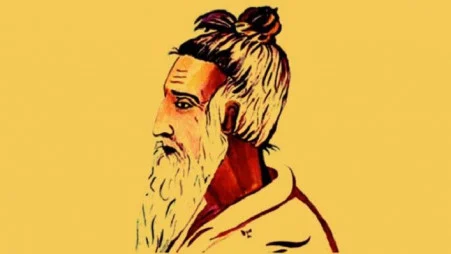
Then, one day, all of it has to be put down. The question worth sitting with isn’t really what happens after that. It’s what, exactly, was being carried in the first place.
17 October is the 136th death anniversary of a man in rural Bengal who built his entire life around that question, long before most of us had the privilege of asking it in the comfort of an essay.
Fakir Lalon Shah never confirmed which religion or caste he was born into, and he refused to let anyone else decide it for him either. In the society around him, that single refusal was almost a provocation.
Lalon spent his life asking a plain, almost childish question underneath both: can you actually point to where caste lives in a person? Is a thread around the neck or a mark on the forehead the thing that makes someone what they are, or is it just decoration on something that was never really labelled to begin with?
It’s tempting to treat that as a historical curiosity, a 19th-century mystic being radical for his time. But strip away the setting and the question is uncomfortably current. We still do the same sorting, just with newer categories.
Which passport, which school, which side of a political or economic line, which app shows the right kind of life. We defend these categories as if they were load-bearing walls in who we are, and we feel genuinely wounded when someone questions them. Lalon’s insight was that none of it was ever structural. It was painted on a boat. The thing actually sitting inside the boat, which the Baul tradition calls the “moner manush”, the person of the heart, never had a caste or a religion attached to it in the first place. It only ever had a body wearing a few borrowed labels.
That’s where the question of death gets interesting, and less frightening than it usually sounds.
If what you really are was never the labels, then death isn’t really a verdict on a Hindu life or a Muslim life, a rich life or a poor one. Those were always costumes. What disappears with the body is the costume, not necessarily the wearer.
Lalon’s songs don’t offer a tidy doctrine about what comes next, and that’s arguably the most honest part of his thinking. He borrows a little from Vaishnav devotion, a little from Sufi longing, a little from older folk belief, and refuses to resolve it into a single answer anyone could put on a certificate.
What he keeps returning to instead is urgency: find out who is actually inside the boat while there’s still time, because the boat is not staying afloat forever.
There’s a version of this that’s genuinely useful on an ordinary Friday, not just at a shrine in Kushtia.
Lalon’s question, carried forward by the people gathering at his akhra this week, is a quieter and harder one: if you took away every label you’ve ever been handed, is there anyone still there? And if the answer is yes, then death stops being quite so total a loss. It isn’t the person who dies, in that reading, it’s only ever the costume, the caste, the name on the door.
The man was real enough to notice the costume in the first place, as he was never really wearing one.