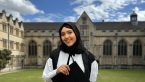
From Mymensingh Medical College to Oxford: Dr Farah Diva Khan's journey
“To me, saving a life means protecting a family’s hope and keeping an entire universe intact.” – Dr. Farah Diva Khan
From Mymensingh Medical College to Oxford: Dr Farah Diva Khan's journey
“To me, saving a life means protecting a family’s hope and keeping an entire universe intact.” – Dr. Farah Diva Khan

Most medical professionals choose between holding a scalpel in the operating room or analysing data in a lab. Dr. Farah Diva Khan refuses to pick just one. Holding an MBBS from Mymensingh Medical College and an MRes in Surgical Science from the University of Oxford, while simultaneously pursuing the MRCS (Membership of the Royal College of Surgeons), she works across both worlds.
Her journey began at Holy Cross College before she earned her medical degree from Mymensingh Medical College. From there, her clinical work and research expanded from United Hospital in Dhaka to Virgen de la Arrixaca University Clinical Hospital in Spain, alongside surgical exposure in healthcare systems across Egypt, Spain, and England.
Right now, she is an Honorary Clinical Fellow at St Thomas’ Hospital in London, while simultaneously preparing for her PhD in cardiovascular science.
Early inspiration and manifestation
Her drive to become a surgeon started back in school, when a classmate was diagnosed with congenital heart disease.
“Doctors said she wouldn’t survive without immediate surgery,” Dr. Farah recalls. “The family couldn’t afford it. My mother and two of my friends’ mothers stepped in to raise funds with the help of the then-President’s fund. That friend later earned an engineering degree from BUET, completed her PhD, and now works in the US. That experience showed me how timely care saves a life and preserves someone who goes on to contribute to society. Right then, I knew I wanted to work from my heart for your heart.”
Her interest grew through articles she used to read in newspapers, which highlighted Bangladeshi students studying abroad.
“I always asked my parents for books,” she shares. “In school, whenever we wrote essays about our future, I wrote my name as ‘Dr. Farah Diva Khan.’ I was manifesting it from that time.”
That personal drive quickly turned into hands-on public service. During her medical college days, she engaged in research work through UN Rohingya emergency-response health camps, reinforcing her belief that medical skill and research knowledge are a sacred responsibility meant to help others rather than a path to personal wealth.
Choosing a pathway overseas
Dr. Farah missed the admission cutoff for Dhaka Medical College by 1.75 marks, going to Mymensingh Medical College instead. Even so, she kept her focus firmly on global academic institutions. “From my first year of medical school, I planned to pursue higher studies abroad,” she explains. “I love my country, but Bangladesh faces a severe shortage of qualified surgeons and clinical researchers. Our medical teams work endlessly, but without advanced research infrastructure and formal surgical training pipelines, flawed systems lead to poor patient outcomes.”
She stays clear about her identity and her intention to return home: “I will always keep my Bangladeshi passport. Having a visa or permanent residency helps secure a work permit, but my citizenship remains Bangladeshi. My primary goal is learning from top global institutions, bringing that knowledge back home to Bangladesh.”
Her father’s advice always stayed with her.
“My father told me, ‘Hole dakat hoba, kintu kokhono chor hoba na,’” she recalls with a smile. “He meant that whatever you do, dominate it completely and be the main character in your own story.”
Evidence-based medicine and systemic critiques
Dr. Farah bases her push for reform on published research rather than personal habits, pointing out that Bangladesh urgently needs clinician-researchers to modernise healthcare practices. She speaks openly against medical choices driven strictly by individual routine rather than clinical evidence.
“In many local hospitals, senior doctors rely heavily on individual experience,” she explains. “Personal experience does help sharpen clinical instincts, but published evidence provides far safer answers.”
Reflecting on a painful experience in which her uncle passed away following elective kidney stone surgery despite having a high urine pus cell count:
“I explicitly advised my family against proceeding with the surgery without the urine culture and sensitivity test results. But they went ahead anyway, purely on the senior professor’s word. Of course, I’m not questioning his entire career, but rather the decision made in that situation. Every established clinician deserves baseline professional respect, but medical choices must remain open to scientific review and established evidence-based guidelines.”
She sees frequent conflicts between doctors and patients in Bangladesh as a reflection of a broader breakdown in the healthcare system. “When hospitals lack audit mechanisms and research skills, patient trust falls apart.”
“A surgeon might perform 500 appendectomies, but without proper tracking, we won’t be able to understand whether our patients are achieving appropriate outcomes and recovery,” she notes. “We need proper research literacy if we want our medical literature to carry global weight.”
The dual route to professorship: FCPS vs. FRCS and PhD/DPhil (Oxford PhD)
When asked about her views on the traditional BCS pathway, Dr. Khan expressed sharp criticism regarding the time investment.
“Preparing for the BCS felt illogical for my goals,” she states. “Spending two years memorising general knowledge and Bengali grammar for an administrative job felt like a huge waste of time. In those exact same two and a half years, I earned my Oxford Master’s degree, worked towards surgical qualifications, authored seven first-author studies that are currently under review for publication, and delivered oral presentations at international conferences.”
She chose the MRCS over the local FCPS pathway to pursue a route combining her surgical Master’s and PhD degrees to become a surgeon-scientist. In high-income countries, clinical qualifications followed by further specialist clinical training and fellowship, allow a doctor to work as a consultant surgeon, while surgical Master’s and PhD degrees provide the academic background required to pursue university professorships.
“I reached out directly to established researchers through networking, guided by mentors like Zakirul Bhai, Chief Scientist at icddr,b and a final-year Oxford DPhil candidate,” she explains. “I ended up connecting with three wonderful supervisors who agreed to guide my thesis.”
While completing a clinical placement at Virgen de la Arrixaca University Clinical Hospital in Spain through Oxford, she helped build a predictive model estimating graft survival for heart transplant patients, which led to her appointment as a full-time Clinical Fellow and Research Lead in the Cardiovascular Department there, making her the first non-EU candidate to hold the post.
Funding, the interview at Oxford, and personal sacrifices
Standard options like Chevening or Commonwealth Scholarships were not open for her.
“Securing funding for core clinical subjects differs significantly from public health or epidemiology, where awards like the Commonwealth or Chevening Scholarships are more widely available. Furthermore, Chevening required two years of post-internship work experience, which I did not have at the time, and my specialty was not listed under Commonwealth eligibility either.”
“I put together a combination of funding sources,” she shares. “I secured around 80% through awards such as the Miranda Brawn Diversity Leadership Scholarship, the Eurofins Scientific Fund, funding directly from my Oxford supervisor, and departmental research scholarships, while paying the remaining 20 lakh BDT out of pocket.”
During her Oxford interview, her honesty about healthcare gaps in low and middle-income regions came across as genuine strengths.
“I was upfront about coming from a low and middle-income country,” she says. “They valued that honest perspective because global health needs people who understand real resource limitations.”
Still, getting to Oxford brought unexpected hurdles. After recovering from COVID-19, a routine chest X-ray showed possible TB lesions, requiring a two-month lab culture test that cleared just days before her visa came through.
Right after that, a family emergency struck. Days before her flight, her mother discovered a breast lump using self-examination techniques Dr. Farah had taught her. Recognising signs suggestive of cancer, she delayed her flight to coordinate her mother’s care alongside consultant Dr. S. K. Farid Ahmed, staying behind to assist during the surgery.
“Oxford was my dream, and missing the initial welcome week was tough,” she explains. “But family came first, and they needed my help. I delayed my flight until October 11 and landed in the UK just in time for my matriculation at Oxford.”
Recognition, self-improvement, and the sacred trust
Arriving at Oxford in her sub-fusc attire brought her childhood goals to a full circle.
“Standing outside the Sheldonian Theatre near the Radcliffe Camera, looking at myself in my sub-fusc gown, brought back memories of my childhood,” she says. “I pictured this path years ago, and making it happen was a surreal moment, Alhamdulillah.”
Her work earned international recognition, including being awarded the Outstanding Woman in Science (WISE) Award in the UK, presented by Princess Anne, a patron of the organisation, and attending the House of Lords as a delegate and scholarship winner.
Her rapid rise also brought scepticism from a fifth-year medical student at Dhaka Medical College after she was invited to speak at a programme, with the student questioning whether she was even eligible to be there. She addresses that scepticism calmly:
“People who don’t do high-level research often expect instant results,” she notes. “At top-tier universities, to produce an original first author research paper, we evaluate massive patient databases over extended periods. Real medical progress takes time, just like mastering surgical procedures.”
Despite her achievements, she speaks openly about dealing with new environments and pushing past procrastination.
“I tell the younger generation to open a document and build a live CV,” she advises. “Track every small milestone so you can spot your skill gaps early. Listen twice as much as you speak when networking. Use free resources on Coursera or YouTube to build your foundation. Above all, invest in self-improvement and view medical knowledge as a sacred trust and privilege meant to serve others.”
Dr. Farah remains committed to her plan of returning to Bangladesh, where she intends to establish high-level surgical protocols and train the next generation of healthcare professionals.