
BRAC university is preparing students for a world that won't stand still
BRAC university is preparing students for a world that won't stand still
A degree can get you an interview, but what happens when you are asked a question you have never encountered in a classroom? Or when you join a team where everyone seems to know something you do not? Increasingly, these are the situations graduates must learn to navigate as they move from university into working life.
The challenge is particularly evident in fields such as technology, where new tools and ways of working can quickly change what employers expect. But it extends well beyond the tech industry. Whatever their chosen profession, graduates need to be able to communicate, work with others and adapt when things do not go according to plan.
For universities, this means looking beyond what students learn for their exams and paying closer attention to how they learn to use that knowledge.
At BRAC University, that question is worth considering through the experiences of its graduates, including Anamika Ahmed, who went on to pursue postgraduate studies in Canada and build a career at Microsoft.
Moving abroad for further studies gave Ahmed a different perspective on what was expected of her as a student. She found that knowing the material was only part of the equation; being able to explain her thinking was just as important.
“In Canada, I realised that knowing the answer is not enough,” she says. “Being able to explain your thinking clearly matters just as much.”
It is something students can easily overlook when much of their academic life revolves around examinations. Getting the right answer matters, of course, but so does understanding why it is right, recognising when it is not and being able to make a case for a different approach.
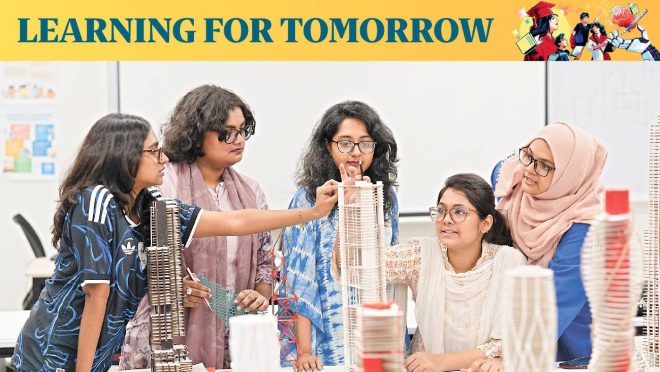
These abilities are developed through practice. Discussions in class, group assignments, presentations and research projects give students opportunities to express their views, listen to others and work through problems that may not have a single, obvious solution.
Such experiences are an important part of preparing students for working life. In most workplaces, people are rarely judged on what they know alone. They must also be able to explain their ideas, respond to criticism and work with colleagues who may see a problem differently.
Putting classroom knowledge to work
There is a difference between understanding a concept in a lecture and using it to solve an actual problem. Students often discover this when they take on their first internship, work on a project or try to build something of their own.
For someone studying computer science, that might mean developing an application rather than simply learning to code. For another student, it could involve conducting field research, testing a business idea or working with an organisation to address a practical challenge.
These experiences can reveal gaps in a student’s knowledge, but that is part of their value. They offer a chance to make mistakes, ask for help and figure out what needs to improve before the stakes become higher in a professional setting.
Ahmed encourages aspiring technology professionals to pursue projects, hackathons, open-source contributions and internships alongside their academic studies. She believes Bangladesh has plenty of talented young people, but access to practical opportunities and industry exposure remains important.
For BRAC University, as for other universities, connecting classroom learning with these experiences can help students understand what their chosen fields actually demand. It can also help them discover which areas interest them most, something that is not always clear from a course outline.
Finding the confidence to speak up
Technical ability, however, does not tell the whole story of Ahmed’s experience.
In her interview with TBS Graduates, she describes the self-doubt that came with entering unfamiliar academic and professional environments, particularly when surrounded by people with impressive backgrounds.
“I had to remind myself that I belonged in the room,” she says.
That feeling will be familiar to many young professionals, especially those entering competitive workplaces for the first time. A person may have the qualifications and the ability to do a job but still hesitate to speak up or question a more experienced colleague.
Confidence is difficult to teach through a textbook. It develops gradually, through experiences that require students to present their work, defend an argument, take responsibility for a decision and learn from feedback.
A university can provide that space. Students who become comfortable asking questions and expressing their opinions in the classroom are better placed to do the same when they enter the workplace.
Ahmed’s career also offers a reminder that things do not always work out on the first attempt. An unsuccessful interview with Amazon did not end her ambitions; she kept preparing and eventually joined the company before moving to Microsoft.
Her advice to aspiring professionals is straightforward: “Apply, prepare, fail, learn and try again.”
An education that lasts beyond graduation
No university can predict exactly what the job market will look like five or ten years from now. Some of the tools students use today may be replaced, and entirely new roles may emerge before they have settled into their careers.
What remains important is the ability to keep learning.
For BRAC University, the challenge is to ensure that students leave with more than a qualification: they should have a firm grasp of their subject, experience applying what they know and the confidence to take on something unfamiliar.
Ahmed’s journey shows that a degree earned in Bangladesh can be a starting point for opportunities abroad. But her experience also suggests that academic knowledge is only one part of the journey. Practical experience, communication and the willingness to learn from setbacks matter too.
Ultimately, the test of a university education is not simply how well a graduate performs on the day of an examination. It is what they can do when the examination is over, the instructions run out and they have to work out the next step for themselves.


