The man behind journalism’s most coveted prize
The man behind journalism’s most coveted prize
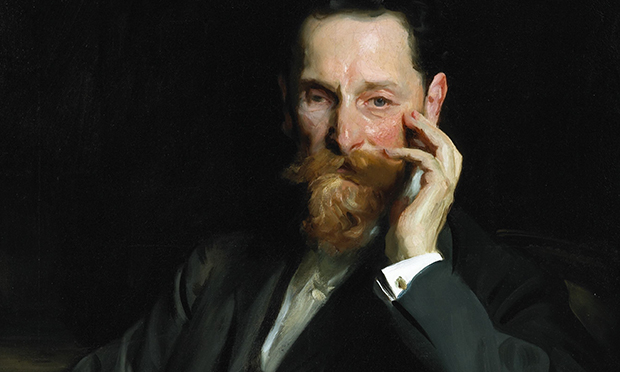
A lot of us have heard the name Pulitzer Prize. Many call it the Nobel Prize for journalists. But only a few know about the person who carries the name of this prestigious prize.
The man is Joseph Pulitzer. He was born in 1847 in Makó, Hungary. Fate brought him to the USA in 1864 by enlisting with a Union Army recruiter in Hamburg. After the Civil War, he walked into the world of journalism. He started working with a German-language paper in St. Louis without knowing that he would soon have his own publication house.
He soon became passionate and ambitious about it and ended up acquiring The New York World in 1883.
With his own newspaper publication, he wanted to bring significant changes in mass media. He wanted to make the newspaper accessible and beneficial for the public. The core idea that made him a significant figure in journalism was that he thought about the people. He thought about designing the paper in a way that would benefit the masses, which would make them actually interested in what was happening in the world.
With this purpose in mind, he used his publication as a knife to keep authority and government under scrutiny.
During those times, investigation was not a very common practice, but Pulitzer decided to run investigative articles and editorials attacking government corruption, wealthy tax-dodgers, and gamblers.
On his sixtieth birthday in 1907, he sent his Post-Dispatch staff a set of guiding principles. The paper later published them as its platform. In them, he told his journalists to “never be satisfied with merely printing news” and to “never be afraid to attack wrong.” More than a century later, those two lines still read like a job description for a reporter.
That was one part of Pulitzer. Another part of the story harshly accuses him of yellow journalism and sensationalised news, and to some extent the accusation is fair. In the 1890s, he fought a fierce circulation battle with William Randolph Hearst’s New York Journal, and during the Spanish-American War, both publishers printed distorted, exaggerated stories to attract readers.
Pulitzer’s profile does something that not many public figures’ profiles do. It almost shows both sides of the coin.
On the basis of my personal knowledge, I would call Joseph Pulitzer a pioneer of the journalism that we are practising today. Over a century ago, he set out the rules and practices that we still follow to this day.
Pulitzer came as an outsider and showed all of America the power of journalism. He made a paper of the commoners.
Not only that, he also looked beyond his own newsroom. He was the first to call for training journalists at university level, in a school of journalism. When he died, he left $2 million to Columbia University to found the school and, with a quarter of the bequest, to create the Pulitzer Prizes.
His will said he hoped to attract people of character and ability into the writing professions. He loved journalism to the core and understood its core principle.
He died on 29 October 1911. Just a year after his death, the Columbia University Graduate School of Journalism was founded in 1912, and the first Pulitzer Prizes were awarded in 1917.
I personally think what made him great was that he established some practices, and at times he slipped too, but till his last breath he embraced what he had done his whole life. Even after his death, he made sure to contribute to the thing he spent his life doing and believing in. I believe that is the kind of spirit that turns a great person into a legend.
His will also spelled out what the top journalism prize should honour. It was to go to “the most disinterested and meritorious public service rendered by any American newspaper.” Public service was the standard he set for the first journalism prize.
Today the prizes are described as the country’s most prestigious awards, and the most sought-after accolades in journalism, letters, and music. This prize is a simple symbol of how he loved every bit of journalism: from writing to literature, he embraced it all.
Today marks his 115th death anniversary. And I like to believe the journalism we practise today would not be the same without Pulitzer.
Pulitzer was both a sensationalist and a reformer, a showman and a believer in serious reporting. The prize carries his name because he believed journalism could be better than it was, and left money to push it there.