DoE identifies four new sources of noise pollution
DoE identifies four new sources of noise pollution
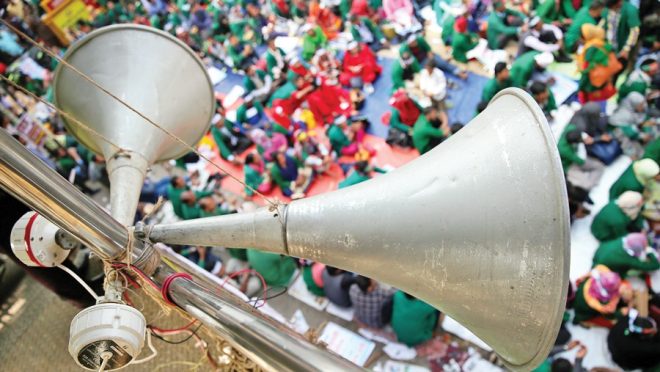
The Department of Environment (DoE) has identified four new sources of noise pollution in Bangladesh, including recreational activities, commercial establishments, announcements from doctors’ chambers, and hand-held microphones used by beggars and hawkers.
DoE Director (Dhaka Metro) Farid Ahmed told BSS that the sources were identified in a survey conducted by the department.
The findings of the survey, titled ‘Noise Level Measurement in 64 District Towns’, conducted in 2022-23, were released recently.
The four newly identified sources are loud music, fireworks and sporting events; noise from restaurants, community centres, bars and clubs; announcements from doctors’ chambers; and the use of hand-held microphones by beggars and hawkers.
The survey identified 25 major sources of noise pollution across the country. These include vehicle movement, hydraulic and regular horns, traffic congestion, loudspeaker announcements, religious events, observances of national and other days, DJ sound systems, horns of VIP vehicles, and sirens of ambulances, fire service and police vehicles.
Other sources include social, political, cultural and official events, construction work, power tools, industrial activities, household appliances, motorcycles, overtaking vehicles, excessive movement of auto-rickshaws and nosimons and karimons, railway horns, tourist vehicles, narrow roads, ships, aircraft, bus terminals, communication devices and infrastructure development.
In Dhaka, major traffic bottlenecks in mixed-use areas recorded particularly high noise levels. These include Jatrabari’s Shahid Faruk roundabout, Shankar, Dhanmondi and Shyamoli intersection.
Persistent background noise was also recorded in busy commercial and transport areas, including English Road, Nawabpur, Sayedabad, Gulistan and Shantinagar.
According to the survey, the highest noise level recorded across the 64 district towns was 129.4 decibels (dB), at Jatrabari’s Shahid Faruk roundabout in Dhaka.
The DoE has designated the Bangladesh Secretariat and its surrounding areas, Agargaon, and areas around the Parliament building and the Prime Minister’s Office as silent zones.
In September 2025, Dhaka North City Corporation (DNCC) also designated Gulshan, Banani, Baridhara and Niketan as silent zones.
However, noise levels in several designated silent zones remain significantly above permissible limits.
A March 2022 study by the Centre for Atmospheric Pollution Studies (CAPS) at Stamford University Bangladesh found that the average noise level across four silent zones — the Secretariat, Agargaon, and areas around Parliament and the Prime Minister’s Office — stood at 97.63 decibels, nearly double the permissible limit of 50 decibels.
The Secretariat recorded an average of 100.17 decibels, with the level peaking at 127 decibels. The Parliament area recorded an average of 99.35 decibels, while Agargaon had the lowest average at 78.11 decibels.
Under DoE regulations, the permissible noise levels vary by area and time of day. Silent zones have limits of 50 decibels during the day and 40 at night, while residential areas have limits of 55 and 45 decibels, respectively.
The limits are 60 decibels during the day and 50 at night in mixed-use areas, 70 and 60 in commercial areas, and 75 and 70 in industrial areas.
During the survey, stakeholders recommended introducing a noise pollution control hotline to enable people to report violations and facilitate legal action against offenders.
They also called for setting limits on sound levels and the duration of social, cultural, political and religious events under existing laws, reducing the movement of slow-moving vehicles, and constructing service roads along highways to minimise noise.
Other recommendations included preventing the illegal import and marketing of hydraulic horns, restricting the use of outdated vehicles, relocating industrial areas outside cities, setting decibel limits for vehicles, limiting loudspeaker use, and strengthening monitoring and enforcement of noise pollution laws.