State University of Bangladesh showcases recycling innovations using Industry 4.0 technologies
State University of Bangladesh showcases recycling innovations using Industry 4.0 technologies
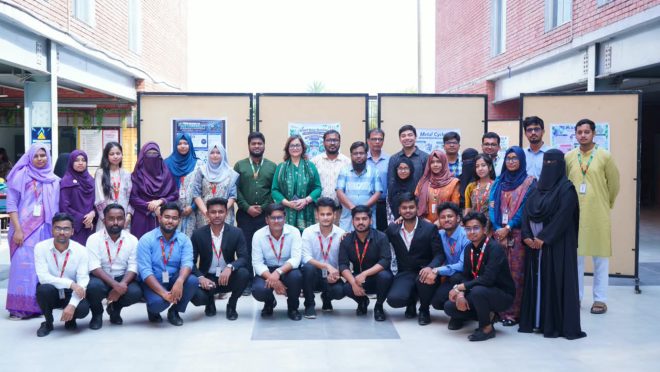
The Department of Computer Science and Engineering (CSE) at State University of Bangladesh (SUB) organised a poster presentation titled “Recycling Using Industry 4.0 Technologies”, showcasing students’ innovative ideas on using advanced technologies to improve recycling, waste management and environmental sustainability.
The event was held on Monday (2 November 2026) in the open space in front of Shadhinota Tower on the university campus, highlighting the potential of artificial intelligence (AI), the Internet of Things (IoT), robotics and data analytics in transforming conventional recycling practices, according to the press release.
The presentation focused on how Industry 4.0 technologies could make recycling systems smarter, more efficient and environmentally sustainable.
During the event, students presented innovative ideas and project concepts addressing various environmental challenges, particularly reducing pollution, improving waste management, optimising resource utilisation and integrating advanced technologies into recycling processes.
The initiative provided students with an opportunity to apply their academic knowledge to practical challenges and explore technology-driven solutions to environmental problems.
Guests and judges appreciated the students’ innovative approaches and highlighted the potential of Industry 4.0 technologies to promote responsible recycling practices and contribute to a greener future.
They also emphasised the importance of integrating innovation and sustainability to address pressing environmental challenges and encourage more efficient resource management.
The programme reflected State University of Bangladesh’s commitment to experiential learning, research engagement and innovation-driven education.
The initiative also aligned with global efforts to combat climate change, promote responsible resource management and advance sustainable development.
Through such programmes, the university aims to encourage students to develop practical, technology-based solutions to real-world challenges while contributing to a greener, more sustainable and resilient future.