The boy who refused to give up
The boy who refused to give up
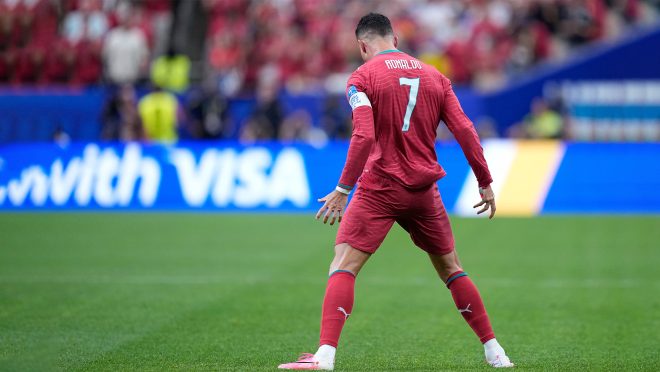
Cristiano Ronaldo’s international retirement marks the end of an extraordinary chapter with Portugal. But beyond the goals, trophies and records lies the story of a boy from Madeira whose determination inspired millions around the world to keep going, no matter how difficult life becomes.
Long before the stadiums echoed with “Siuuu”, before the records, the trophies and the global fame, Cristiano Ronaldo was simply a boy from Madeira with a football and a dream that seemed bigger than his circumstances.
Born on 5 February 1985, in Funchal, Portugal, he grew up in a working-class family. His mother, Maria Dolores, worked as a cook, while his father, José Dinis Aveiro, worked as a municipal gardener and kit man at a local football club, Andorinha. Life was not always easy, but football gave young Cristiano something to hold on to. It was more than a game; it was the possibility of a different future.
At just 11, Ronaldo left Madeira for Lisbon to join Sporting CP’s academy. For a child, it was an enormous sacrifice. He was away from his family, struggling with homesickness and an unfamiliar environment. His Madeiran accent made him a target of jokes, and there were days when loneliness became almost unbearable. He reportedly cried often and even considered returning home. But he stayed.
He understood that if he wanted to become the footballer he dreamed of being, he had to endure the difficult days that came with the journey. The boy who missed home kept showing up to training, choosing the dream even when the dream hurt.
Ronaldo was not always the physically imposing athlete the world knows today. As a youngster, he was skinny and lacked the strength needed to compete at the highest level. Instead of accepting that as a limitation, he worked relentlessly to improve. He focused on his fitness, his strength and every detail of his game.
Then, at 15, he faced another frightening setback: doctors diagnosed him with a heart condition that required a procedure. For a young footballer whose entire future depended on his body, it could have been devastating. Thankfully, the treatment was successful, and he returned to football.
His journey was already teaching a lesson that would define his career: setbacks may interrupt the road, but they do not have to decide where it ends.
Behind Ronaldo’s extraordinary rise was a personal loss that stayed with him. His father died in September 2005, when Ronaldo was only 20 and beginning to establish himself at Manchester United. His father had struggled with alcoholism, and their relationship carried the pain and complexity that often come with such circumstances.
Ronaldo later spoke emotionally about how little his father got to see of his success. In a 2019 interview, he became visibly emotional while watching footage of his father speaking proudly about him.
The moment revealed a side of Ronaldo that statistics could never capture: beneath the confidence and competitive fire was a son who wished his father could have been there to witness the journey.
The rest of the story unfolded across the biggest stages in football. Sporting CP gave him his first major platform, Manchester United helped turn him into a global star, and Real Madrid became the stage for some of the most extraordinary years of his career.
He won five Ballon d’Or awards, lifted the Champions League five times across his club career and became one of the most prolific goalscorers the game has ever seen. At Madrid, he broke records with a consistency that once seemed impossible.
But behind every celebration was the same relentless pursuit of improvement: another training session, another target, another opportunity to prove himself. Talent opened the door, but discipline and an almost obsessive commitment to his craft kept him at the top.
For Portugal, the journey was not always filled with celebrations. Ronaldo experienced heartbreak at Euro 2004, when Portugal lost the final on home soil to Greece. Twelve years later, he returned to the biggest stage with a different ending in mind.
At Euro 2016, he had to leave the final against France early because of injury, watching much of the match from the sidelines. But when Portugal finally lifted the trophy, he celebrated as a captain who had helped lead his country to its first major international title.
The tears that followed were not simply tears of joy; they carried the weight of years of expectation, disappointment and belief. Portugal would go on to win the Nations League in 2019 and again in 2025, adding more chapters to his international legacy.
For all the individual awards and personal milestones, Ronaldo has often acknowledged the sacrifices his family made along the way, particularly those of his mother. Maria Dolores stood beside him through the difficult early years and continued to be a central figure in his life.
His story is also a reminder that behind many extraordinary achievements are people whose sacrifices rarely make the headlines. The boy who left home at 11 carried more than a football dream with him; he carried the hopes of a family that wanted him to succeed. And when the world finally applauded, those early struggles and sacrifices were part of the journey too.
Yesterday, Ronaldo announced that he would retire from international football after the November break, bringing an end to a 23-year journey with Portugal. He will hand the iconic number 7 shirt to the next generation.
He leaves the national team with 234 appearances and 146 goals, holding the men’s international records for both appearances and goals. In his farewell message, he reflected on the privilege of representing his country and said that Portugal would always be a part of him.
The announcement marks the end of an era, but not necessarily the end of his playing career at club level.
The boy from Madeira did not have an easy beginning. He faced loneliness, physical setbacks and personal heartbreak. He lost his father before the world fully understood the greatness he was building. Yet he kept moving forward. And in doing so, he inspired millions across the world to believe that they could do the same.
The number 7 shirt will pass to someone else. The records may one day be broken. The stadiums will eventually fall silent. But the story of a boy who refused to give up will remain.
The boy from Madeira made it. And millions around the world learned that they could keep going, too.