What if Bangladesh’s leopards never left?
The spatial ecology of leopards is fascinating. Documented home ranges run from just 6.78 sq km in North Bengal to more than 1,000 sq km in arid environments such as the Kalahari. These numbers demonstrate just how variable the space requirements of individual leopards can be.
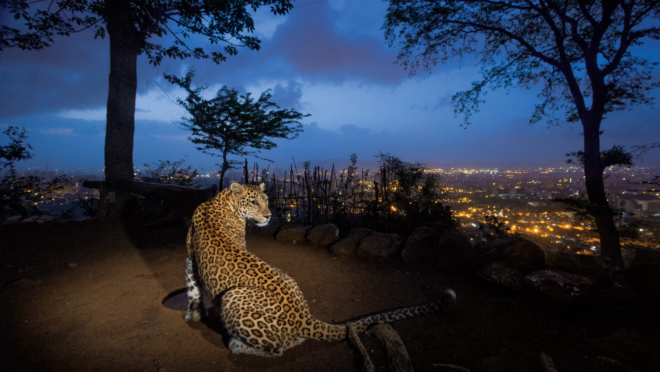
The recent suspected leopard encounter in Lalmonirhat raises an uncomfortable question: have leopards really disappeared from Bangladesh, or have we become too accustomed to believing they have?
A few months ago, during a discussion on Bangladesh’s wildlife in one of my zoology classes, a student asked me a question that has stayed with me: Did Bangladesh ever have leopards? It was an innocent question, but an unsettling one. Here was a student of zoology, someone studying the diversity of animals, for whom the leopard had become so distant from Bangladesh’s natural history that its very existence in the country seemed questionable.
I could understand why. For generations of Bangladeshis, leopards have been largely absent from everyday encounters, wildlife documentaries, schoolbooks and public discussions about conservation. The tiger remains our most celebrated carnivore, while the leopard has gradually faded from the national imagination.
Ecologists have a term for this phenomenon: shifting baseline syndrome. It describes how successive generations come to accept the environmental conditions they inherit as normal, often without recognising how much has already been lost. A forest that once supported several large carnivores becomes a forest with only one.
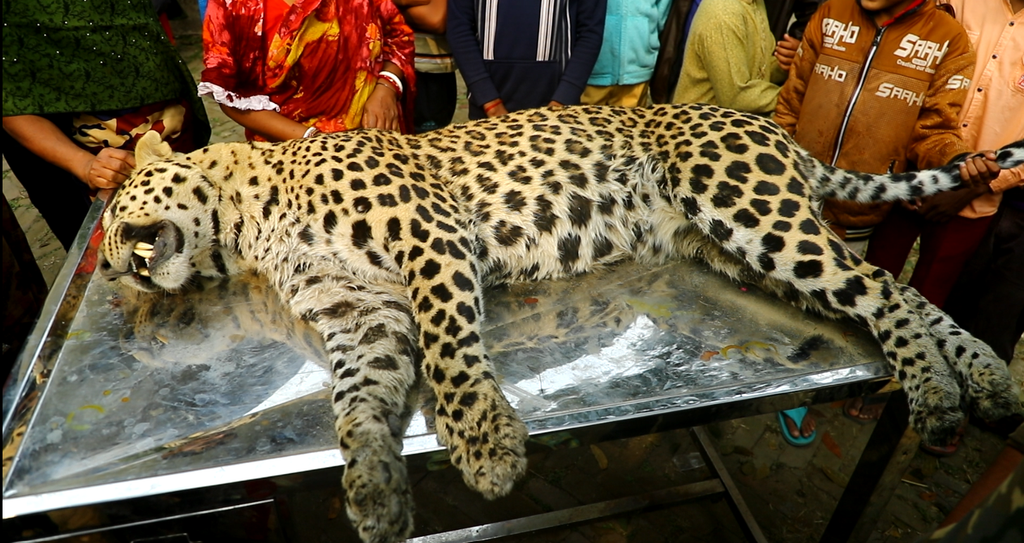
Photo: Phireaaj Aal Saabah
A landscape that once accommodated wildlife becomes farmland and settlements. Eventually, the younger generation grows up believing that the depleted landscape is how things have always been.
And perhaps this is precisely what has happened to the leopard in Bangladesh.
The Lalmonirhat encounter
On 25 October, three people were injured in an encounter with a large wild cat in Amjhol village of Hatibandha upazila, Lalmonirhat, close to the Indian border.
The animal was widely suspected to be a leopard. Border guards, police and residents searched for it, while reports described a frightened community gathering around the fields where it had taken refuge. Almost immediately, another explanation emerged: the animal had entered Bangladesh from India.
It is certainly possible. Leopards are capable of travelling considerable distances, and the international boundary does not represent an ecological barrier to a dispersing carnivore. But the assumption deserves closer scrutiny.
How do we know where the animal came from? Was it recently dispersing from an Indian population, or had it already been using habitats on the Bangladeshi side? Could the agricultural landscape itself have provided temporary refuge?
Without evidence of its movements, we cannot answer these questions simply by pointing to the border.
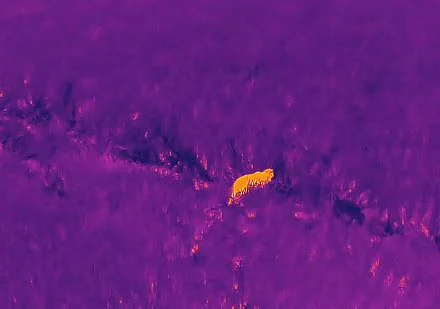
Photo: Collected
The incident also demands attention for the immediate danger it posed, both to the injured villagers and to the animal itself. A large carnivore surrounded by a crowd can become highly defensive. Effective wildlife response requires securing the area, preventing further encounters and allowing trained personnel to manage the situation.
But beyond the immediate conflict lies a larger question about how we interpret the presence of an animal we have come to regard as almost absent.
A leopard’s changing landscape
Historically, leopards were distributed across much of Bangladesh. Early accounts describe their presence in forests and wooded landscapes extending from the northeast and southeast to the Sal forests of central Bangladesh.
By the 1980s, however, their distribution had contracted considerably. Habitat destruction, hunting and the depletion of wild prey had pushed the species towards the margins of its former range.
IUCN Bangladesh’s 2015 national Red List assessed the leopard as Critically Endangered, describing its occurrence in parts of the Chittagong Hill Tracts, northeastern forests and adjoining tea gardens. It also noted that the country’s remaining population may no longer be viable.
But leopards are remarkably adaptable animals. Across Africa and Asia, they inhabit tropical forests, dry woodlands, mountains, agricultural landscapes and even areas near densely populated settlements.
Their home ranges vary enormously depending on prey availability, habitat conditions, sex, age and competition.
The spatial ecology of leopards is fascinating. Documented home ranges run from just 6.78 sq km in North Bengal to more than 1,000 sq km in arid environments such as the Kalahari. These numbers demonstrate just how variable the space requirements of individual leopards can be.
Importantly, leopards can live exclusively outside large, protected forests. Researchers recorded extensive use of tea plantations, agricultural fields and forest patches. This is particularly relevant to northern Bangladesh, which shares a landscape with the tea-growing regions of West Bengal.
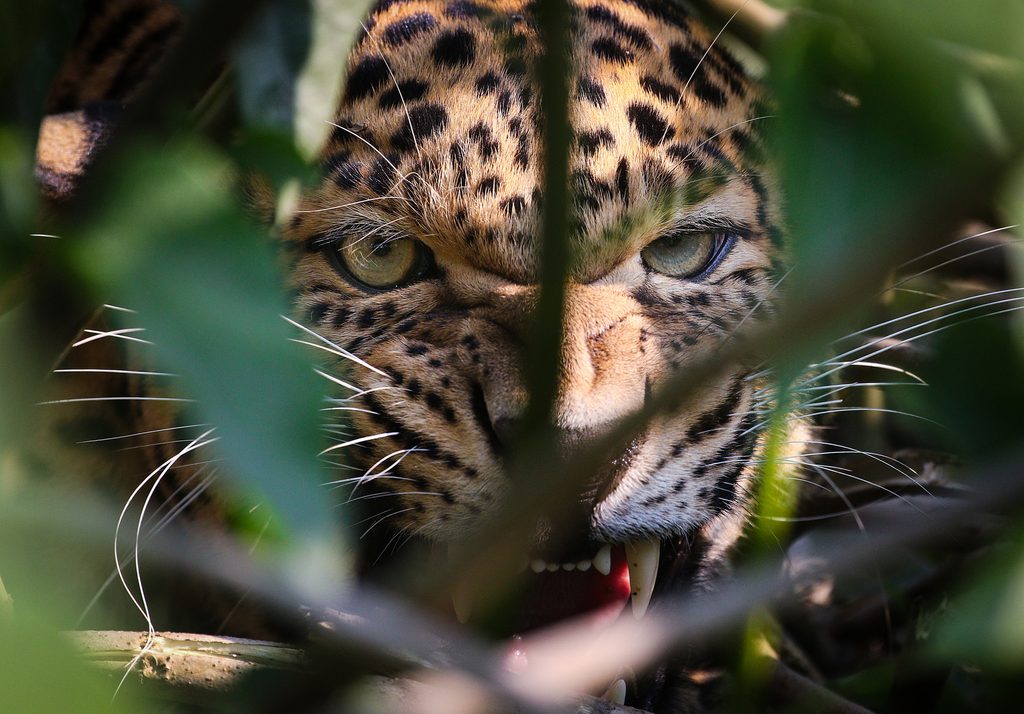
Photo: Collected
A leopard does not necessarily need hundreds of square kilometres of uninterrupted forest to survive. Under suitable conditions, some individuals can occupy relatively small areas within human-modified landscapes.
That does not establish the existence of resident leopards in northern Bangladesh. But it challenges the assumption that the absence of extensive forests automatically rules out their presence.
The missing decades
Over roughly the past 25 years, Bangladesh has experienced a series of reported leopard encounters, particularly in its northern and northeastern border districts.
There have been more than 10 such incidents, according to newspaper reports and other records. Private menageries in northern Bangladesh and Rangpur Zoo kept leopards as late as 2010, with claims that they were sourced from nearby districts. What would the incident count actually tell us?
Certainly, leopards have appeared repeatedly in these landscapes. But would that count tell us whether they were continuously present, how frequently they moved across the border, or whether any individuals reproduced within Bangladesh?
It would not.
Now consider a more difficult question. What was happening during the 1980s and 1990s? And even before that?
How many leopards occupied the northern districts then? How many encounters went unreported? How many animals were mistaken for other species, killed without documentation, or simply never detected?
We have little systematic evidence with which to answer these questions.
The absence of historical records cannot automatically be interpreted as evidence that leopards were absent. Equally, scattered contemporary sightings cannot establish a breeding population.
Between these two uncertainties lies an enormous gap in our knowledge of Bangladesh’s carnivores.
And that gap should concern us more than the occasional appearance of a leopard.
The burden of extinction
There is another, more consequential problem with how we describe poorly studied wildlife: the lasting influence of extinction labels.
Declaring a species regionally extinct is a serious scientific conclusion. It implies that the last individual capable of reproduction has disappeared from the region, following an assessment of the available evidence.
When such conclusions are made without adequate surveys, they risk creating a legacy that becomes increasingly difficult to challenge.
A species labelled extinct may disappear from national conservation priorities, research proposals and monitoring programmes. Future sightings may be dismissed as exceptional visitors rather than investigated as possible evidence of overlooked persistence.
The consequences can extend internationally. Conservation assessments and distribution maps are widely consulted by researchers, funding organisations and policymakers. Once an uncertain conclusion becomes embedded in these resources, subsequent studies may repeat it without revisiting the original evidence.
Bangladesh has already experienced the rediscovery of mammals previously classified as nationally extinct. Take the gaur, for example. I was taught in class that marbled cats and golden cats were on the verge of extinction. All three have since turned up on camera traps. These examples illustrate why extinction assessments must remain open to revision as new evidence emerges.
For the leopard, an important distinction must be made: Bangladesh’s 2015 national Red List classified it as Critically Endangered, not Regionally Extinct. Yet the perception that the species has effectively disappeared remains widespread.
The danger, therefore, is not only formal misclassification. It is also the informal extinction narrative that takes hold when scientific uncertainty is gradually replaced by public certainty.
What we need to know
The Lalmonirhat incident should prompt more than another round of speculation about an animal crossing from India.
It should encourage systematic surveys of suitable habitats in northern Bangladesh, including riverine vegetation, maize-sugarcane-paddy mosaics, tea-growing landscapes and remaining forest patches.
Camera trapping, genetic sampling and carefully documented local observations could help establish whether leopards use these areas regularly or appear only during occasional dispersal events. Cross-border collaboration would be especially valuable because leopard movements and habitat use do not stop at national boundaries.
Such research would also help authorities prepare for future encounters, reducing risks to both people and animals.
None of this means that we should presume a hidden, thriving leopard population exists in Bangladesh. The evidence does not justify that conclusion.
But we should be equally reluctant to presume that every leopard detected here must have arrived from somewhere else.
I often return to that question from my classroom. Did Bangladesh ever have leopards?
The historical answer is unquestionably yes.
The more difficult question is whether we know enough about their present status to say with confidence where they have disappeared – and where they might still survive.
Perhaps the leopard in Lalmonirhat is an unexpected visitor. Or perhaps it is a reminder of how little we know about the wildlife that still survives in our changing landscapes.
What troubles me is how readily we explain away every rare encounter with the same convenient assumption: the animal must have come from India.
But what if it was here all along?