Should we let our kids play Roblox?
Should we let our kids play Roblox?
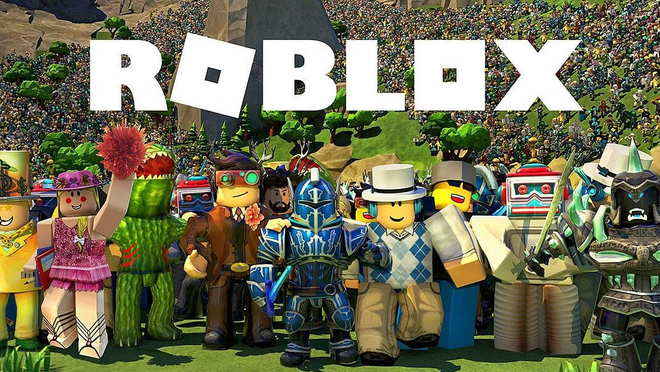
A few weeks ago, I realised that almost every child in my school was talking about the same thing. Whenever I was listening to their conversations, the only thing they were talking about was Roblox.
I grew up in a different time. The games we usually played on our parents’ phones were Clash of Clans, PUBG, Ludo or Candy Crush. So I was curious and I asked my students to explain Roblox to me.
Their answers were both shocking and surprising.
For those who have never heard of it, Roblox is not one game. It is an online platform where people can play millions of different games, which the company calls “experiences”. Its founders, David Baszucki and Erik Cassel, started the company in 2004 and the platform opened to the public in 2006. It grew slowly at first and then exploded, especially when children were stuck at home during the pandemic. Today, according to the company’s own results, about 123 million people use it every day.
More than a third of the users who have verified their age are under 13.
Many of my students said they play Roblox for three to four hours every day. There are all sorts of games one can play here. They described games about dressing up, murders and mysteries, horror games and whatnot. Some of the older, more mature students defended it. They told me that you can learn from Roblox too, that there are educational games and one student even asked if we could use them for our homework.
But the more I listened, the more uneasy I became.
Children in classes three, four and five have started using words I never expected to hear from them, curse words and sexual language that I do not even know how to put politely. I cannot prove where they are learning these, and of course there’s too much exposure on the internet, but these children spend most of their free time on this platform, which could potentially be a cause.
Often I notice two students who have stopped speaking to each other and when I ask, the reason turns out to be something that happened in a game, an insult or an exclusion which ends up following them into the classroom. When I asked my students directly about the bad side of Roblox, they made faces and looked away, as if they were trying to avoid something.
Now, Roblox is much more than games.
It is also a place where children can talk to other people and send messages. There are communities and, from what I understand, players can share posts there. As a teacher and as an adult, I keep coming back to one thought: we have no way of knowing who our children are talking to and what they are seeing.
I am not the only one who worries. The Guardian reported in April 2025 that children as young as five could come across inappropriate content and interact with adults without effective safeguards. Earlier this year, the BBC reported the case of a man who was jailed after grooming a 14-year-old girl he had first met on Roblox. Her mother said she was shocked and angry to discover it. Australia’s eSafety Commissioner has also pressed the company over whether it does enough to keep adults away from young children.
To be fair, Roblox says that such cases are rare and that it takes safety seriously.
It has introduced age checks that use face scanning and it says adults can no longer chat with children under 16. That is a welcome step. But these changes are new and only about half of users had completed the check when the company last reported. One of my students, a girl in class four, told me the system detected her to be between 25 and 30 years old. I cannot say how often this happens but it is concerning.
If a machine can look at a nine-year-old and see an adult, then I am not sure we can rely on it alone to protect her.
I also want to be fair to the children and to their parents. This generation is not like ours. In a crowded city like Dhaka there are few playgrounds and open spaces and it is often not safe for a child to play outside. Of course they turn to online games. Therefore, the games should be fun, something that refreshes a child’s mind after a long day at school. Wanting that is not the problem.
The real question is how far our children are being exposed to things they were never meant to see at such an innocent age.
If you do allow your child to play, I would ask you to do a few things. No setting can replace a parent who knows what their child is doing. Switch on the parental controls and keep chat limited, or off, for younger children. Keep the device in a shared space. Set a daily limit that is far shorter than three or four hours. And most importantly, ask your child what they play and who they play with.
Listen without being angry, so that when something goes wrong, they come to you first.
Sheikh Sidratul Muntaha is an English language teacher at British Standard School.